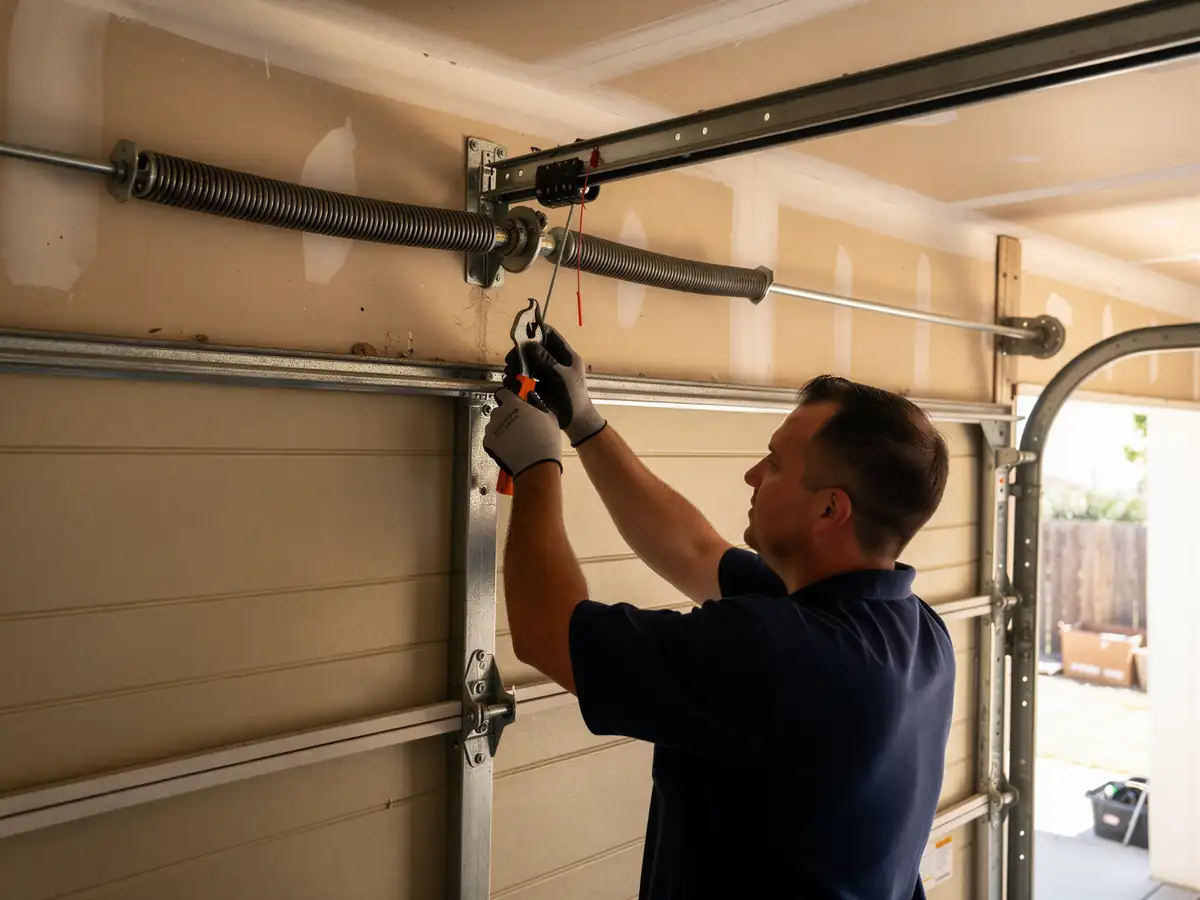
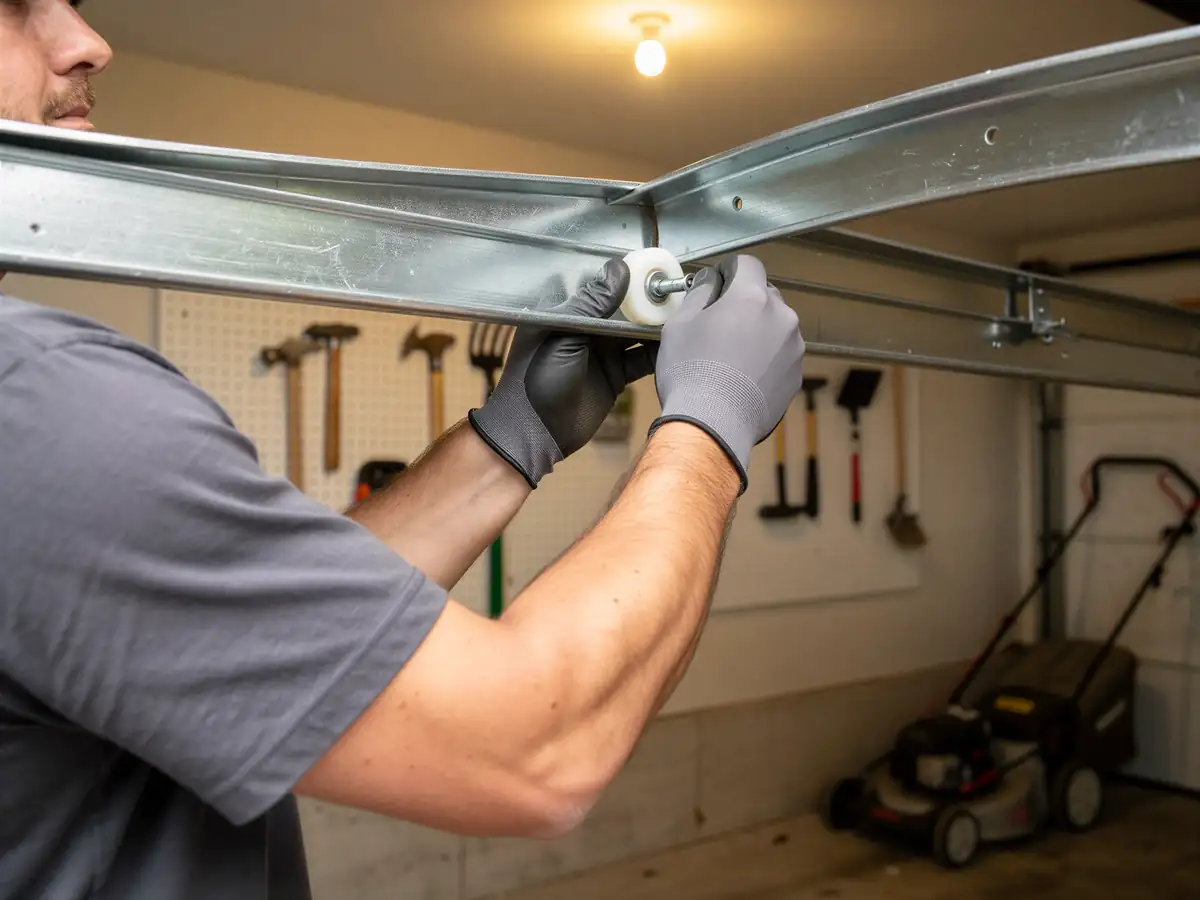
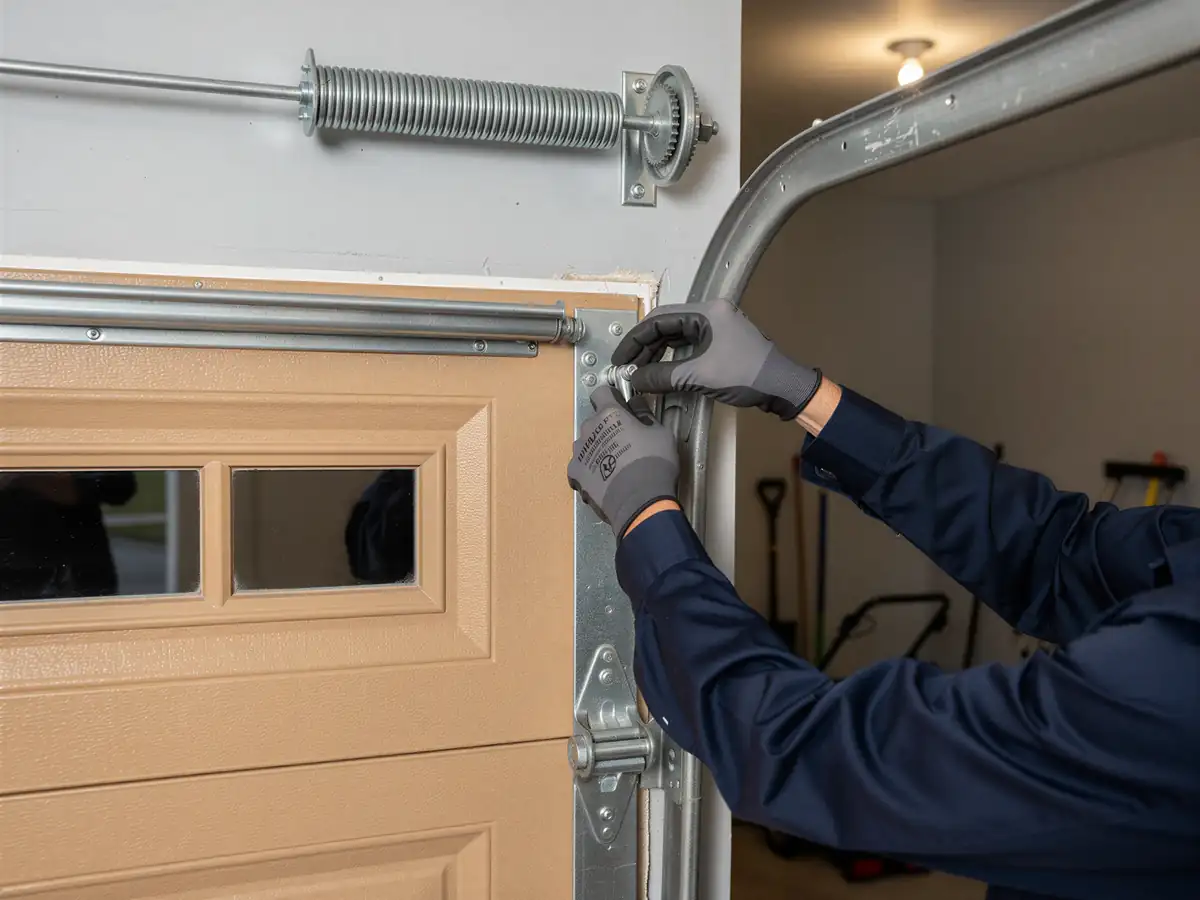
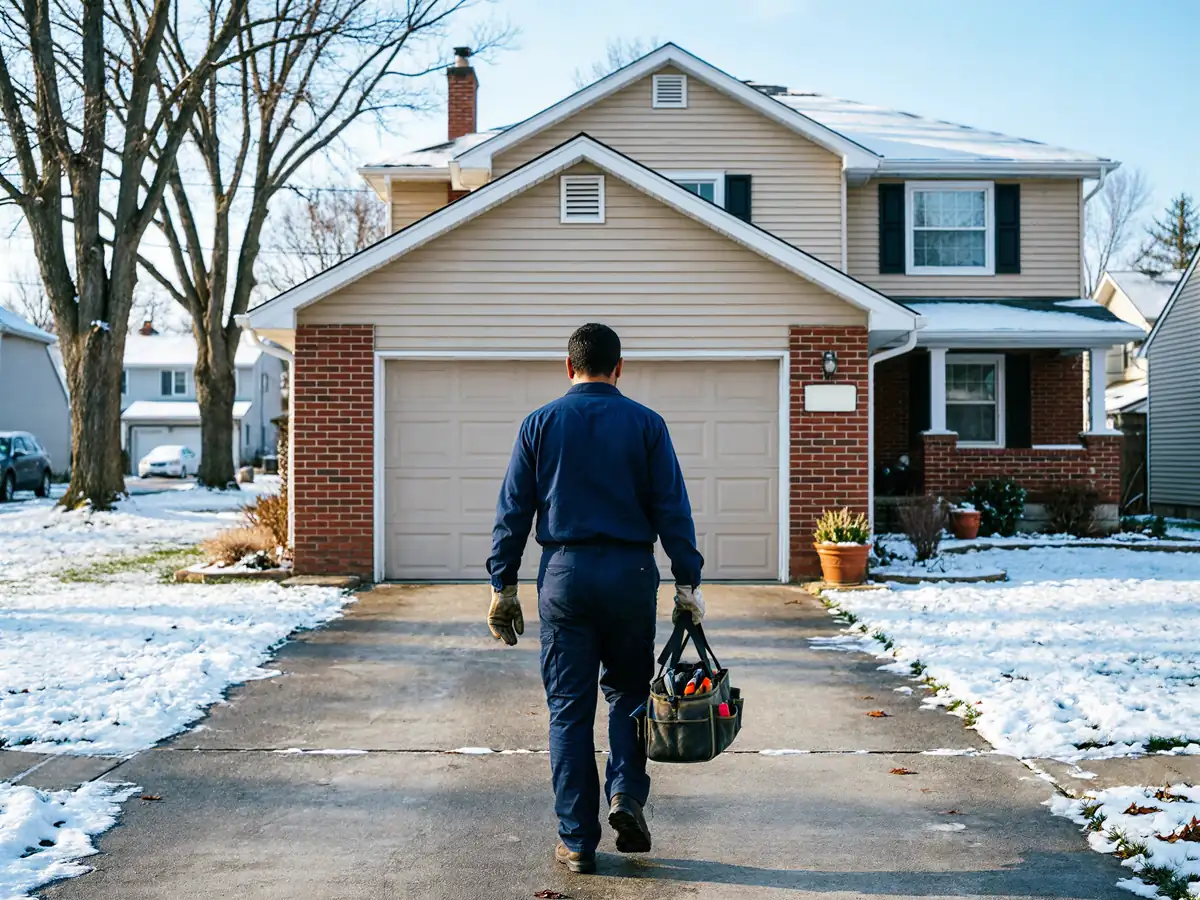
Most calls we get aren't about one broken part. They're about a door that's been fine for years and then isn't. In West Allis, the housing stock runs 1938 to 2000, with the median build year sitting at 1976, and most neighborhoods clustered in 1960s-70s construction. That means a lot of original hardware is still bolted to the jamb: torsion springs rated for a lighter door than what's on it now, rollers that have never been swapped, openers from a different era entirely. A service call has to account for all of that history at once, not just the symptom you called about. If your spring snapped, the real question is whether the drums, cable, and bearing plate around it are from the same build year - because on a house from this period, they usually are, and they're usually due too.
Where People Go Wrong
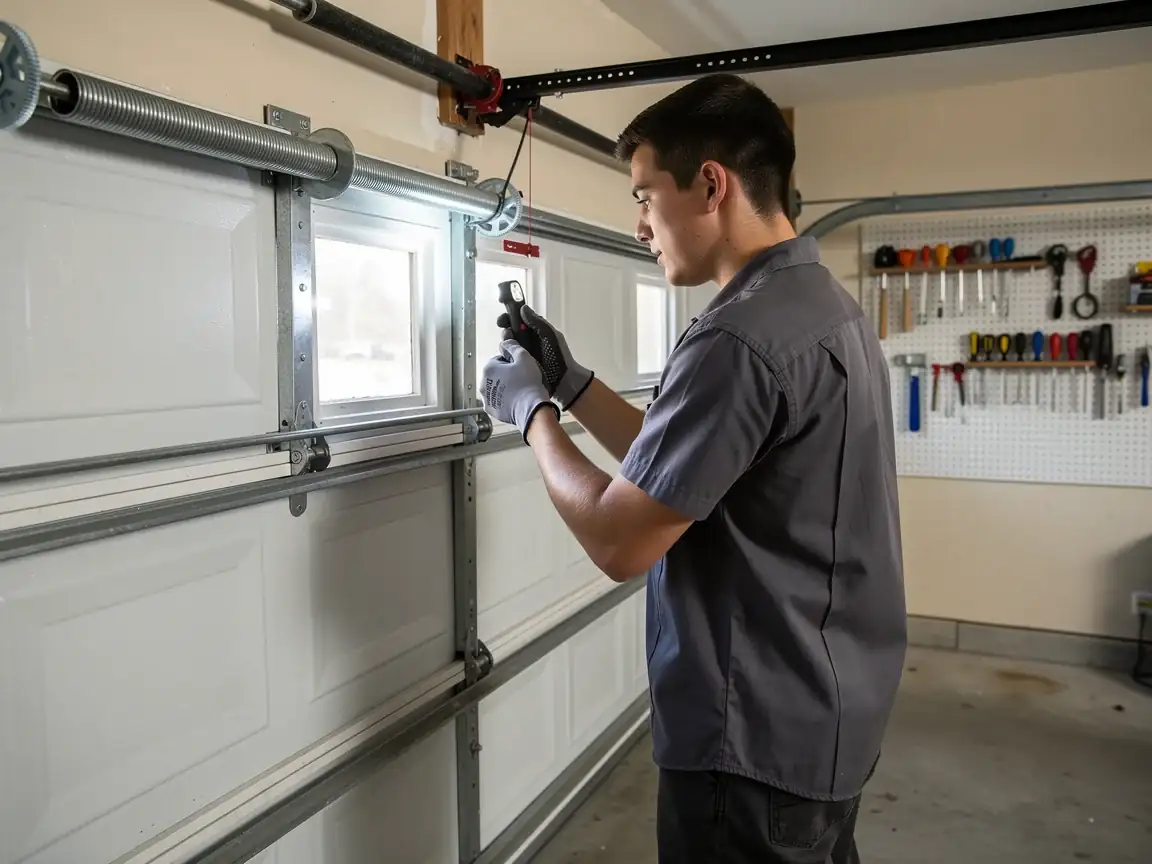
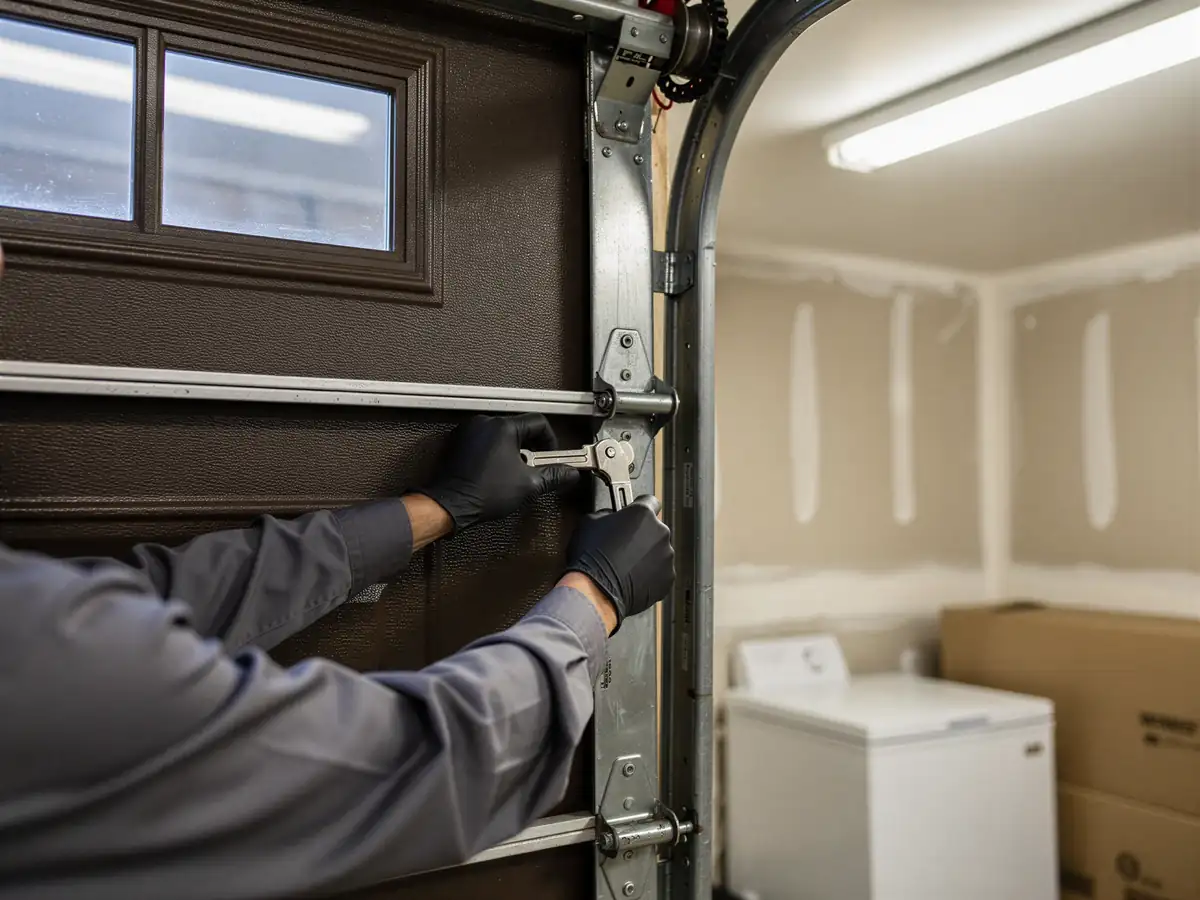
The common mistake is treating a garage door call like a single-part swap. On a house built in the 1960s or 70s - which covers a large share of homes here - the spring, the rollers, and the opener's gears are often the same age. Replace only the part that failed and you've fixed today's problem while leaving tomorrow's sitting six inches away on the same shaft. A real service call checks the whole assembly: spring tension and winding, cable fray, hinge wear, track alignment, and opener force settings. We also look at the door panel itself. On homes from the 1938-2000 range, especially the older end, the original one-piece or early sectional doors sometimes weren't built with today's insulation or hardware spacing in mind, which changes what parts actually fit.
What Local Conditions Do
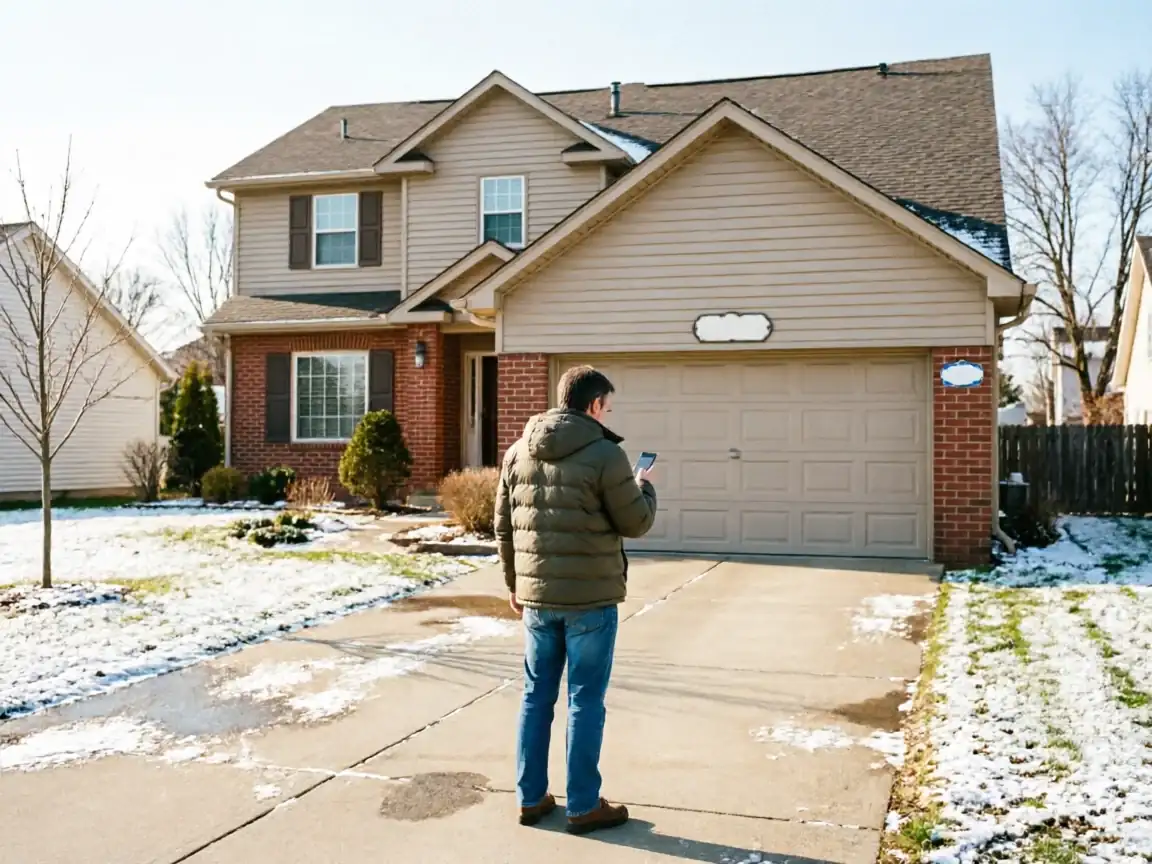
West Allis sits in a severe cold climate band, and that changes what we check on every call, not just the winter ones. Cold makes steel springs more brittle and more likely to snap under tension that would have been fine in warmer months - so a spring near the end of its life tends to go in a cold stretch, not a mild one. Metal tracks contract, and a door that was riding slightly out of alignment in July can bind or jump the track in January. We also check weatherstripping and bottom seals more closely here than a milder-climate shop would, since a gapped seal doesn't just waste heat, it lets in the kind of cold that stiffens grease and makes an opener strain harder than it should.
What Changes With the Season
Spring tension actually needs rechecking as temperatures swing, because steel expands and contracts enough to shift how a door balances - a door that closed level in August can start drifting on one side by December. We see more call volume for broken springs and stuck openers in the cold months, and less for cosmetic panel damage, which tends to be a warmer-weather call. One honest limit here: we don't carry every obsolete part for the oldest doors in the 1938-2000 range on the truck. If your door is an original from the earlier end of that span, a repair sometimes means ordering a part rather than fixing it same-visit, and in some of those cases replacement ends up cheaper than chasing parts for a door that old.
How it works
From “it’s stuck” to “it’s fixed”
01
Tell us what’s wrong
Describe the symptom - won’t open, loud bang, opener runs but the door won’t move.
02
On-site diagnosis
A technician tests the door under power and by hand and finds what actually failed.
03
Clear, up-front plan
You get the fix that’s needed and what drives the cost - before any work starts.
04
Repaired & tested
The repair is done, the door is set true and tested, and the work area left clean.
Not sure which repair your door needs in West Allis, WI? Describe what it’s doing - every job starts with a diagnosis.
Straight answers about garage door repair in West Allis. Still unsure? Ask us directly.
Will a service call fix my door in one visit?
Most of the time, yes - springs, rollers, cables, and opener adjustments are on the truck. The exception is original hardware from the older end of the area's 1938-2000 housing stock, where a specific part sometimes has to be ordered rather than swapped on the spot.
Why did my spring break in winter and not summer?
Cold makes steel more brittle, and West Allis sits in a severe cold climate band. A spring that's already near the end of its working life is more likely to fail under tension during a cold stretch than a mild one, even though the tension itself hasn't changed.
Do you check more than the part I called about?
Yes. On homes built in the 1960s-70s stock common across this area, the spring, cables, rollers, and opener gearing are often the same age. We check the full assembly so you're not back out here in a few months for the next part from the same era.
Is it ever cheaper to replace than repair?
Sometimes, especially with original doors from the earlier end of the 1938-2000 range where parts are harder to source. If we're ordering an obsolete part just to patch an old door, we'll tell you straight when replacement costs less over time.