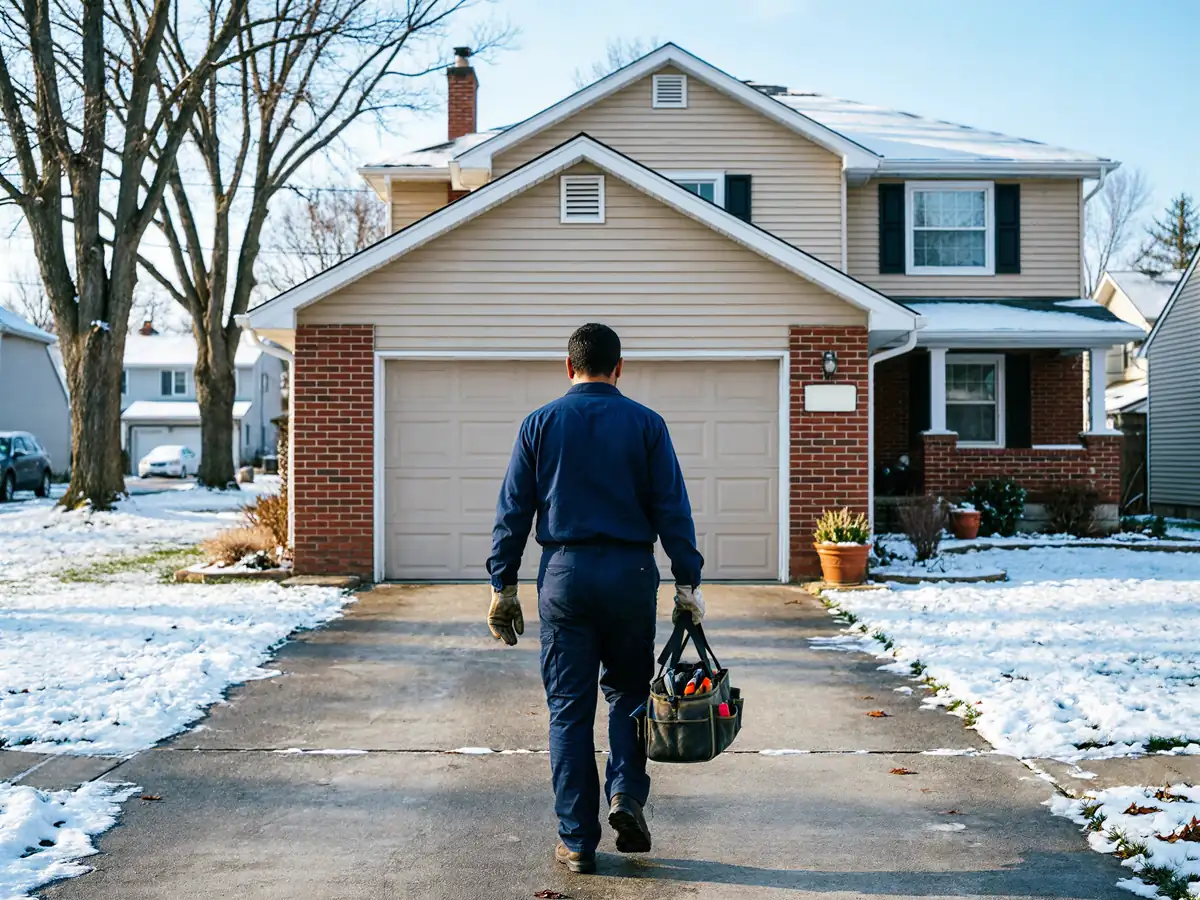
West Allis homes built mostly in the 1960s-70s sit on original track hardware that wasn't built for 50+ winters of freeze-thaw. Here's why doors jump track here.
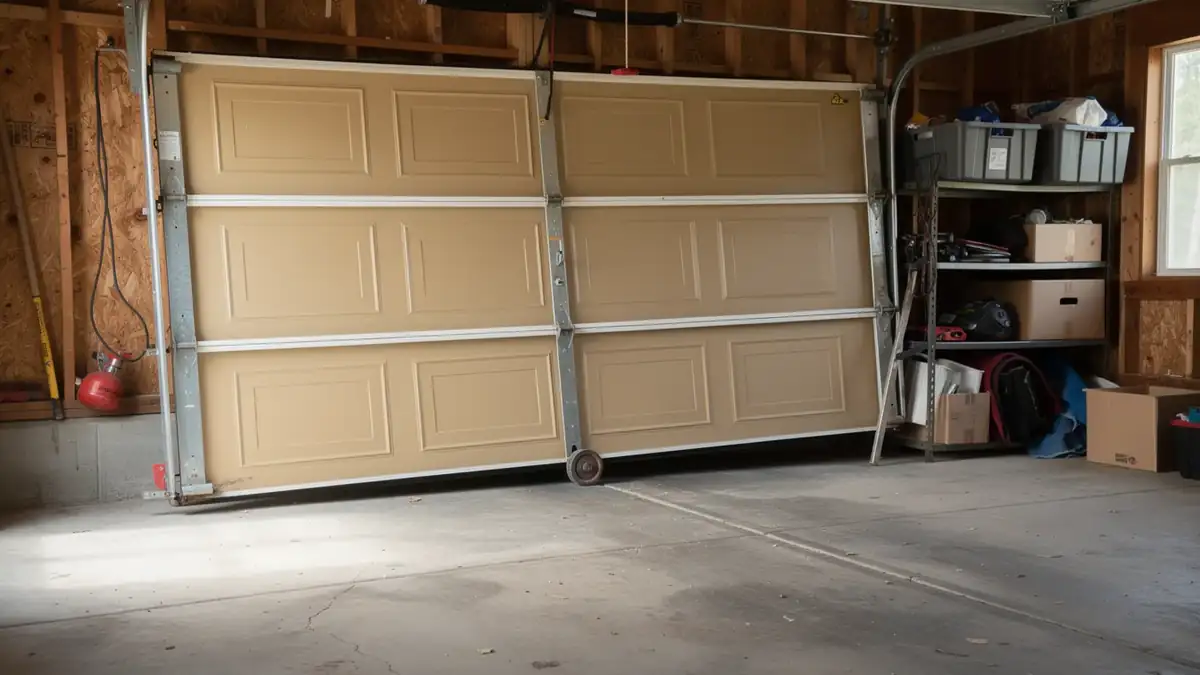
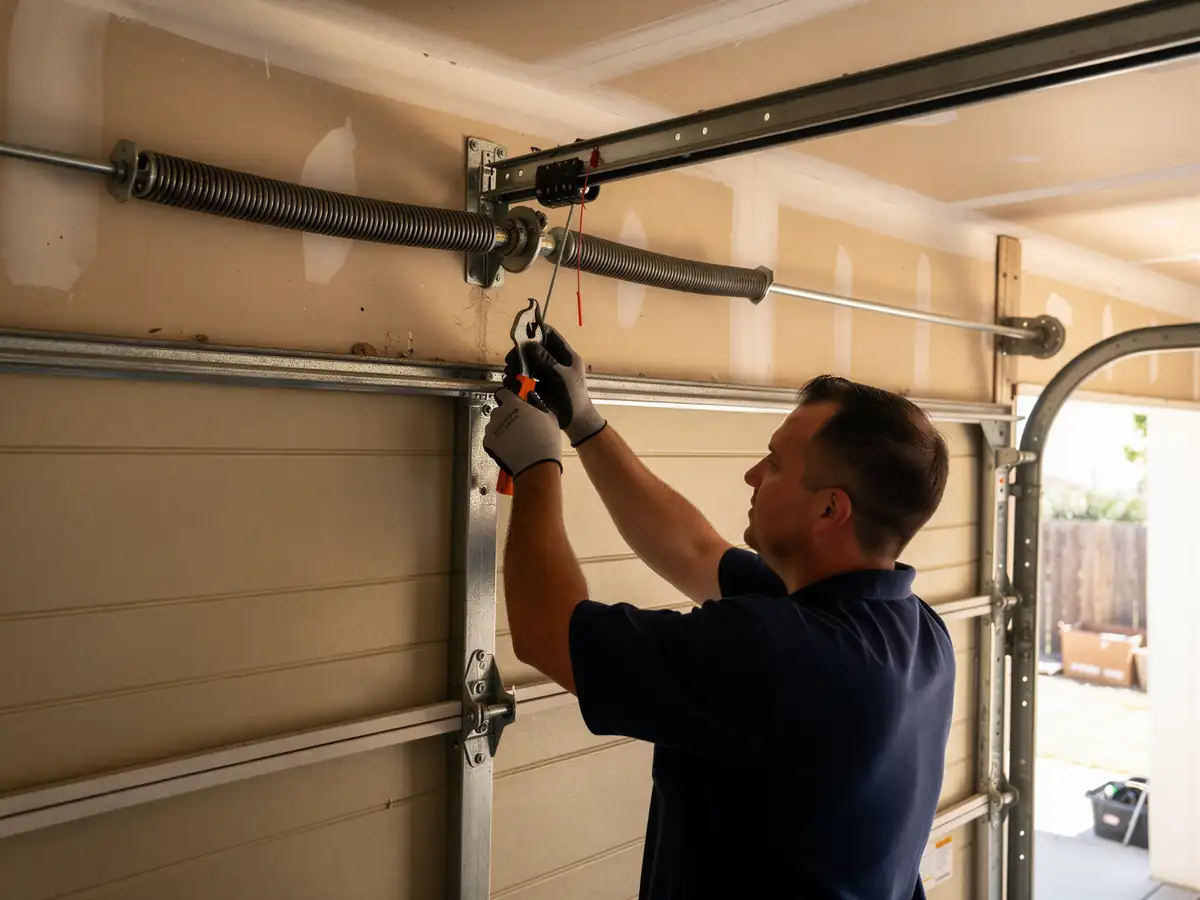
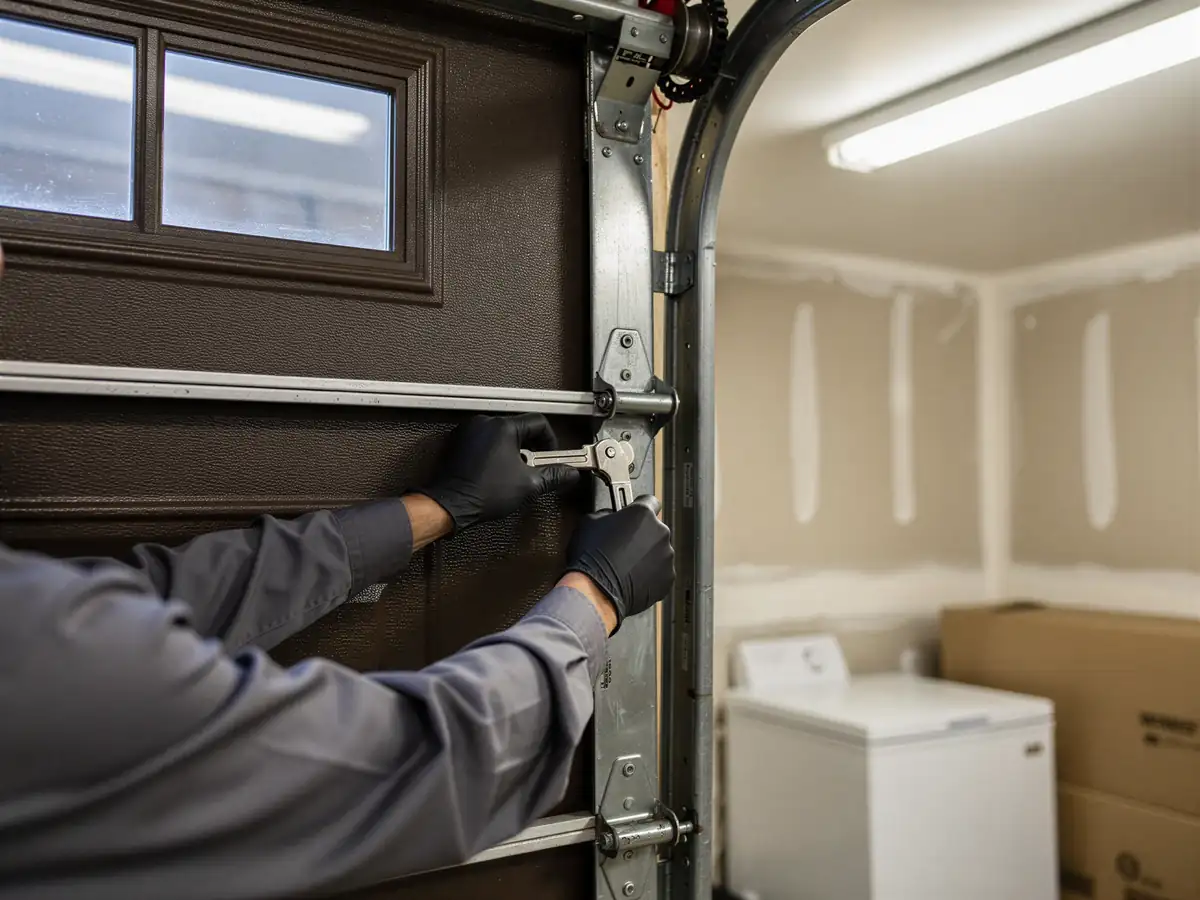
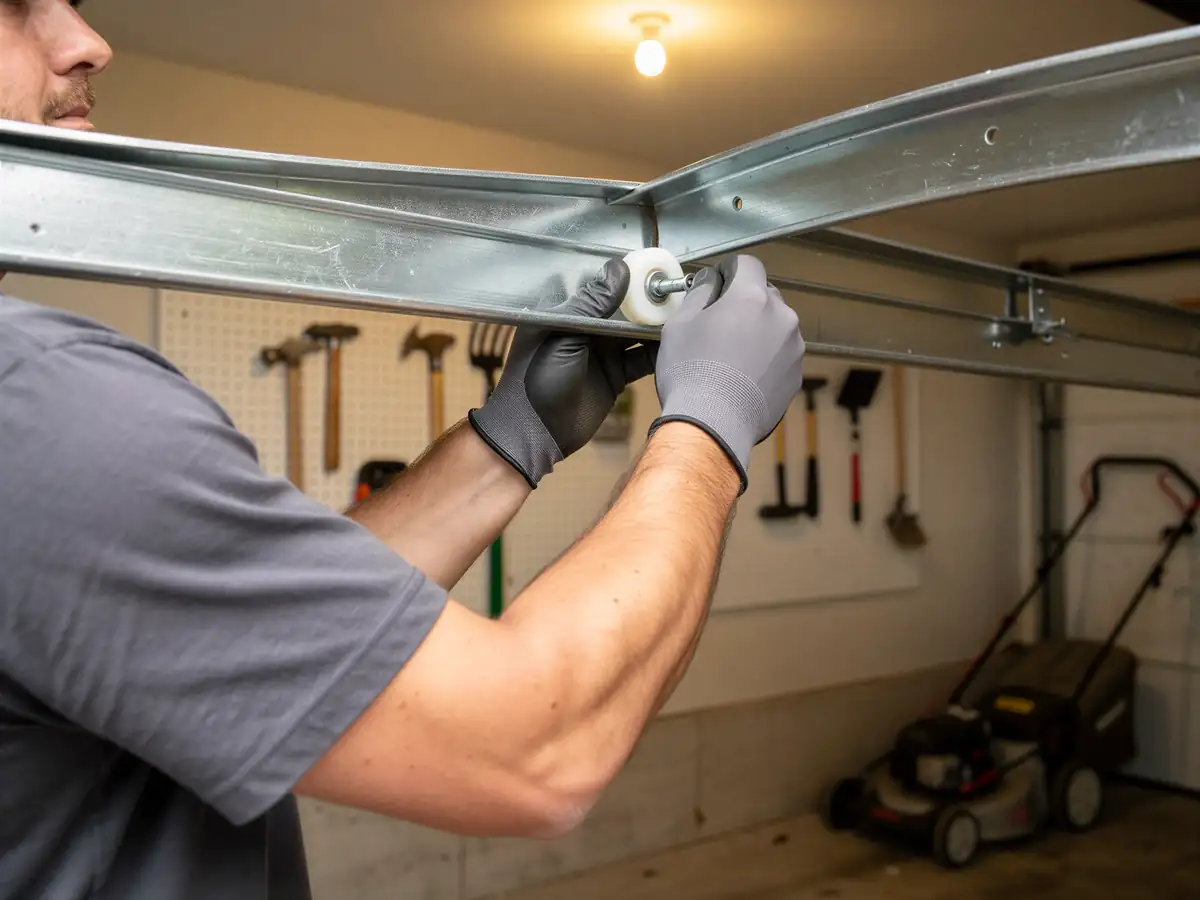
A door that's off track doesn't usually announce itself with a bang. It starts with a roller that catches, a panel that leans a quarter-inch out of line, or a door that stops three inches from the floor and won't go further. In West Allis, this shows up more on houses built in that long run between 1938 and 2000, with the median around 1976 - which is most of this town. That's original steel track, often the roll-formed kind that was standard through the 60s and 70s, and it was never designed to be adjusted once it shifted. Once a track bracket works loose from the jamb, the door rides off the rail a little more every cycle, and the opener keeps forcing it through the misalignment until something - a roller, a hinge, or the track itself - gives out. We see this pattern across the older pockets of town, including areas like where the housing stock is from that same build era. The door doesn't fail all at once. It fails one cycle at a time, and by the time it's visibly crooked, the hardware underneath has usually been fighting it for weeks.
Where People Go Wrong
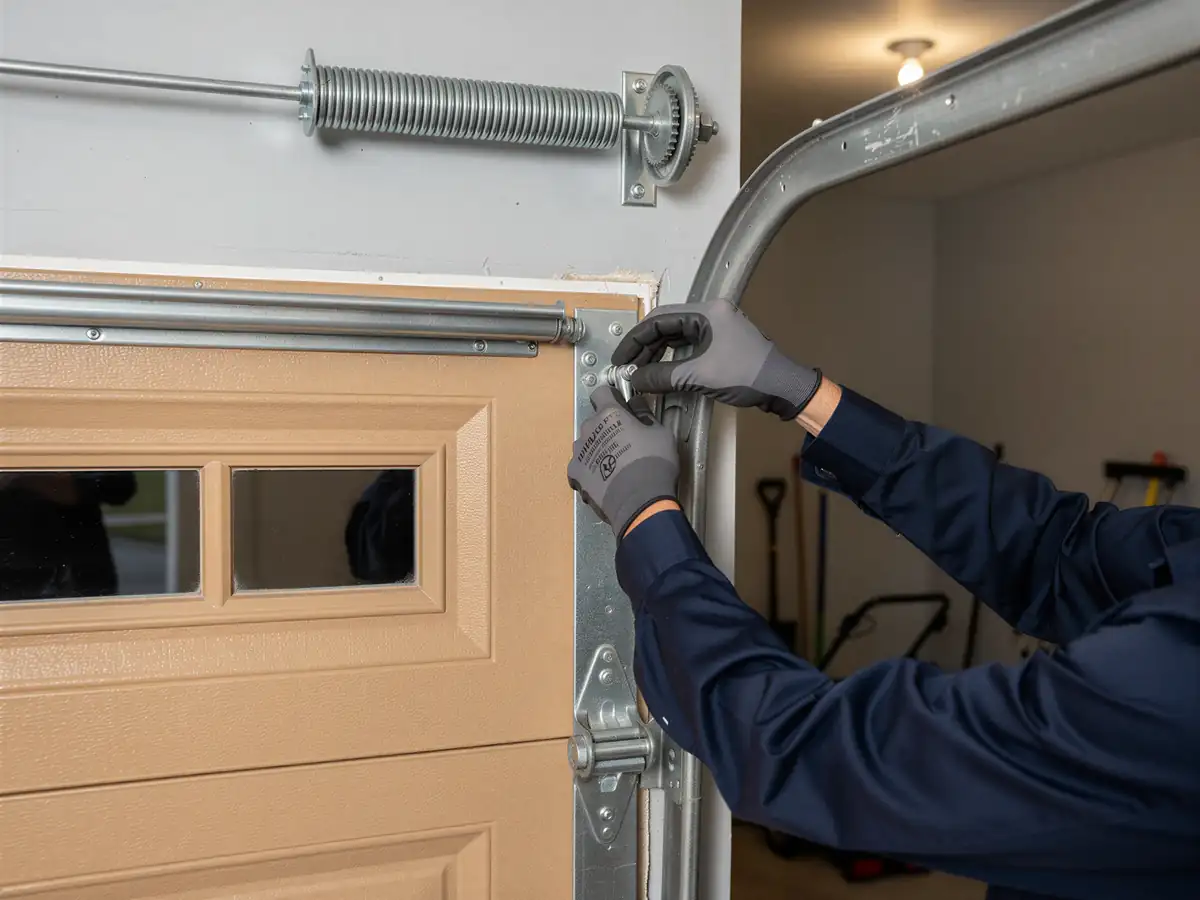
The most common mistake is forcing the opener through a door that's already binding. If the door hesitates or grinds partway up, running it again - or worse, running it on a remote while you're not watching it move - just drives the rollers harder against a track that's already bent or loose. The second mistake is assuming a bent track is a one-person fix with a rubber mallet. On the 1960s and 70s track common in this area, the gauge is thin enough that pounding it back into shape work-hardens the steel at the bend point, and it goes out of alignment again within a few months, usually worse. The third mistake, and the one we see most on older West Allis houses, is ignoring a loose jamb bracket because the door still closes. The bracket holds the vertical track plumb. Once it's loose, every opening cycle widens the gap a little, and the door walks further off the rail each time until a roller jumps the track entirely, usually on a cold morning when the steel is stiff and less forgiving.
What Local Conditions Do
West Allis sits in a severe cold climate band, and that matters for track alignment specifically because steel contracts in the cold. A track that's running a hair out of plumb in July can bind in January simply because the metal has tightened against the rollers. On houses from the 1976 median build year, the garage itself is often unheated or only marginally conditioned, so the track hardware swings through the full outdoor temperature range every winter. That constant expansion and contraction loosens fasteners at the wall brackets faster than it would in a milder climate. It's also why a door that's been slightly off track all autumn tends to finally jump the rail in the first hard cold snap - the slack in the hardware runs out right when the steel is least flexible. None of this is unique to one house; it's a function of the building era and the climate band this town sits in together.
What Changes With the Season
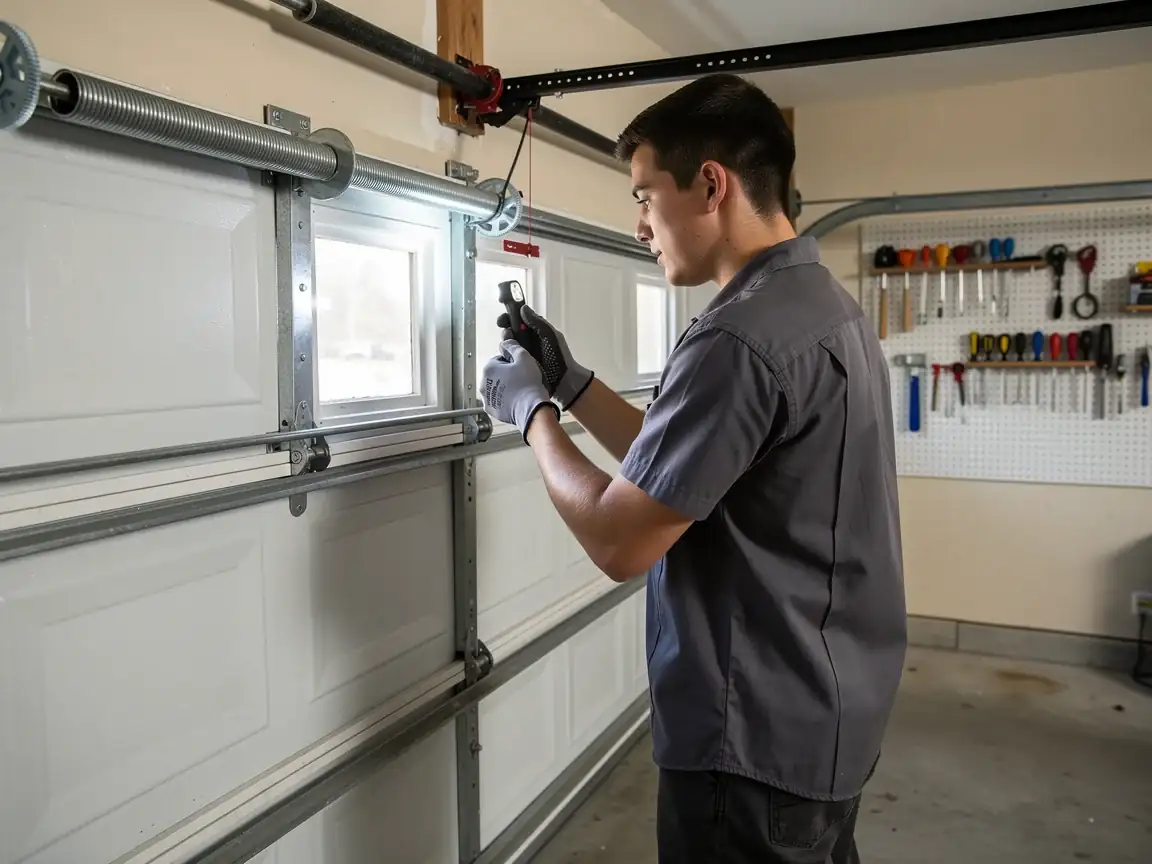
The failures cluster at the transitions, not the extremes. Late fall, as temperatures drop and the track hasn't moved all summer, is when loose brackets finally let go. Early spring brings a different problem - moisture from melting snow gets into the track channel and rollers that were already worn start to bind on rust and debris instead of sliding clean. Mid-winter itself is usually the quiet stretch, oddly enough, because once the steel has fully contracted, a door either holds or it's already failed. The honest limitation here: we can true up a track, replace rollers, and reset brackets, but if the vertical track itself is bent more than slightly, or the jamb underneath it has shifted with the house, re-aligning it is a short-term fix. On a lot of the older stock in this area, once we're resetting the same bracket a second winter in a row, replacing that section of track costs less over time than keeps re-adjusting it.
Straight answers about garage door repair in West Allis. Still unsure? Ask us directly.
Why does my garage door only jump the track in winter?
Cold steel contracts and loses flexibility, so a track that's already a little loose or out of plumb has less give left in it. On houses from West Allis's typical 1960s-70s build era, that's often enough for a roller to finally jump the rail during the first hard freeze of the season.
Can I fix a bent track myself?
You can sometimes bend it back, but on the thinner roll-formed steel common in older West Allis houses, hand-bending work-hardens the metal at the bend and it tends to go crooked again within months. We'd rather true it up with the right tools or replace the section.
Is a door off track always a track problem?
Not always. Sometimes it's a loose wall bracket, a worn roller, or a jamb that's shifted slightly with the house over the decades. We check all three before assuming the track itself needs replacing.