What You Are Seeing
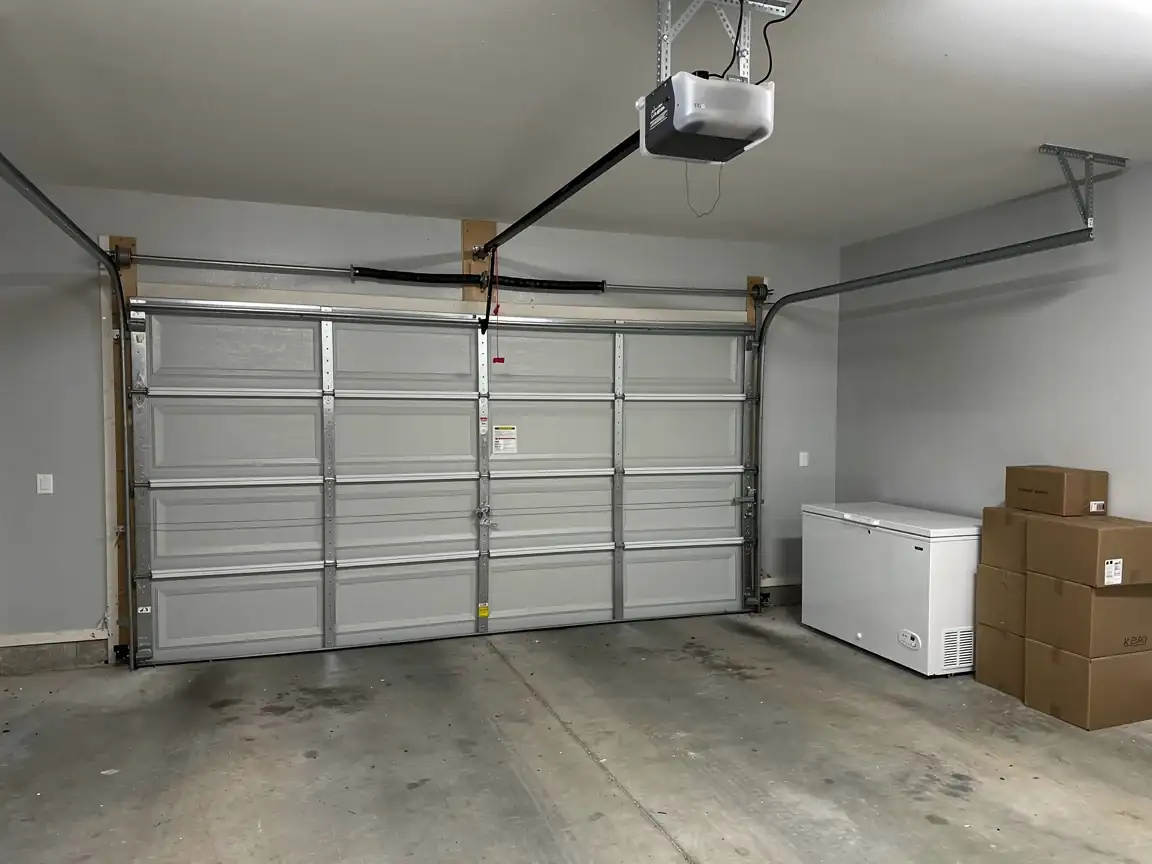
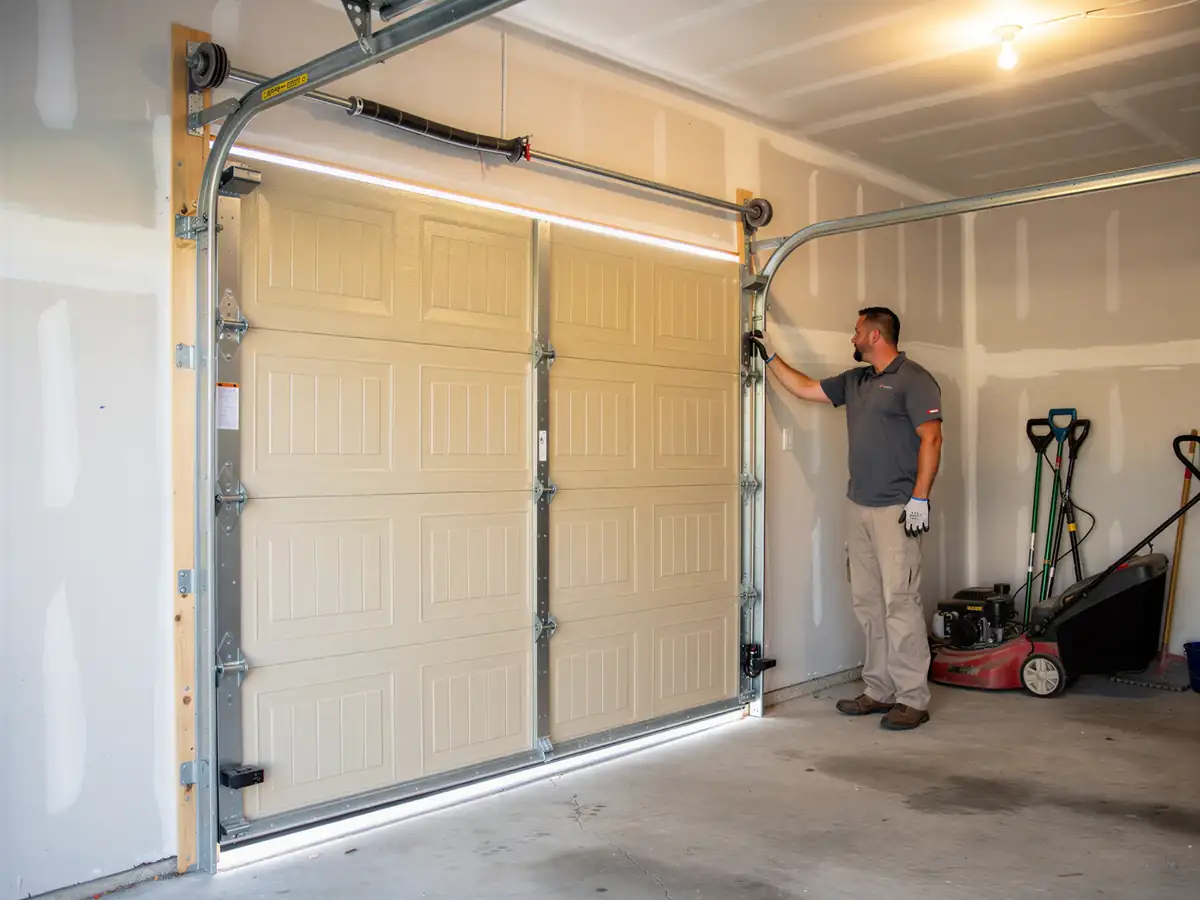
The door looks crooked in the opening, hanging lower on one side, or it's stopped moving altogether with one panel visibly out of the track. Sometimes it's quieter than that: a grinding or popping sound right before the door stalls, which usually means a roller just jumped the rail rather than the whole door coming down.\n\nOn a lot of the original 1978-era track still in place around Caledonia, you'll see the rail itself bowed outward a few inches above where the bottom roller sits - that's the spot that takes the hit when a car taps the door or a kid runs a bike into the garage. If the cable looks slack on one side while the other side is still under tension, that's a different problem layered on top, and it means the door is being held up unevenly, which is not safe to force closed by hand.
The Cost of This Job
We don't post a number here because off-track jobs split into two very different repairs and the price follows which one you've got. A door that's simply derailed - rollers out of the channel, track otherwise straight - is a realignment and a roller check, and it's the smaller job. A door with a bent track section is a different repair, because bent galvanized rail doesn't bend back true; the section gets replaced.\n\nGiven that Caledonia is mostly original 1976-2000-era housing stock, the far more common call here is the second kind - a rail that's been slowly working loose and finally kinked, not a fresh impact. We'll tell you on site which one you're looking at before any work starts, and if the bracket or jamb wood underneath has also gone soft from forty-plus years of exposure, that gets flagged too rather than papered over.
What the Fix Involves
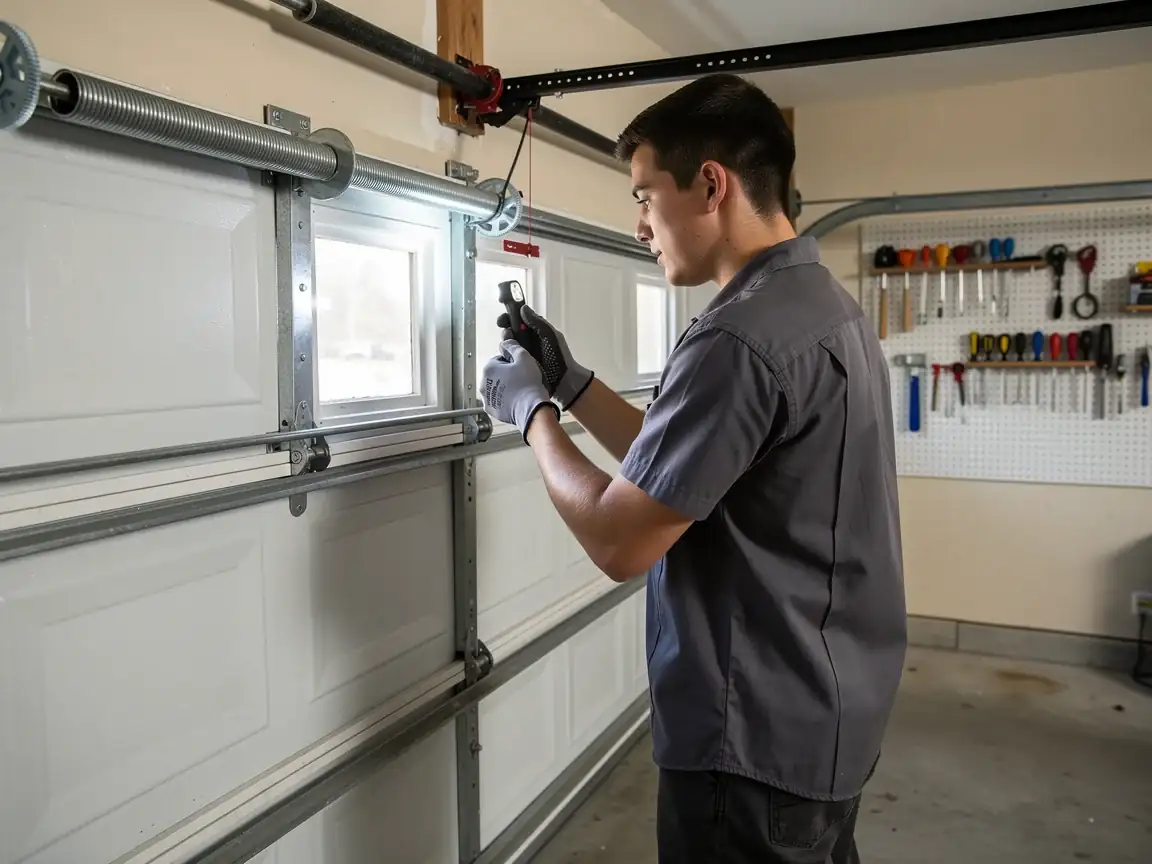
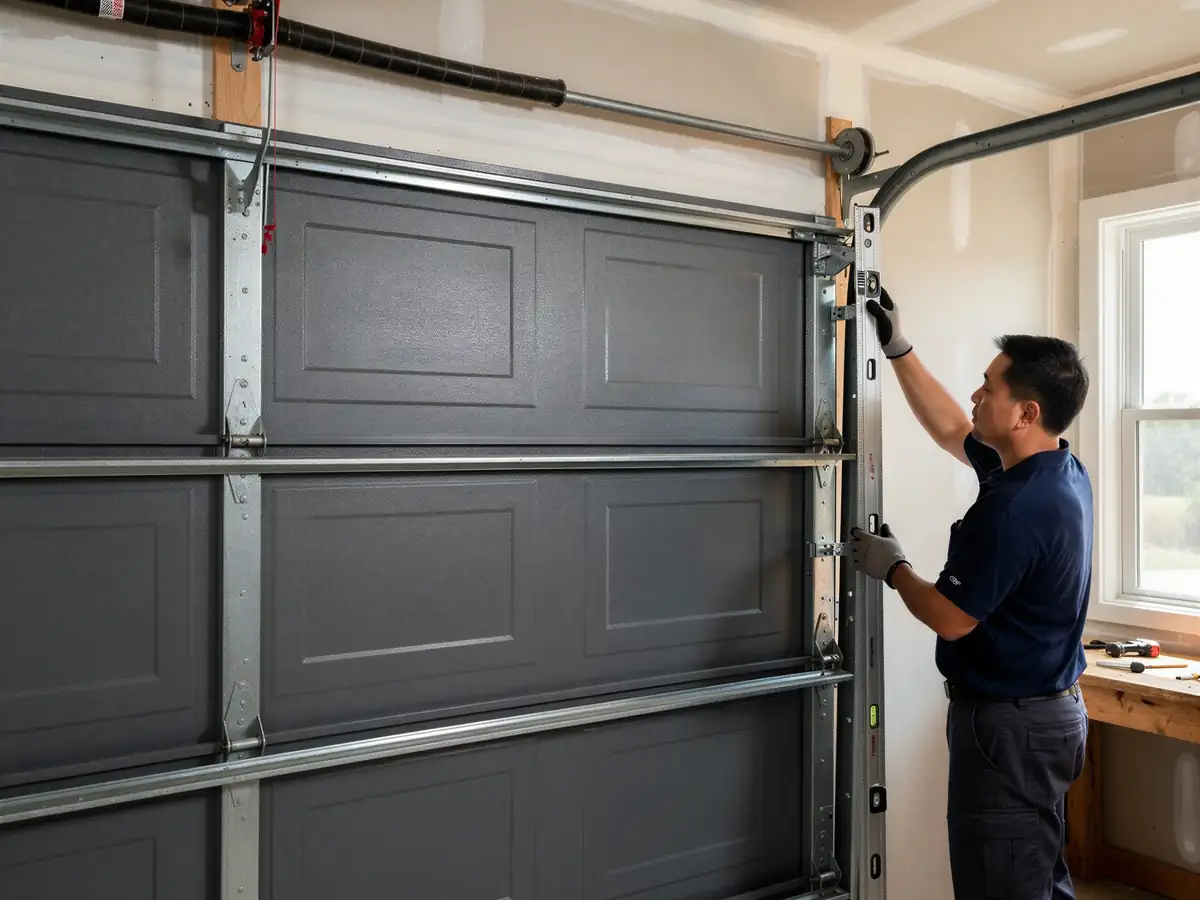
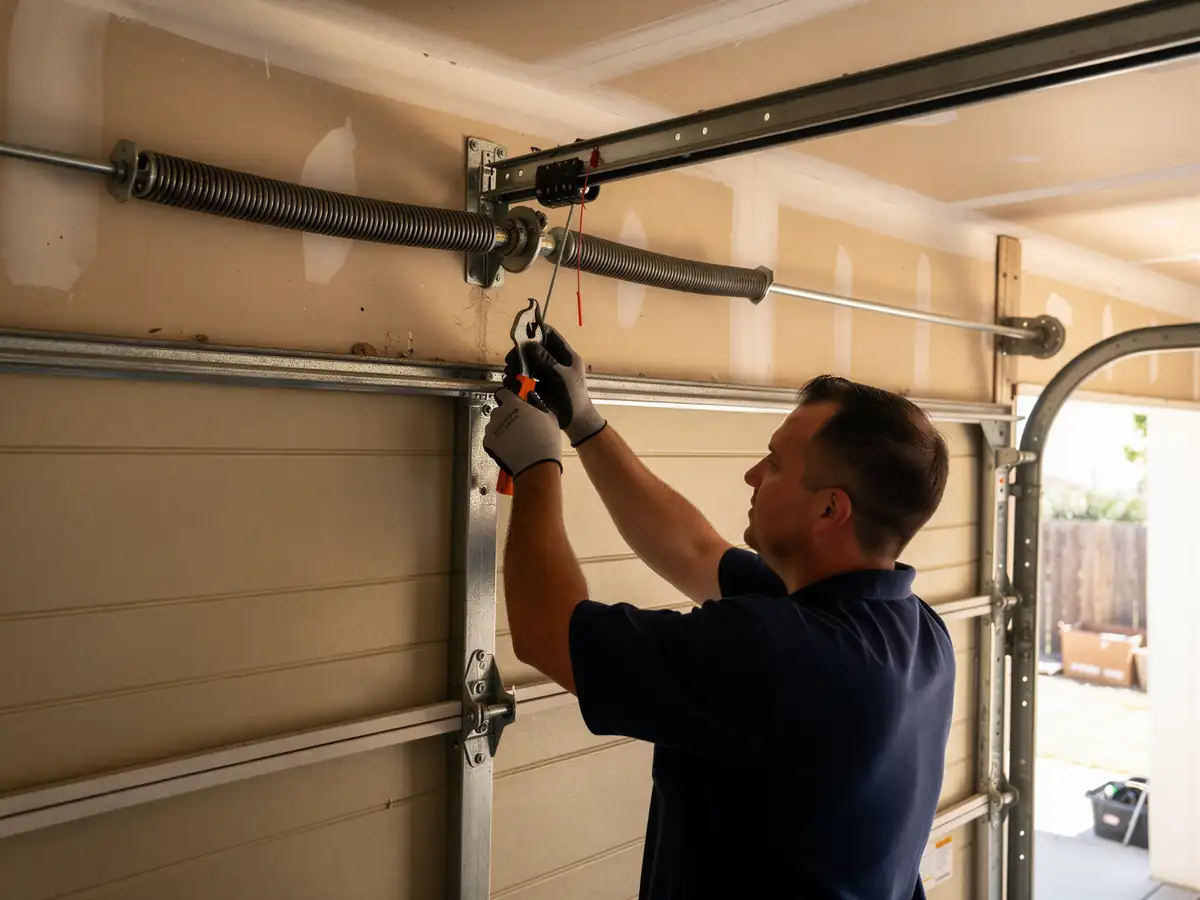
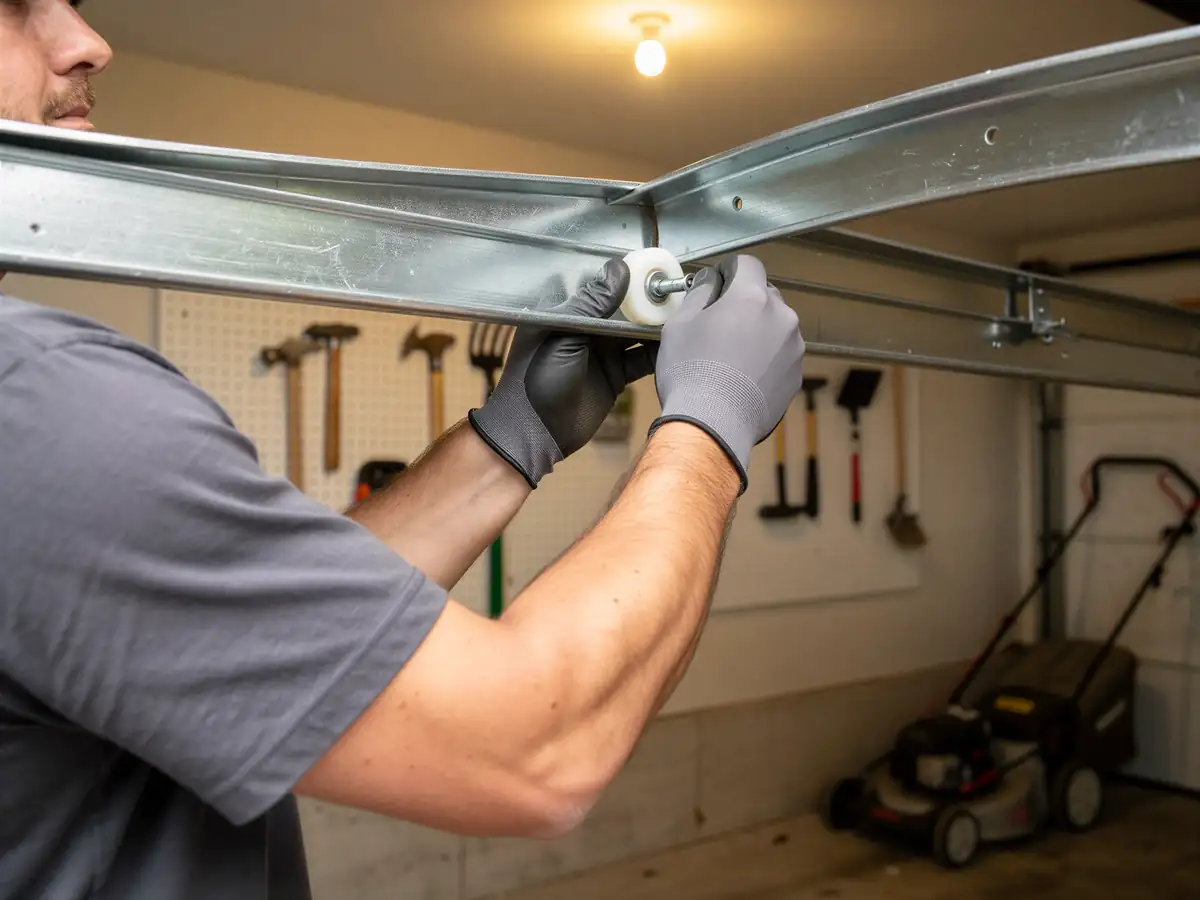
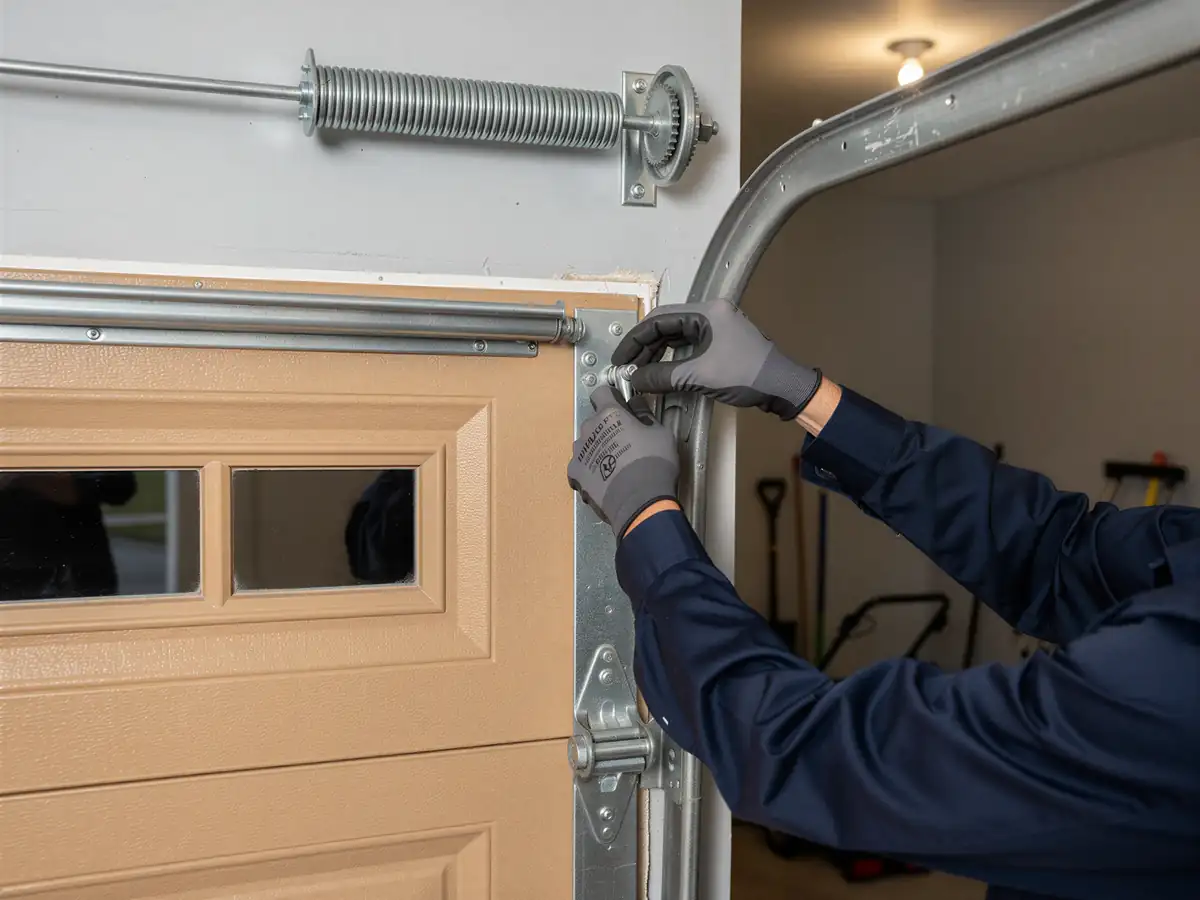
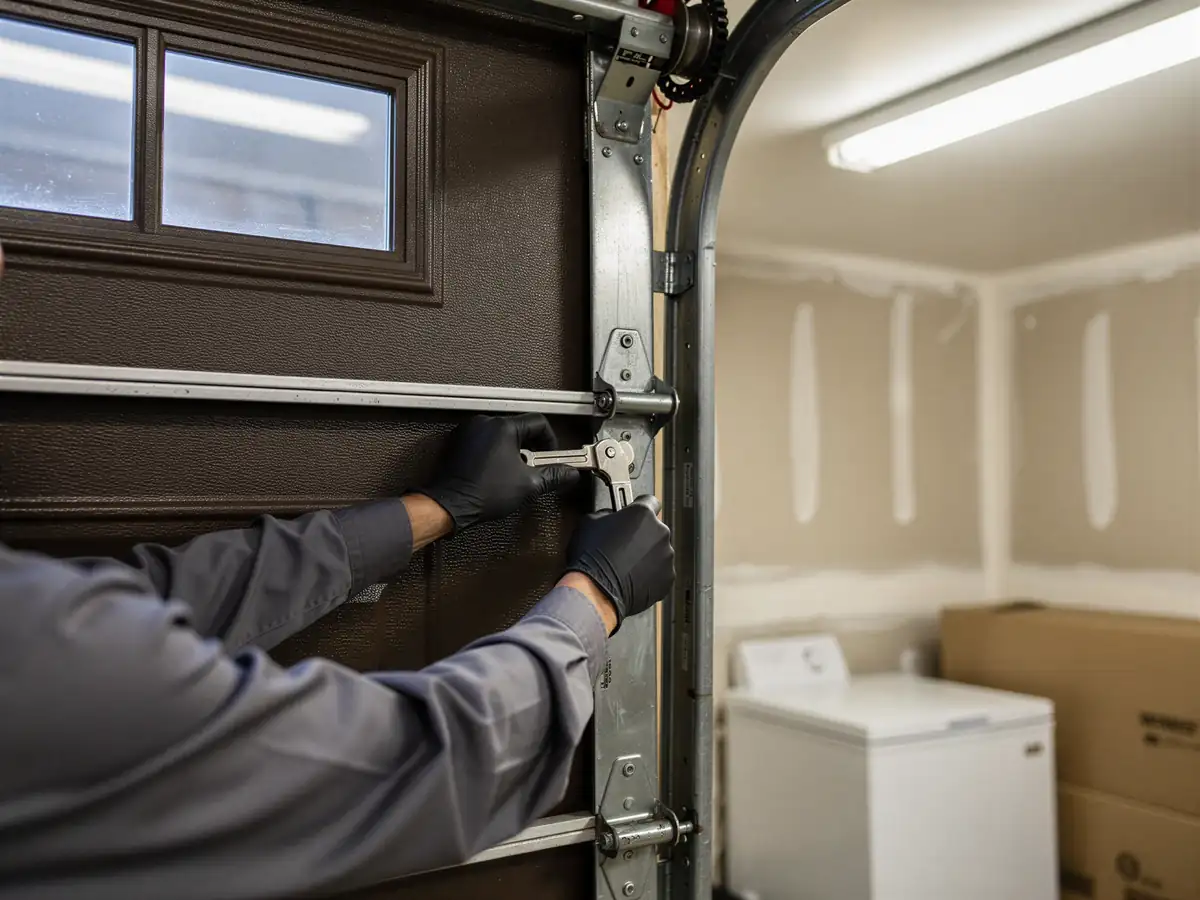
First step is always getting the door safely off whatever's holding it crooked - if the cable's under tension on one side, that gets released before anyone touches the track. Then the rail gets checked for true along its full length, not just at the bend, because a kink in one spot often means the bracket a foot away has already started to pull loose too.\n\nOn the original-era track common across this town, we're also checking roller wear while we're in there - galvanized track from the late 1970s wasn't built around the nylon rollers sold now, so if the rollers are the newer type on old rail, that mismatch is sometimes what caused the derailment in the first place. Brackets get re-anchored into solid jamb, not just re-driven into the same worn screw holes, which matters on a house pushing 45 years old.
The DIY Question
Reseating a roller that's barely off the rail, with the door otherwise sitting flat and no tension on the cables, is something a careful homeowner can sometimes do. Bending track back, re-anchoring a bracket, or doing anything while a spring-loaded cable is under load is not - a door that's off-track with the opener still engaged can drop without warning, and it's heavy enough to hurt someone.\n\nOur honest limitation: if the track is more than mildly bent, we're not going to recommend hammering it straight, even temporarily. On hardware this old, a field-bent rail almost always kinks again within weeks, and now you've paid for two visits instead of one. We'll replace the section instead of patching it, because on a door built around 1978, patching just moves the next failure a few months down the road.