Getting It Booked In
Franklin sits about 9 miles from our West Allis shop
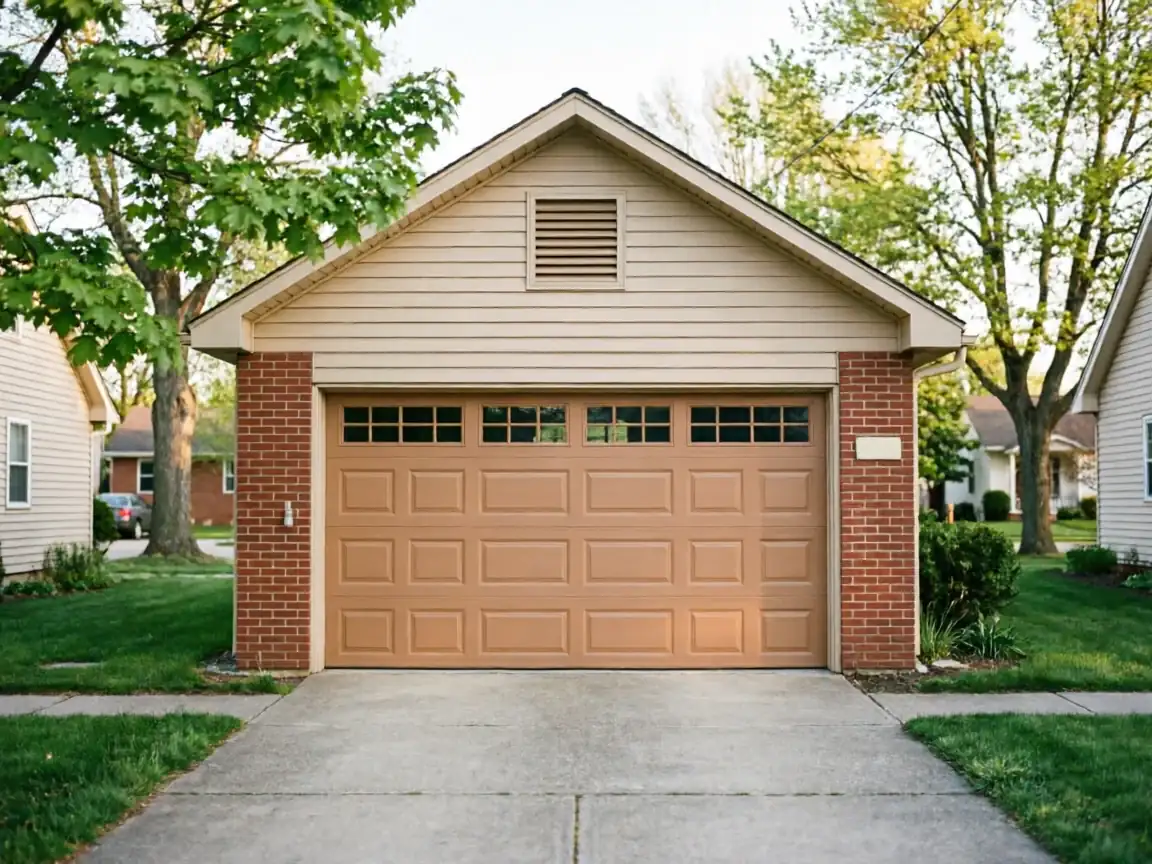
And the housing stock here runs noticeably newer than the rest of the area we cover. The median Franklin home was built around 1989, while the broader service area's median lands closer to 1976 across a build range of 1938 to 2000. That gap isn't trivia - a door installed in the late 80s or 90s came with different spring sizing, different track gauge, and openers built for a different generation of safety standards than the older stock we see closer to West Allis.
- 9 miles
We don't keep a branch in Franklin
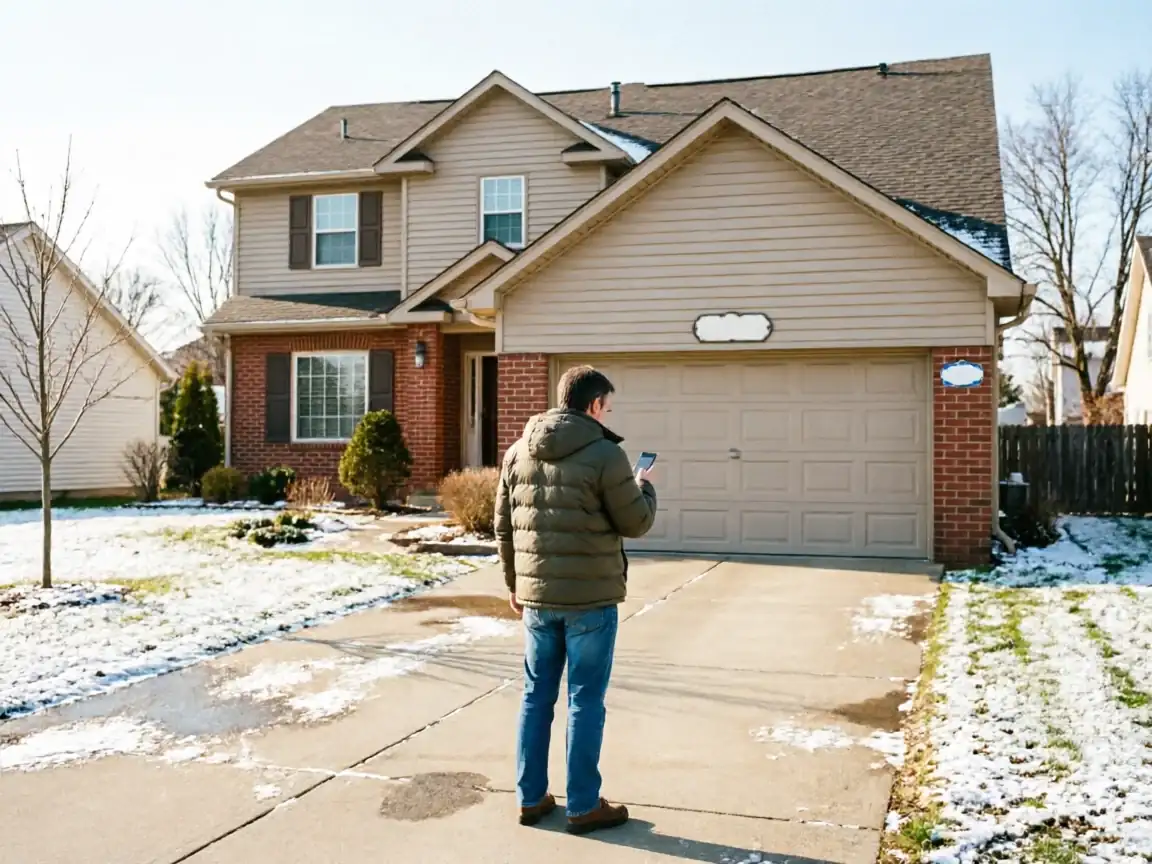
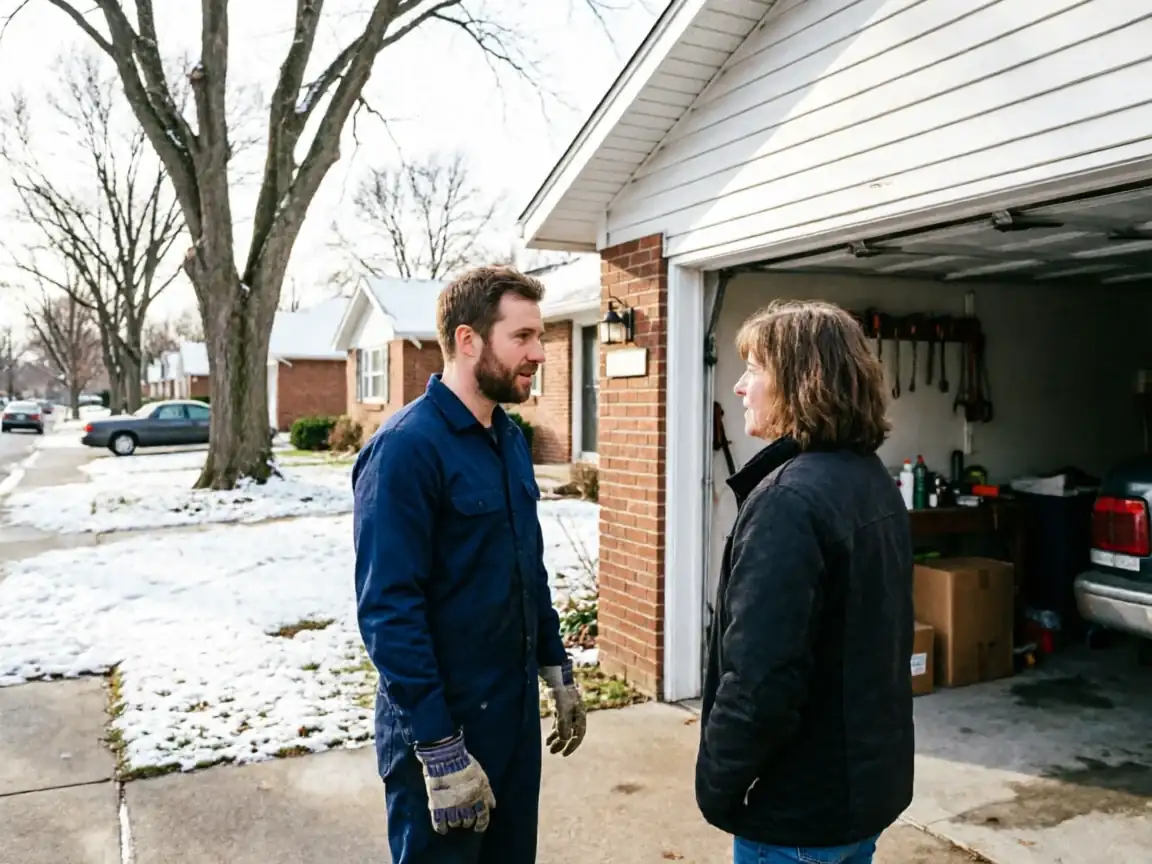
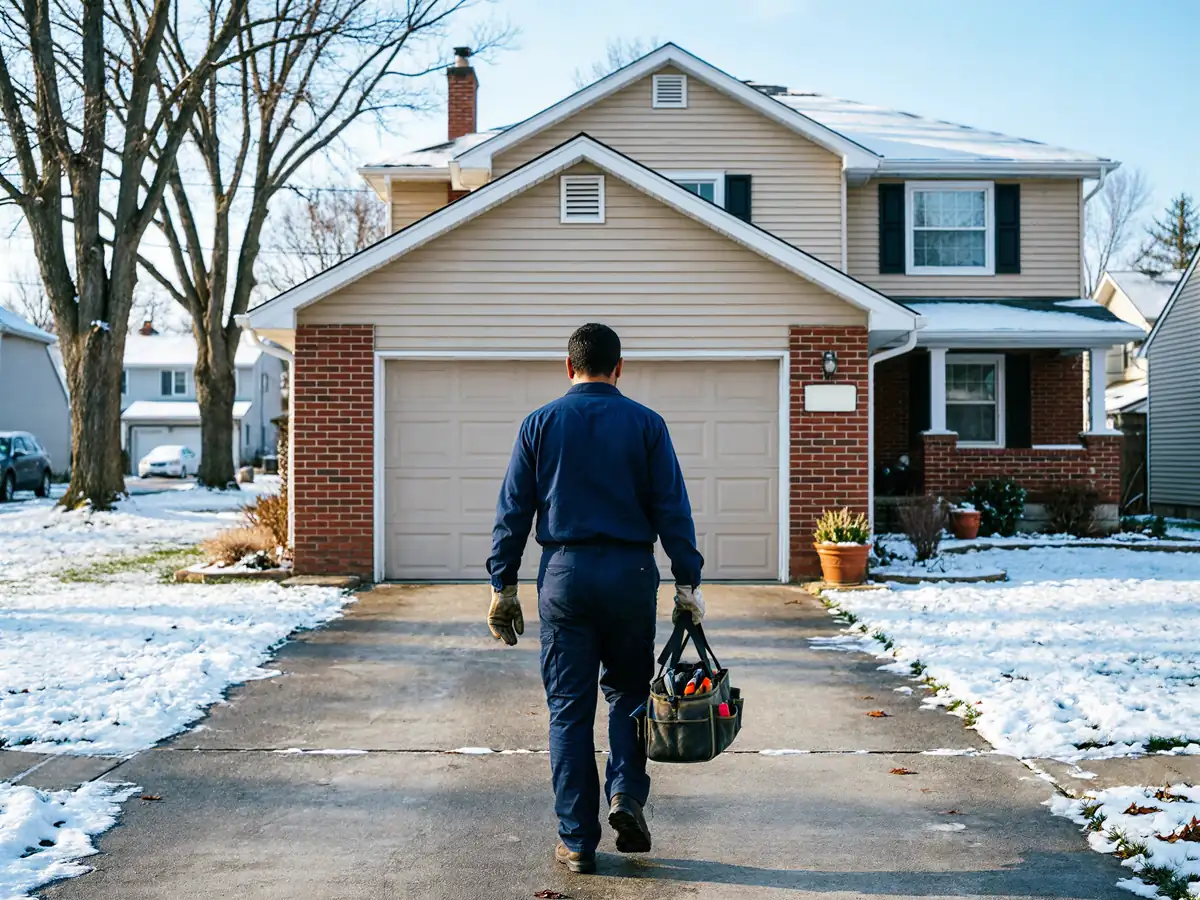
So every emergency call starts with a truck leaving West Allis. There's no way around that distance, and we won't pretend otherwise. What we can do is ask the right questions on the phone - door age, spring type, whether the opener grinds or just hums - so the truck that shows up has the right part on it instead of a second trip. Franklin's winters sit in the same cold-climate band as the rest of the region, and a dead spring on a frozen morning doesn't wait for a convenient afternoon.
The DIY Question
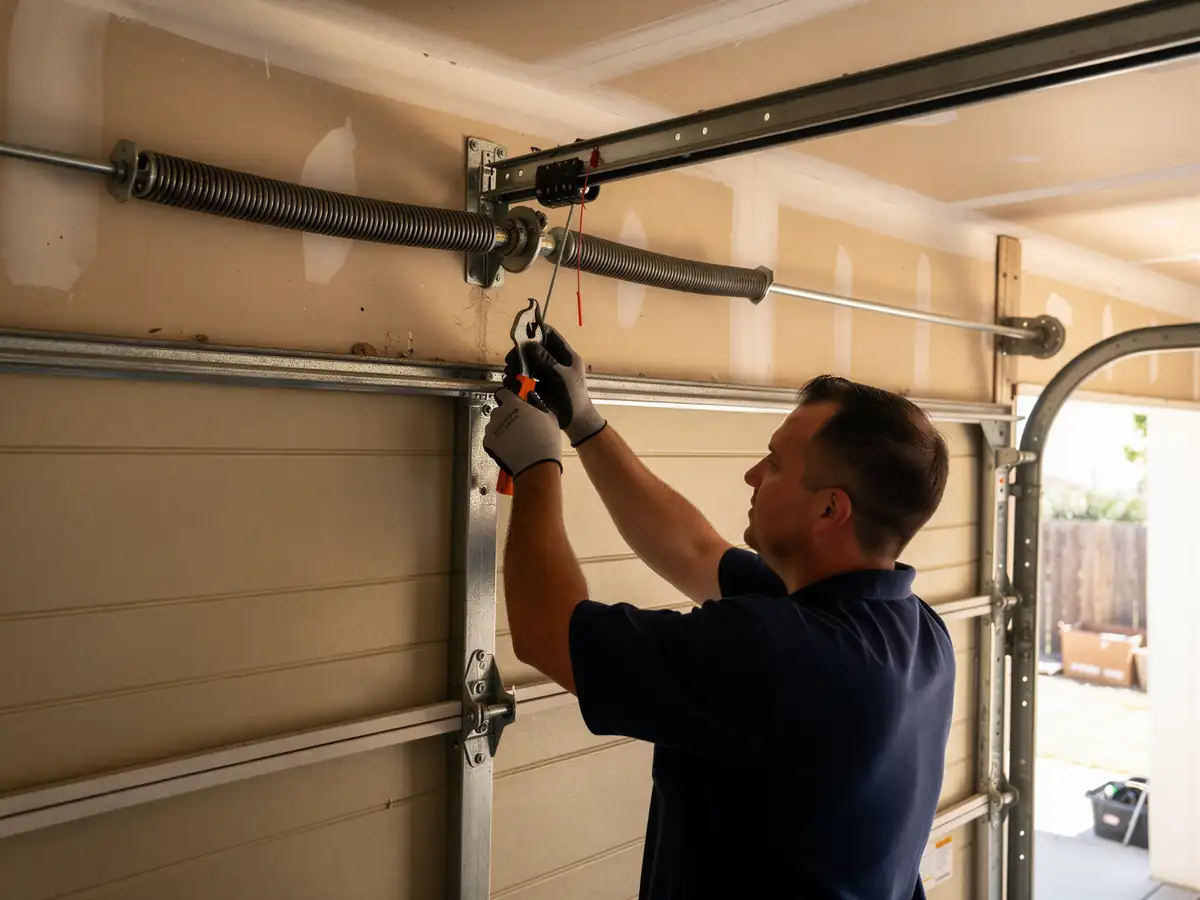
A broken torsion spring on a double door is not a safe weekend project, no matter how new the house is. The spring is under enough tension to do real damage, and Franklin's newer-build doors (median year 1989) commonly run steel panels on torsion systems rated for heavier loads than the older wood doors found elsewhere in the service area - meaning more stored energy, not less.
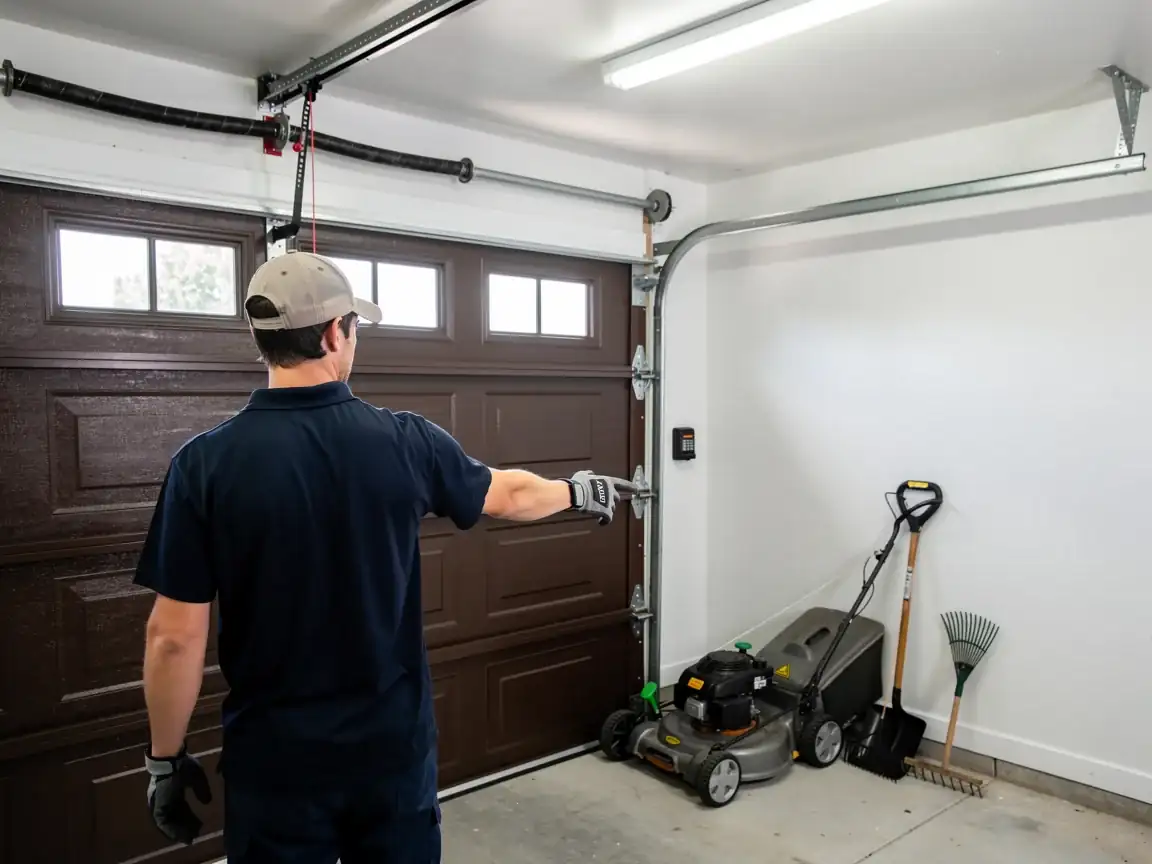
Where a homeowner can safely help themselves: checking the track for visible obstruction, confirming the opener's wall switch has power, or testing the photo-eye sensors for dust or misalignment. Those take five minutes and no tools. Anything involving the spring, the cable drums, or pulling the door off its tracks is a call, not a project.
Honest limitation: if your door needs a spring size or opener part that isn't common stock - which happens more often with houses built in the 90s than with the older, more standardized stock elsewhere - we may need a day to source it. We'd rather tell you that up front than promise a same-visit fix we can't deliver.
What the Fix Involves
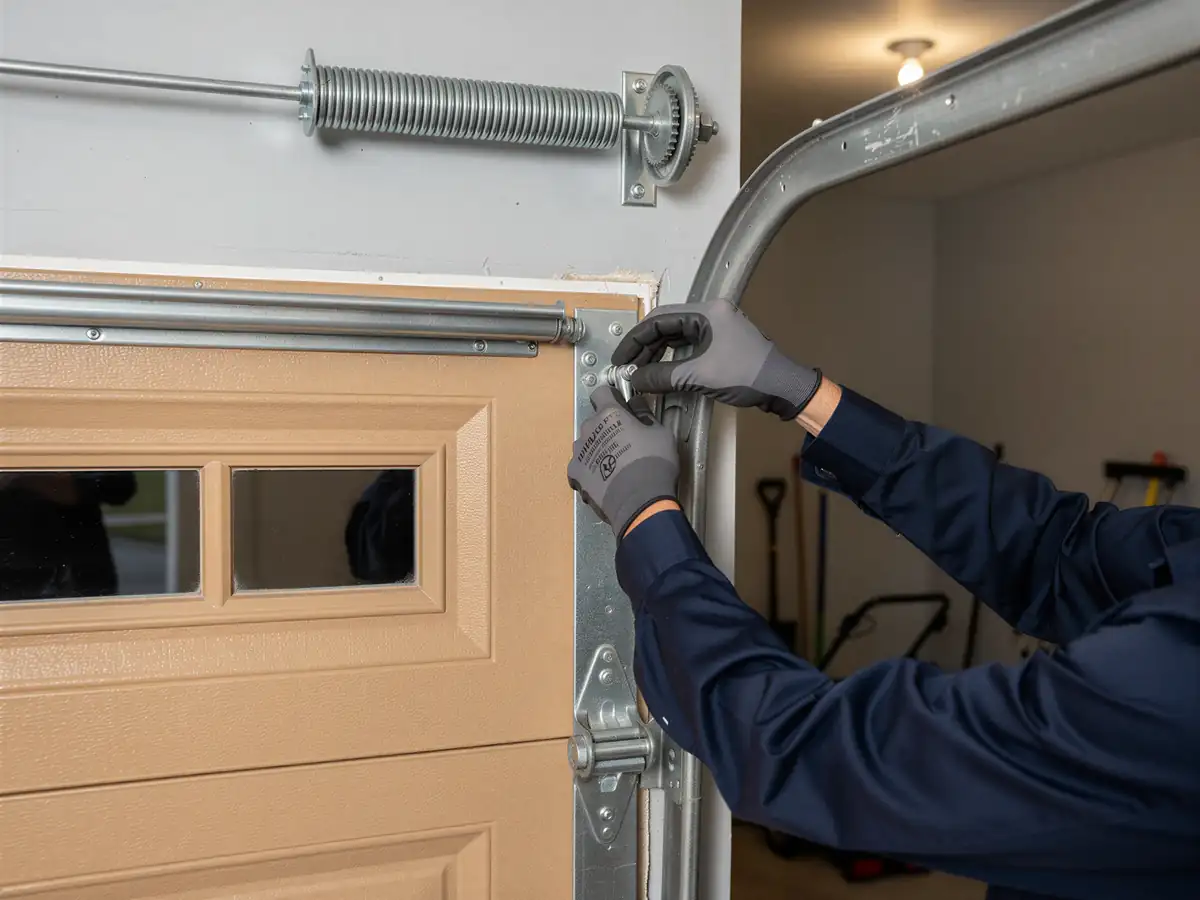
On a typical emergency call to a Franklin home, we're usually looking at one of three things: a snapped torsion spring, a cable that's jumped its drum, or an opener that's stripped its gear after years of normal use. Because the median home here was built around 1989, we're more often dealing with factory-standard torsion hardware and chain-drive or screw-drive openers from that era rather than the older extension-spring setups common in houses built before 1970.
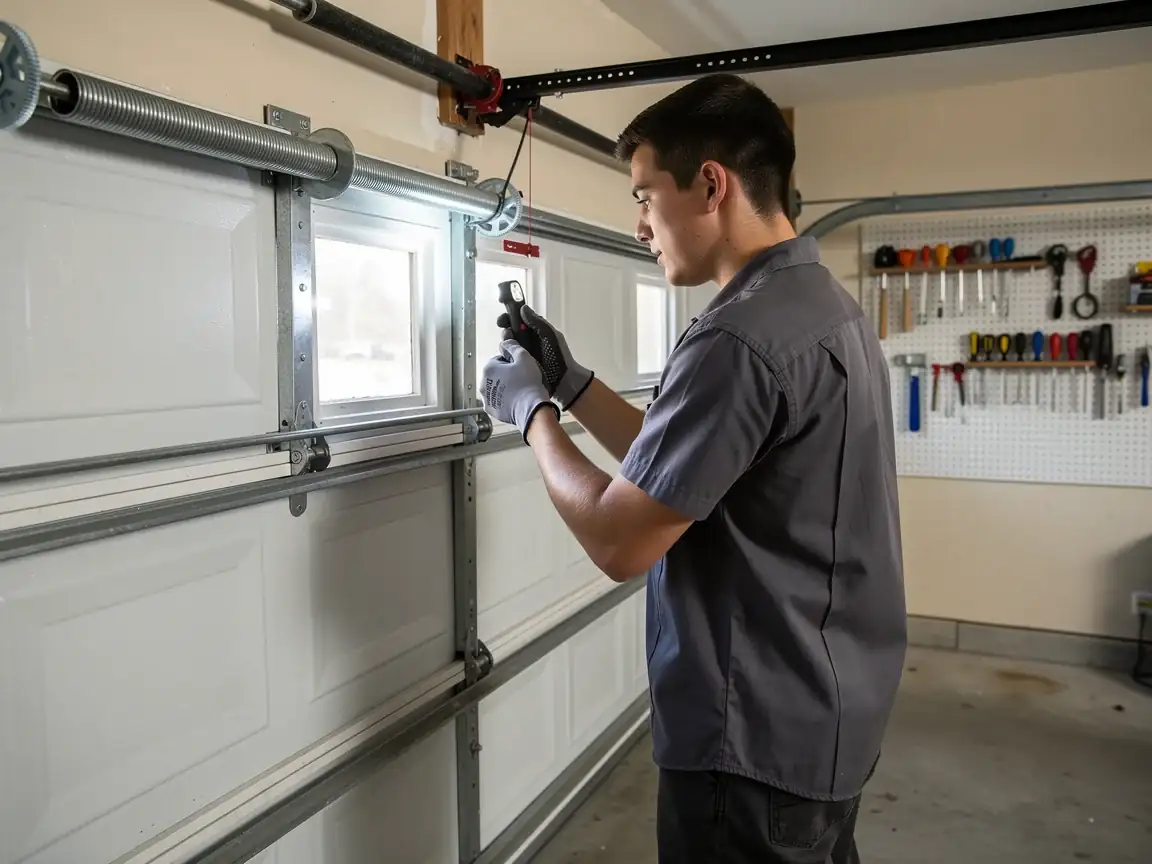
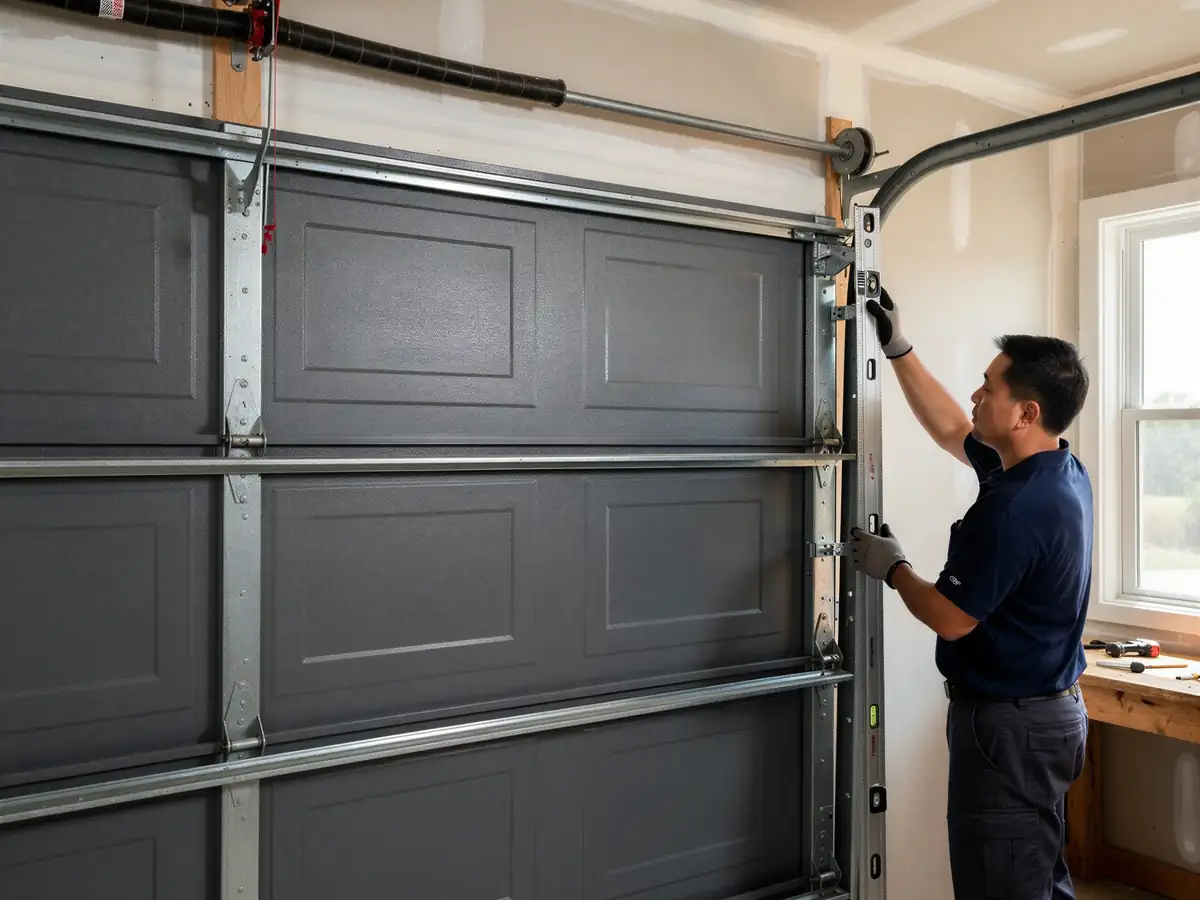
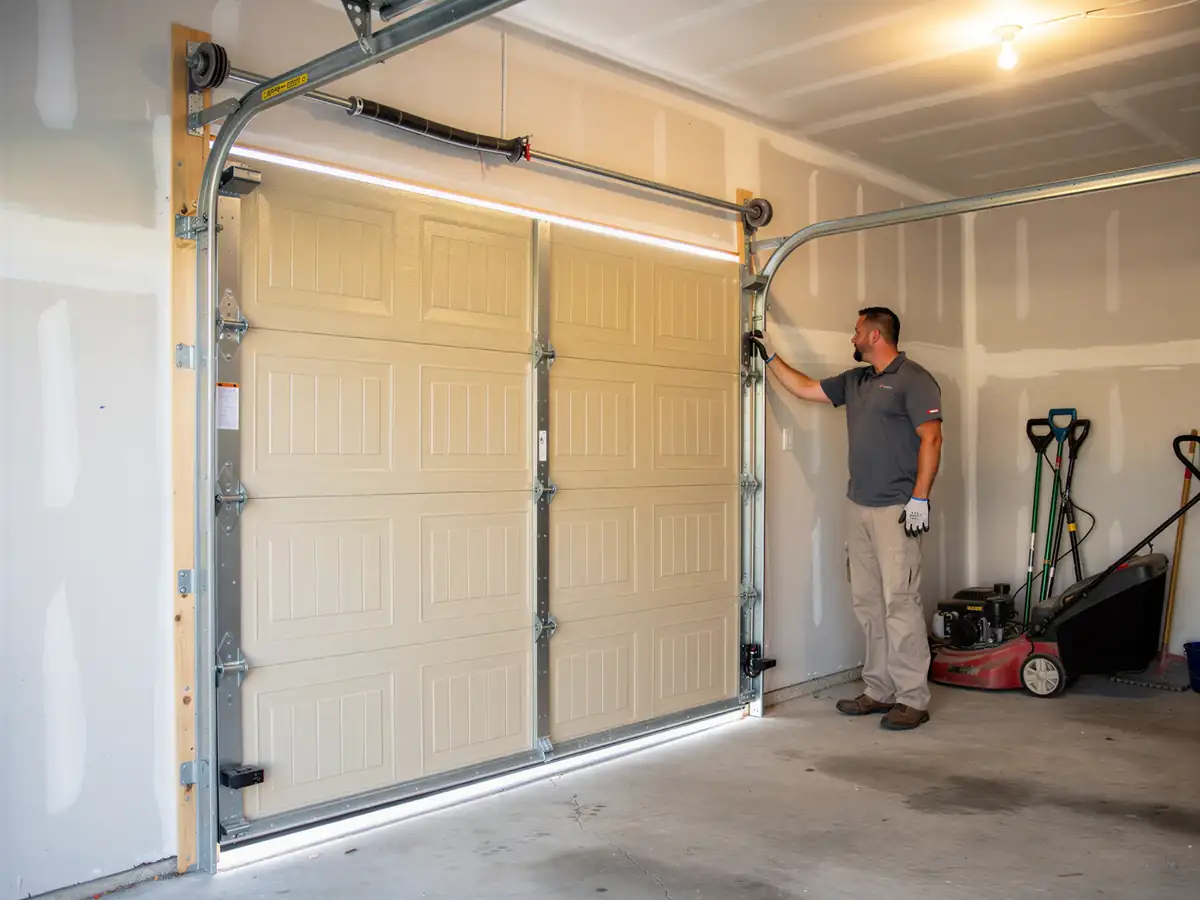
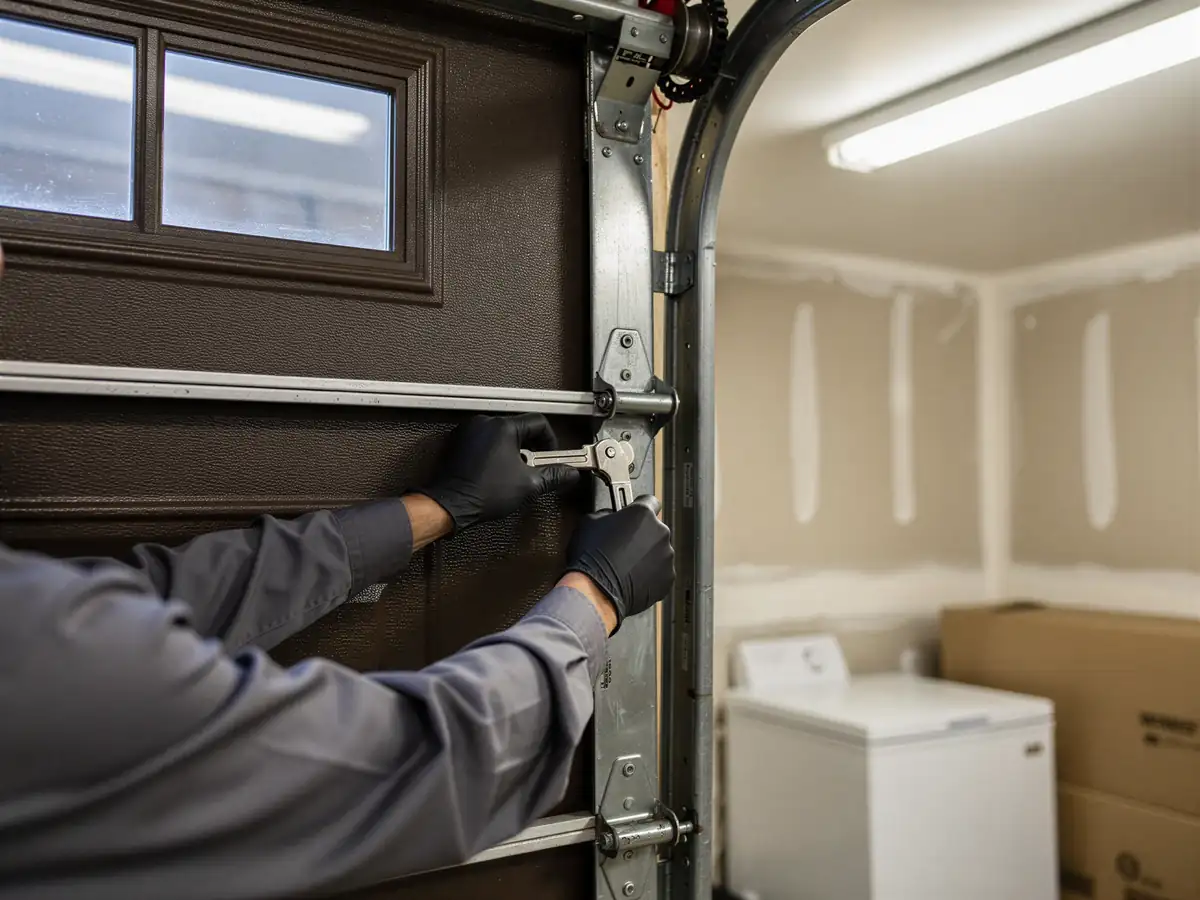
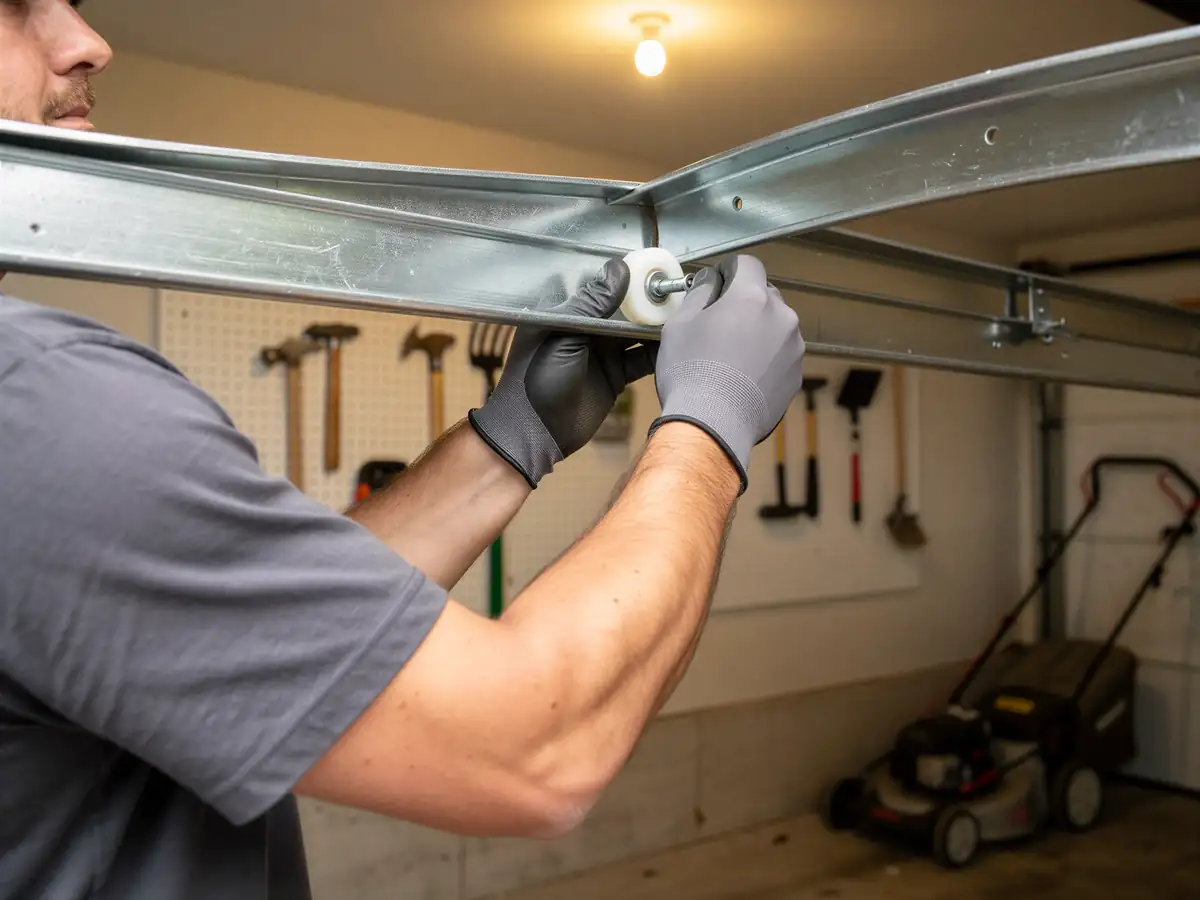
The actual repair starts with isolating the door from the opener - pulling the release cord so nothing moves under power while we work. From there it's a matter of matching spring wire size and length to the door weight, re-seating or replacing cable, and testing travel limits once everything's back under tension. On newer steel doors we also check the bottom bracket and rollers, since factory-grade hardware from the late 80s and 90s is starting to show its age across the board.
How Long It Takes
Most single-spring or cable repairs on a Franklin home run under two hours once the truck is on site
Assuming the part is one we carry. Opener repairs vary more - a stripped gear kit is quick, but a full board failure on an older unit can take longer to diagnose than to fix.
We can't quote an exact window for how fast we can get a truck to Franklin on any given day
Call volume and the 9-mile drive from West Allis both factor in, and we're not going to invent a number we can't back up. What we can tell you is that once we're there, the newer, more uniform hardware found in Franklin's 1989-median housing stock generally means a more predictable repair than the mixed-era doors we see in older parts of the service area.