What Can Go Wrong
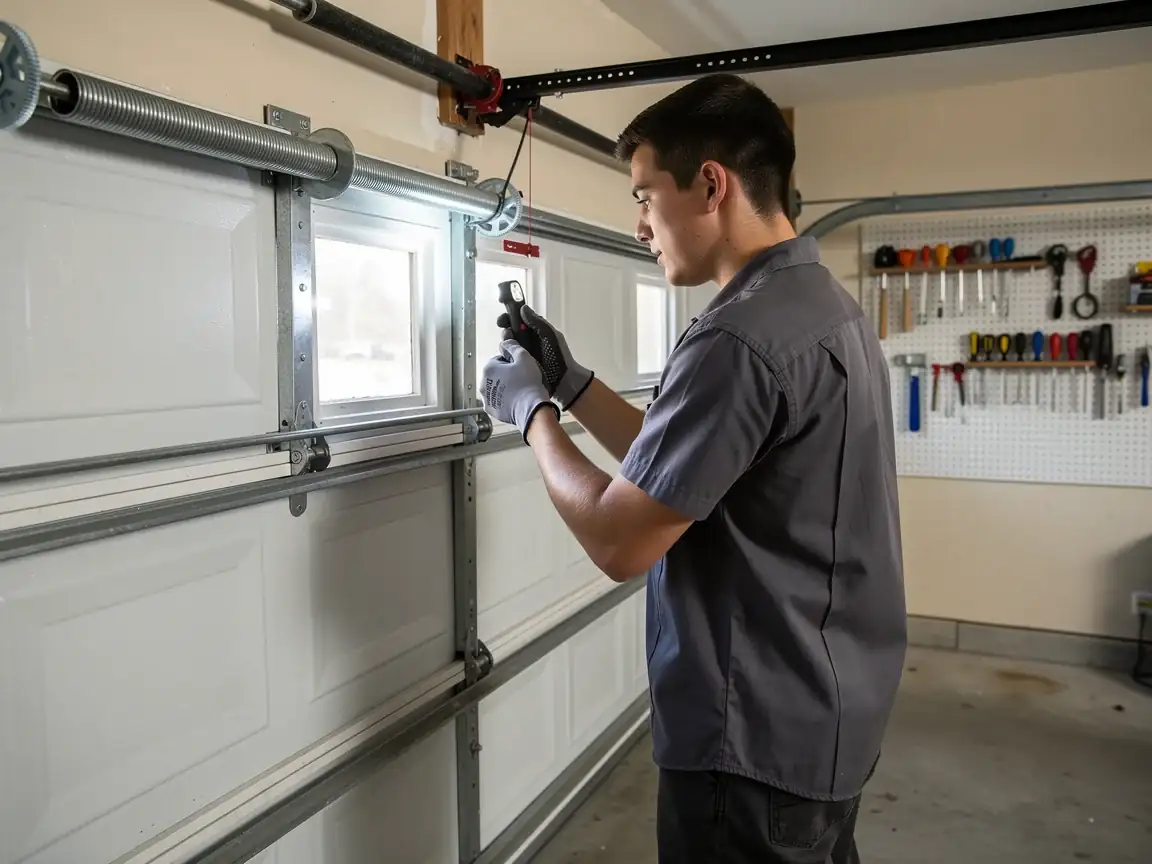
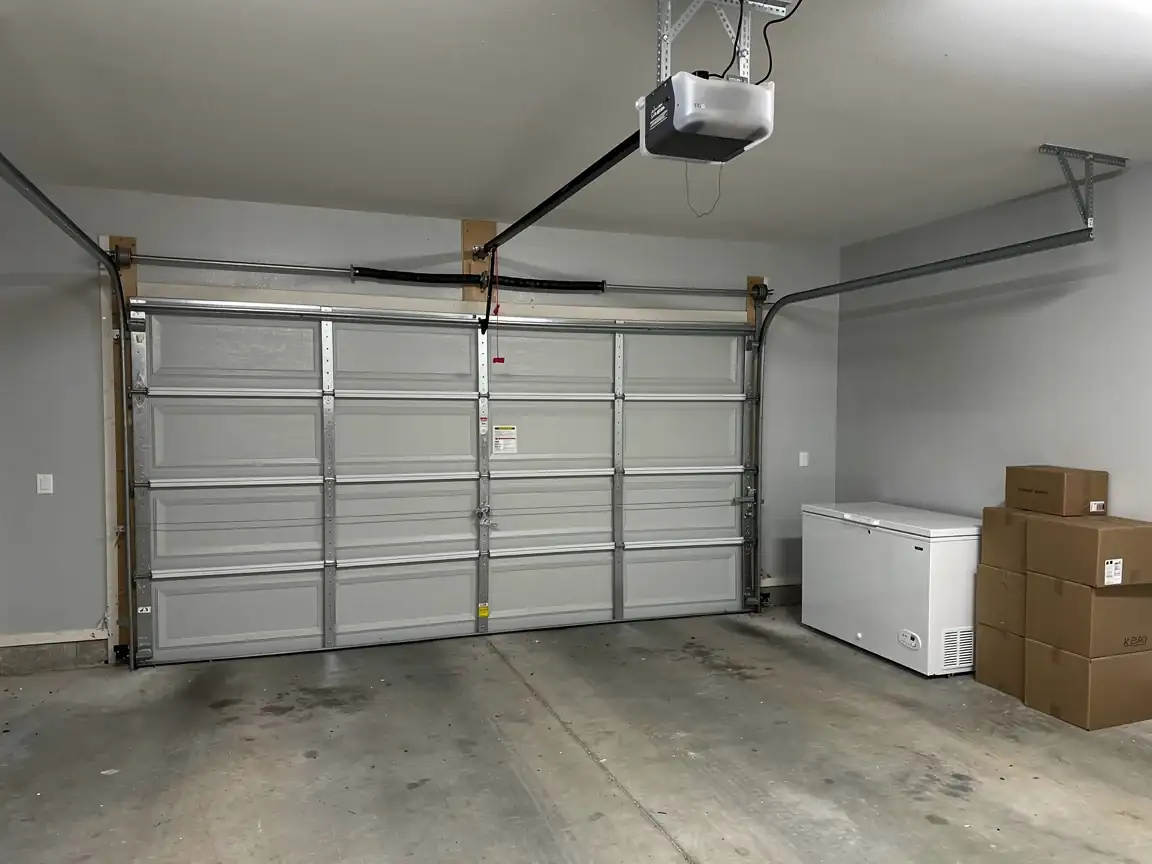
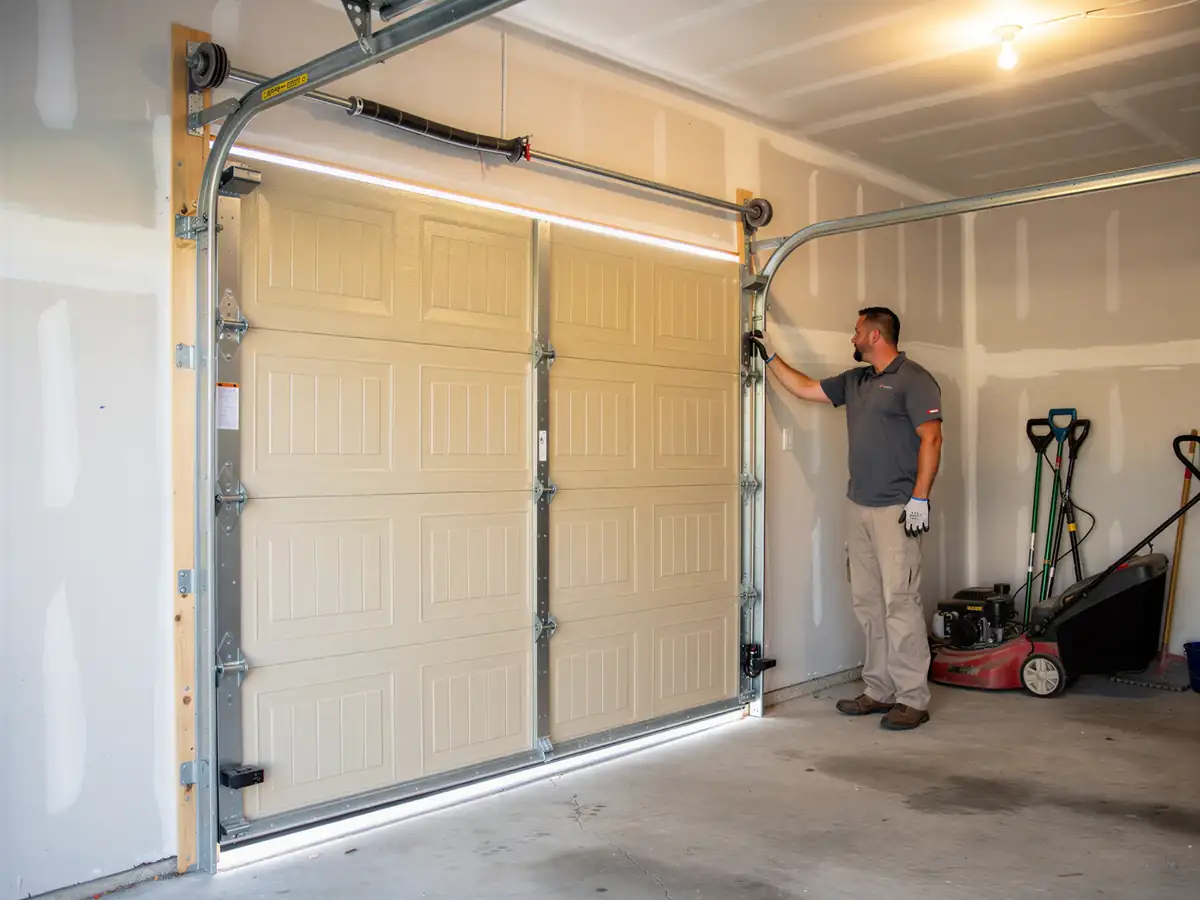
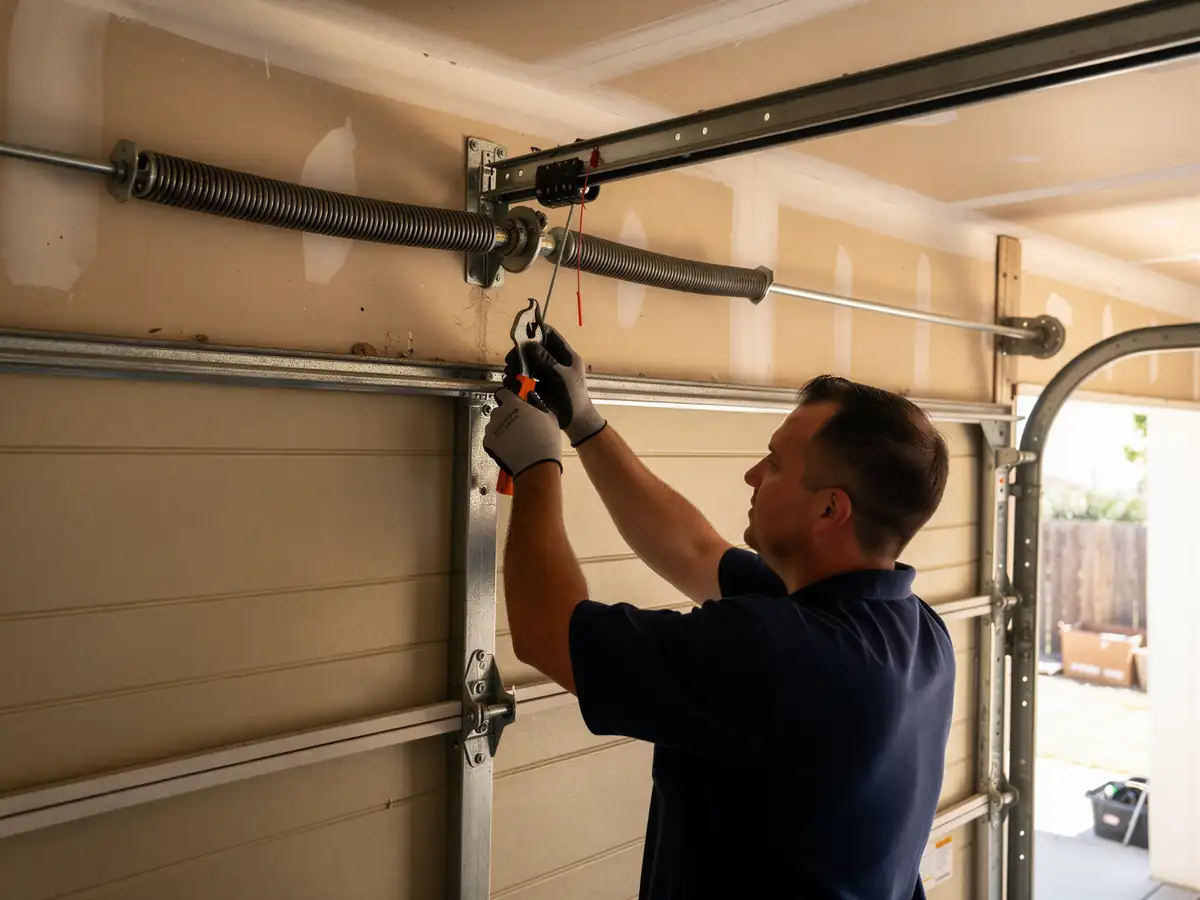
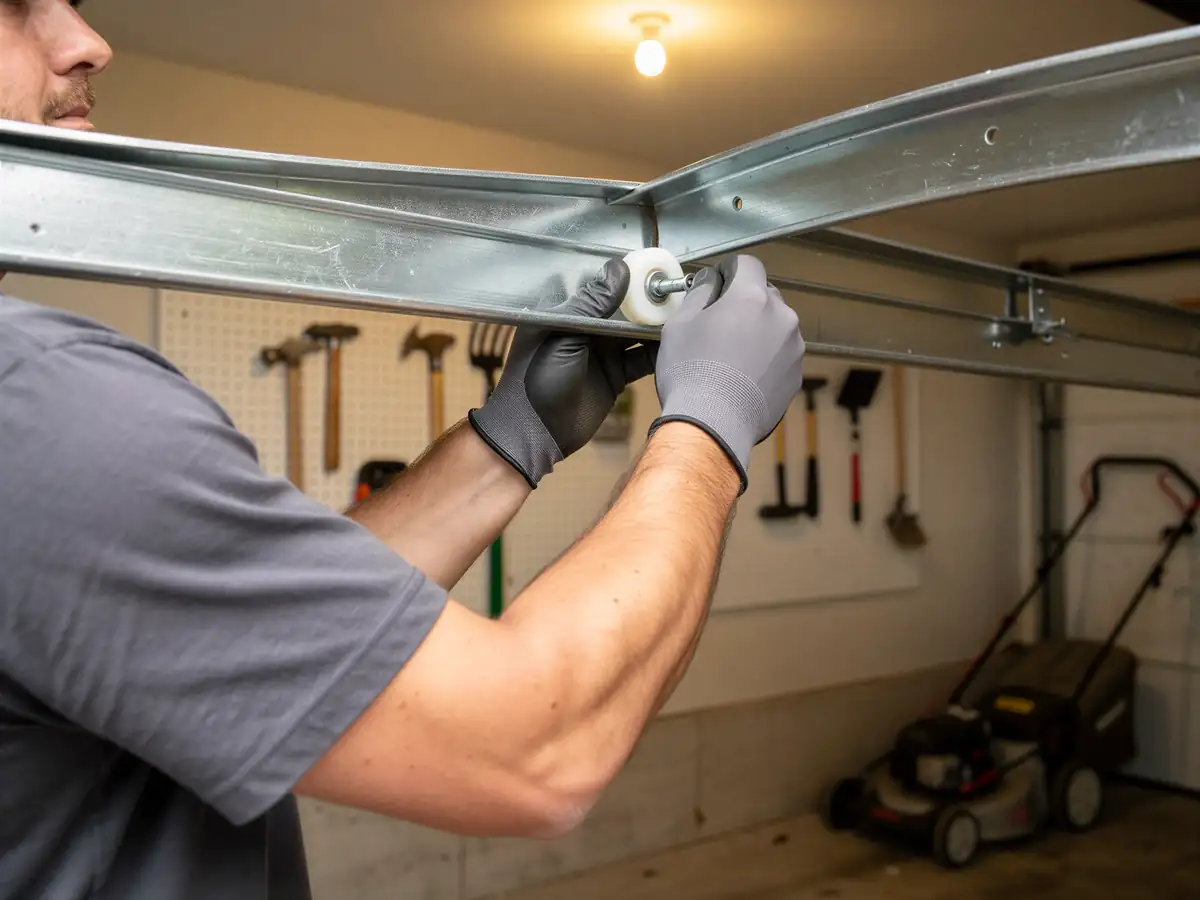
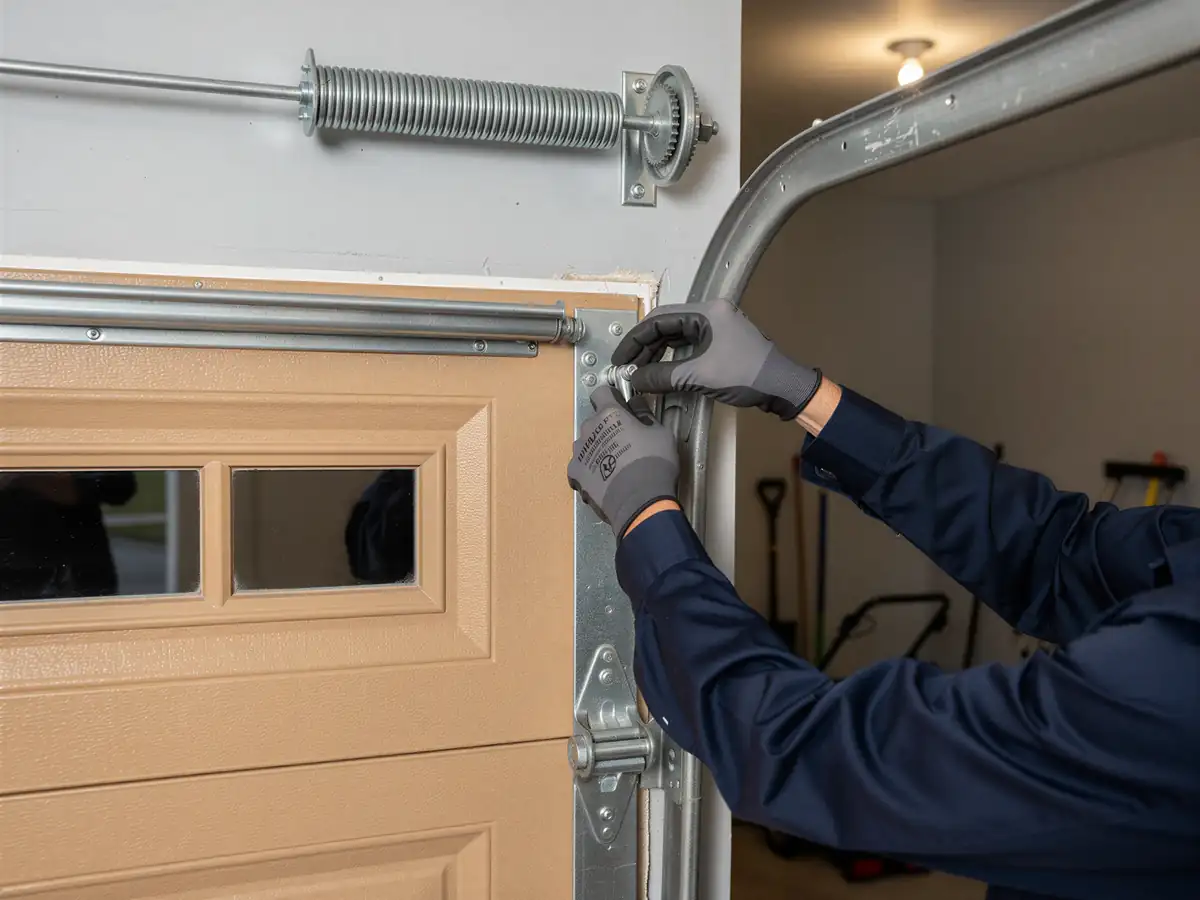
Houses here cluster around a 1987 build year, a full decade newer than the 1976 median across the rest of the service area, so the springs and track hardware you'll find are torsion-era, not the older extension-spring setups common on much of West Allis's pre-1970s stock. That's a meaningfully different repair. Torsion springs wind under tension on a shaft above the door and fail with a loud bang, usually leaving the door stuck shut and heavy as a car hood. Extension springs, by contrast, stretch along the horizontal tracks and tend to fail with a cable snap rather than a shaft break. On a door this age, the opener is also more likely to be a chain or belt-drive unit with a gear-and-sprocket assembly that wears out, rather than the older mechanical drives that show up on much older houses. The winters here fall in the cold-severe band, and cold still does what cold does - it stiffens torsion springs and dries out nylon rollers regardless of the door's age. But in Muskego's newer housing stock the galvanized hardware typically holds up longer before it needs replacing than it does on an older door that's already seen forty-plus winters.
What You Are Seeing
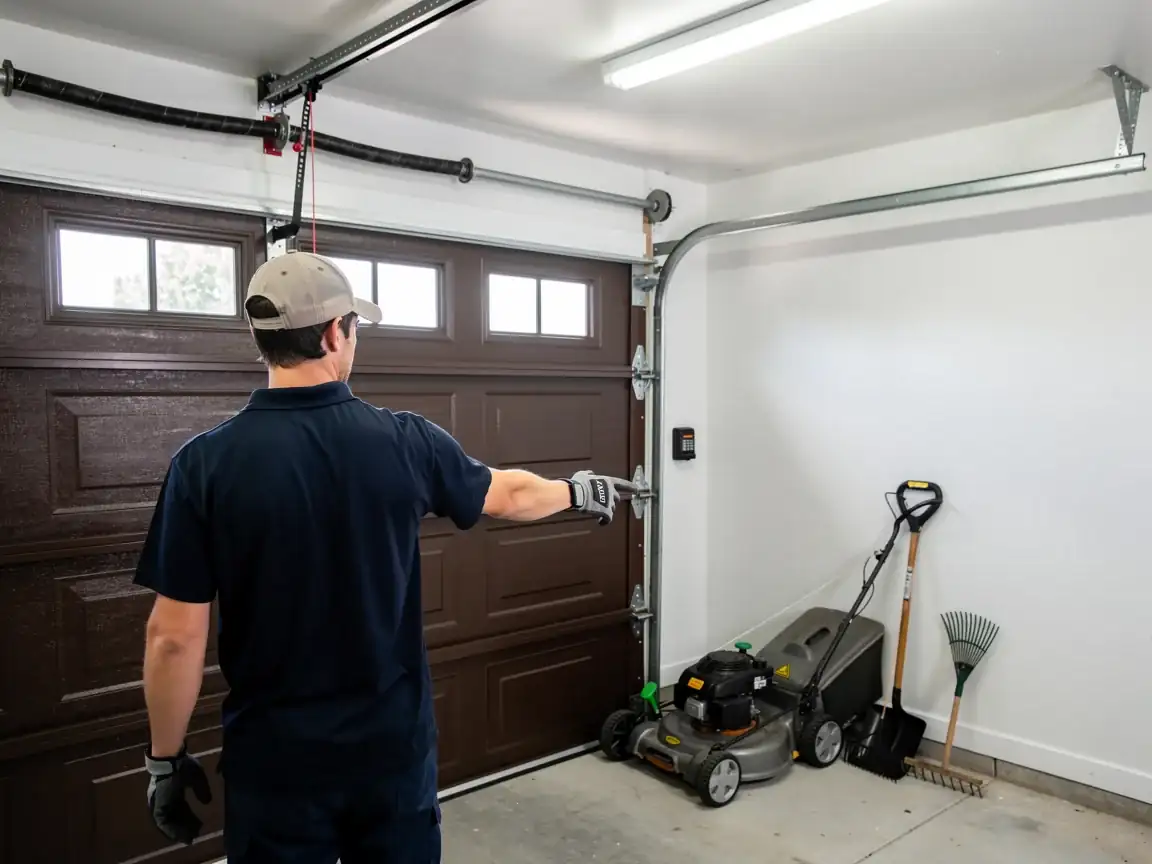
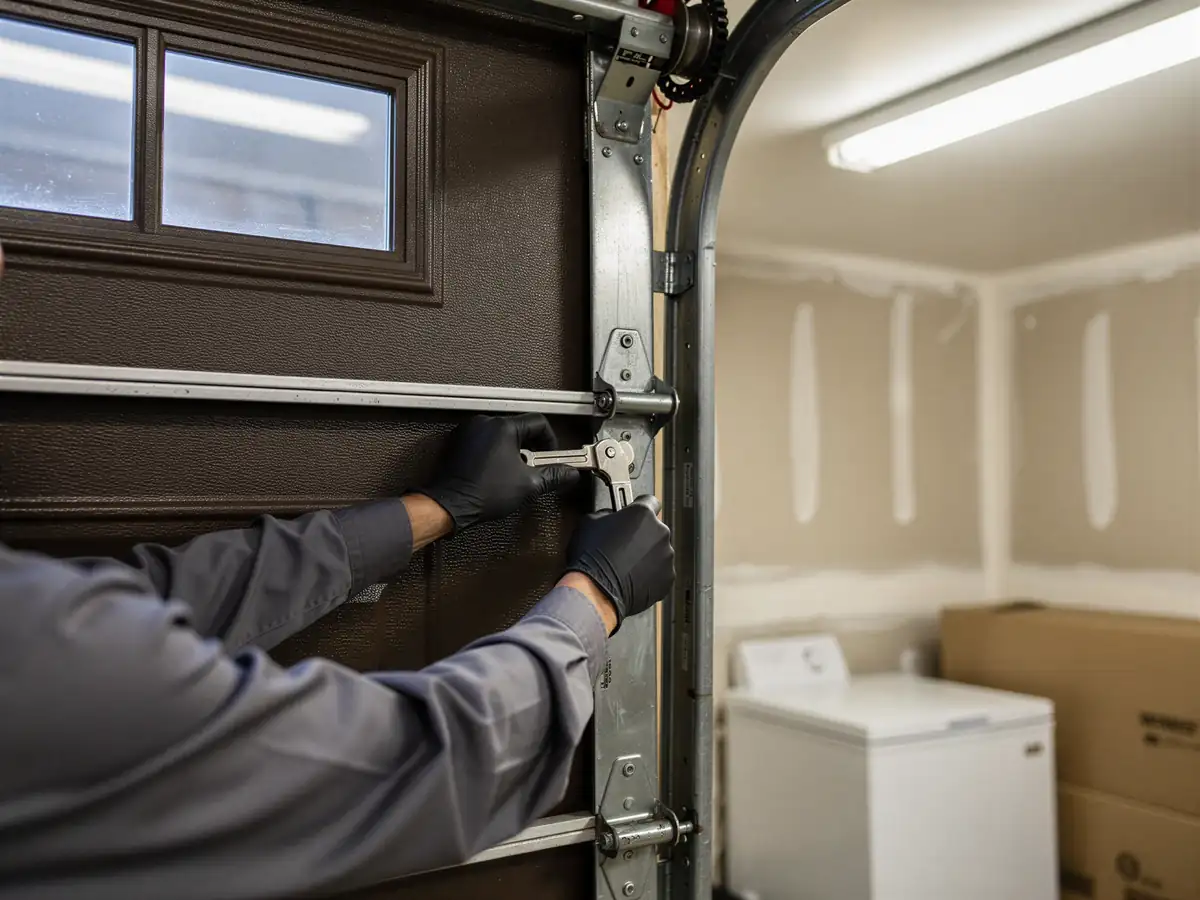
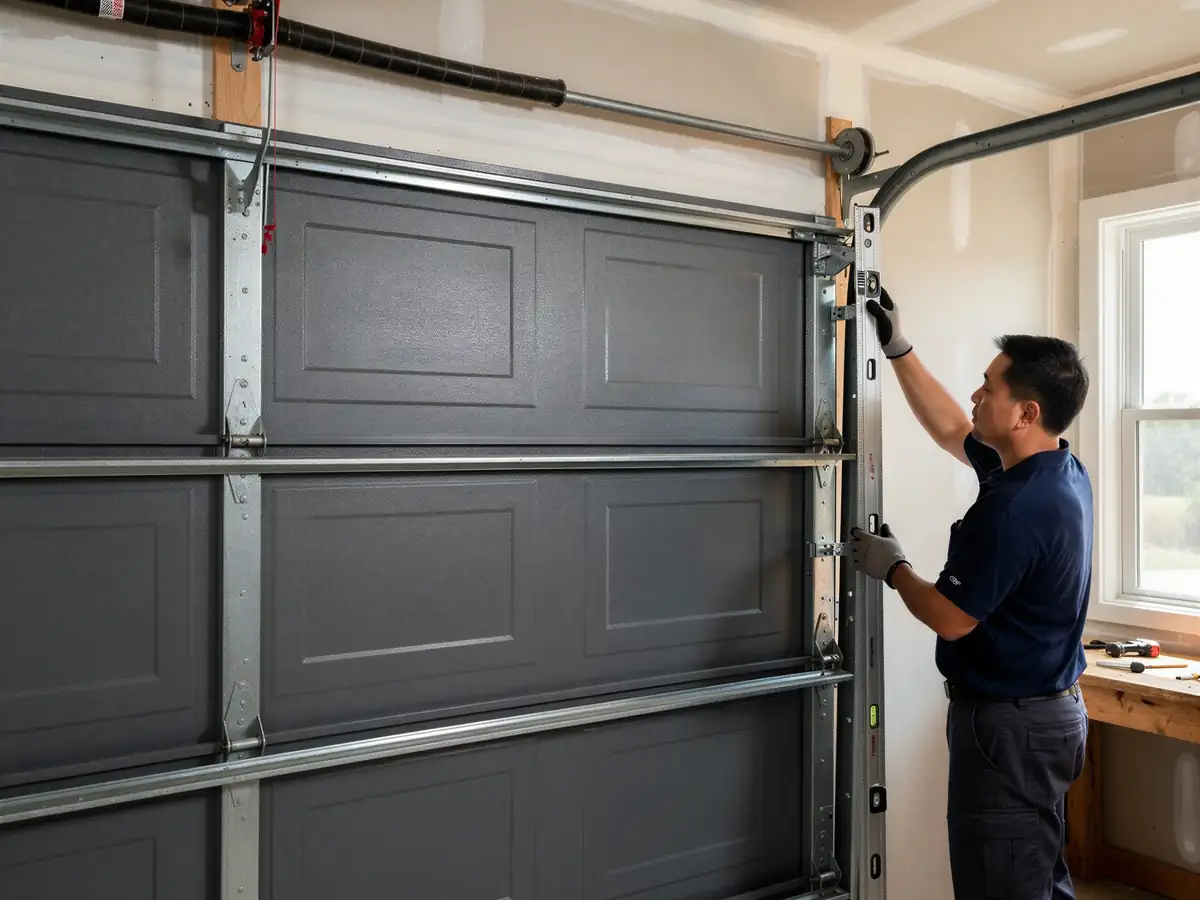
A torsion spring failure on a door this age usually looks the same way every time: the door won't lift, or it lifts a few inches and stalls, and there's often a visible gap in the coil on the shaft above the opening. If the opener runs but the door doesn't move, that's almost always the spring, not the motor - the motor isn't built to lift a spring-less door and it knows it, so it strains or reverses. A cable that's starting to fray shows as one side of the door hanging lower than the other, or the door racking sideways as it travels. On a late-1980s or 1990s door, you might also see the roller tracks pulling away from the frame where the brackets have loosened over decades of use - not a dramatic failure, but one that makes the door rattle and bind. If the opener itself is the issue, listen for a motor that hums without moving the door, or a remote that works only from a few feet away - both point to a worn gear set or a failing circuit board rather than anything wrong with the door panel.