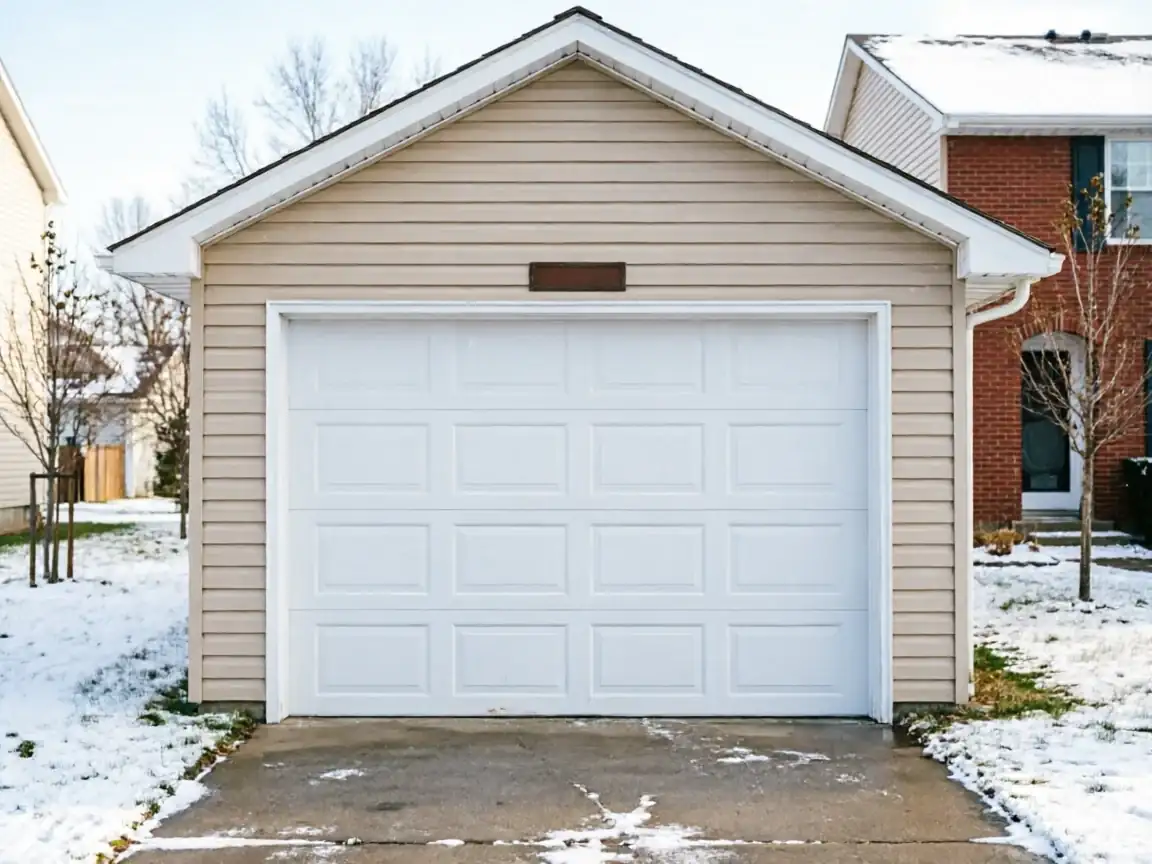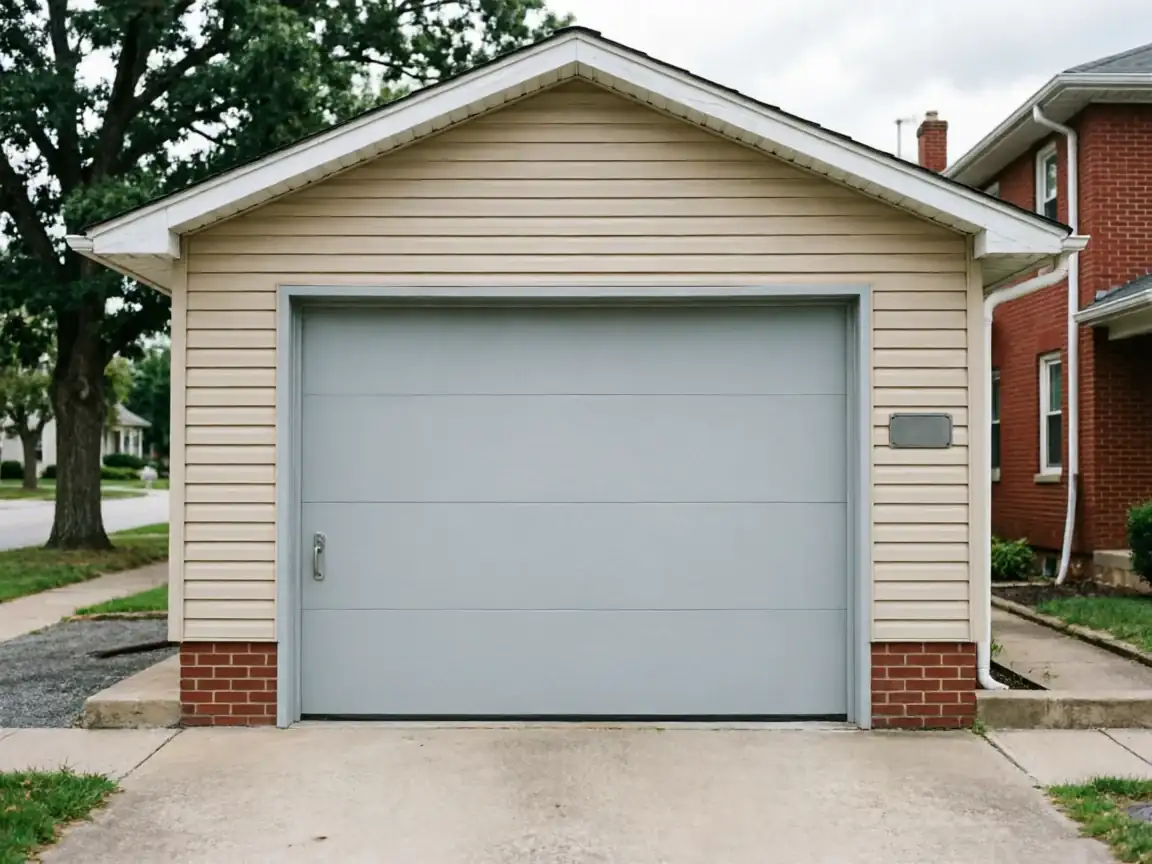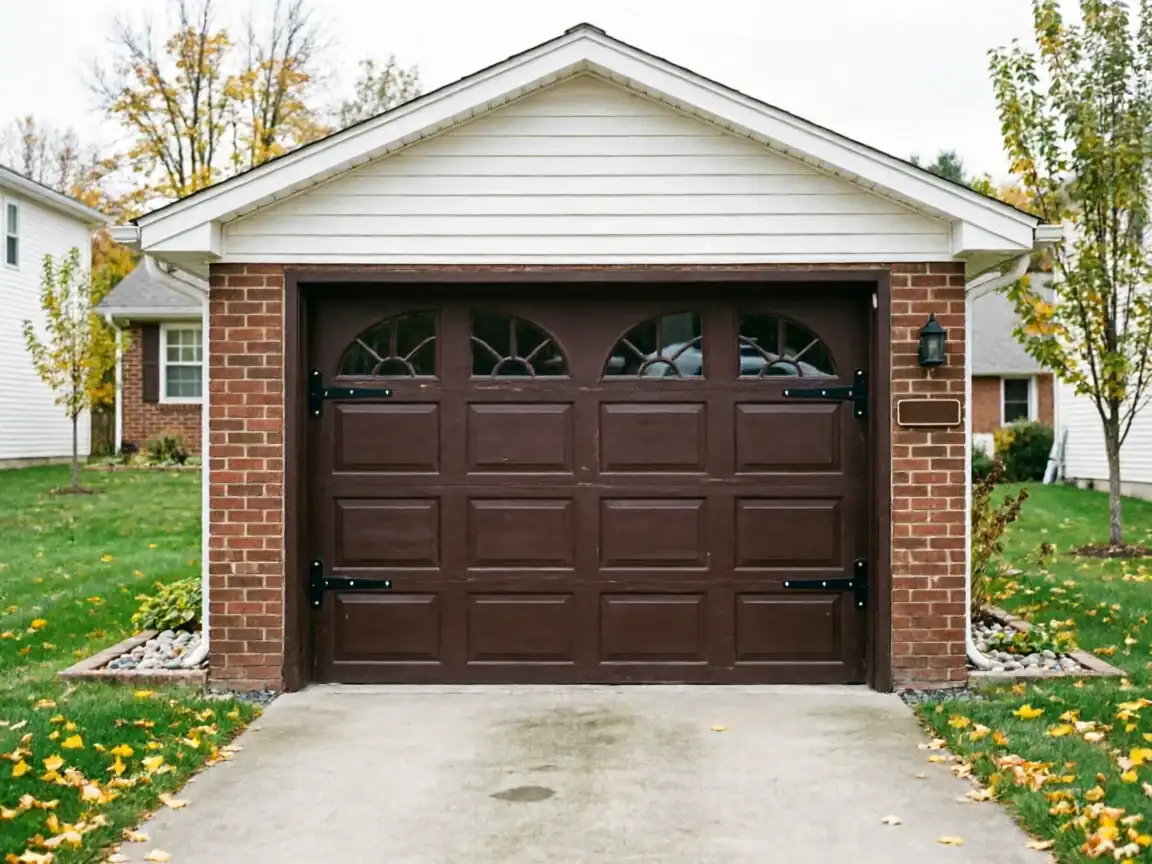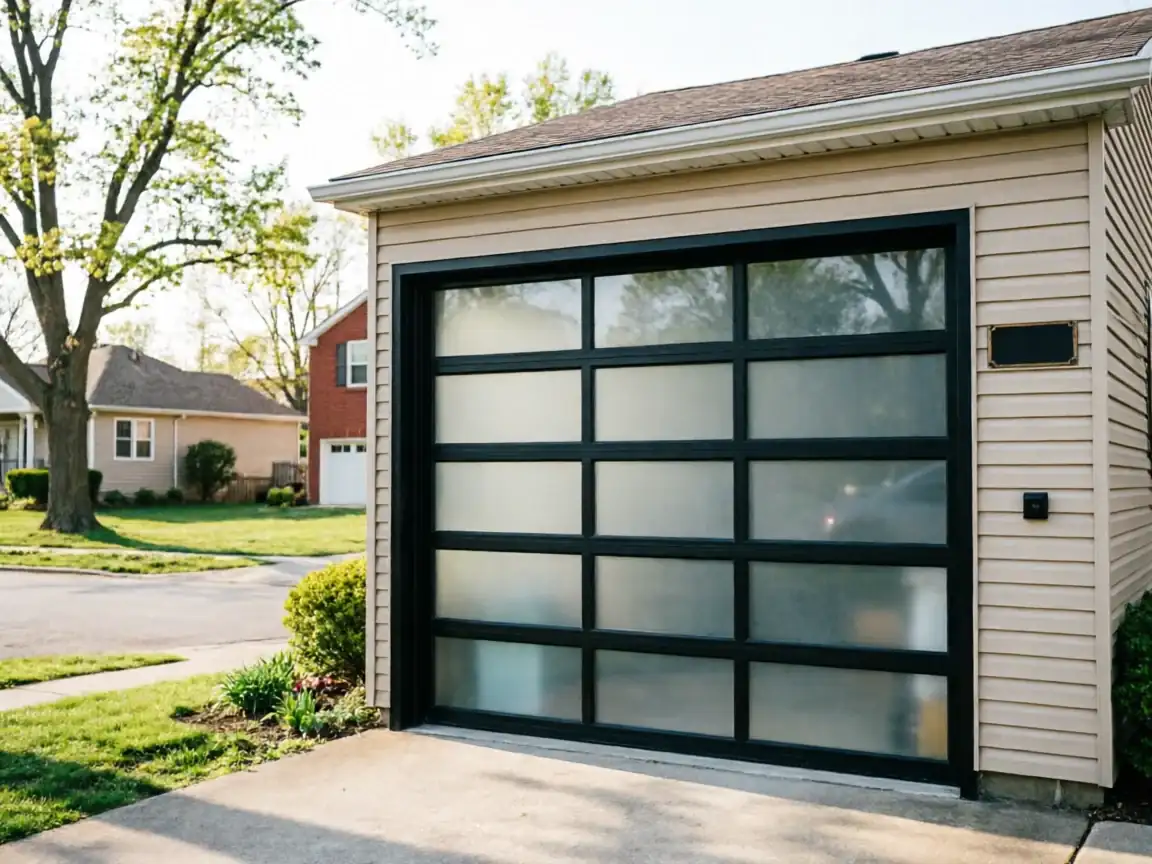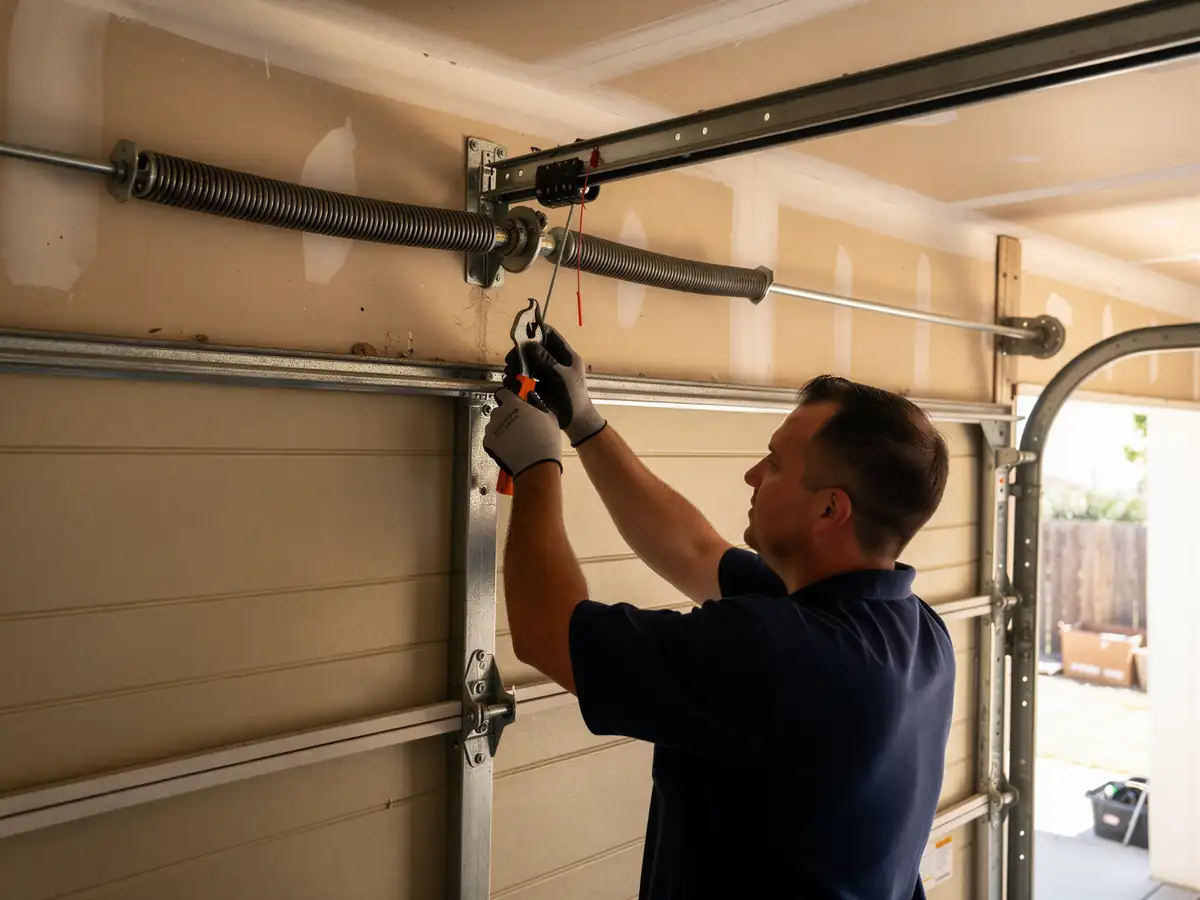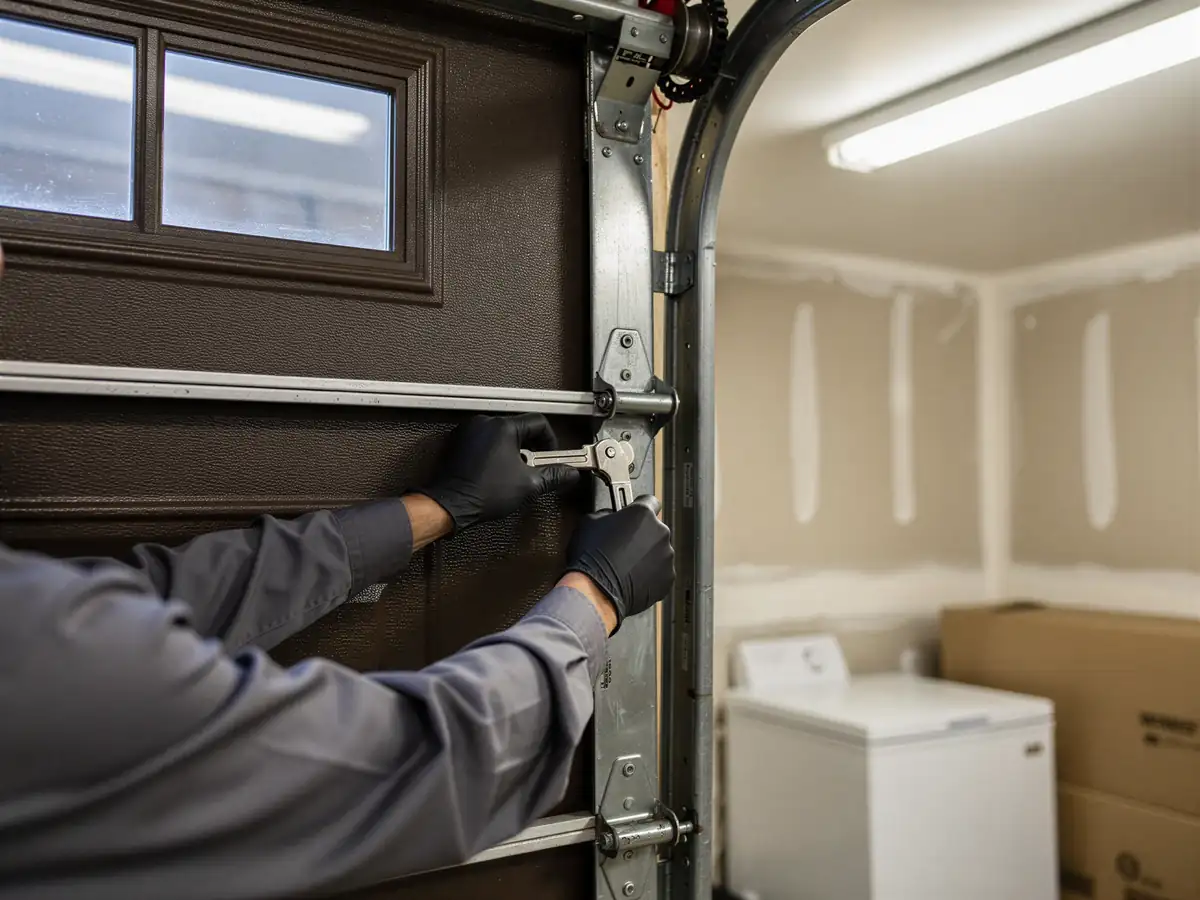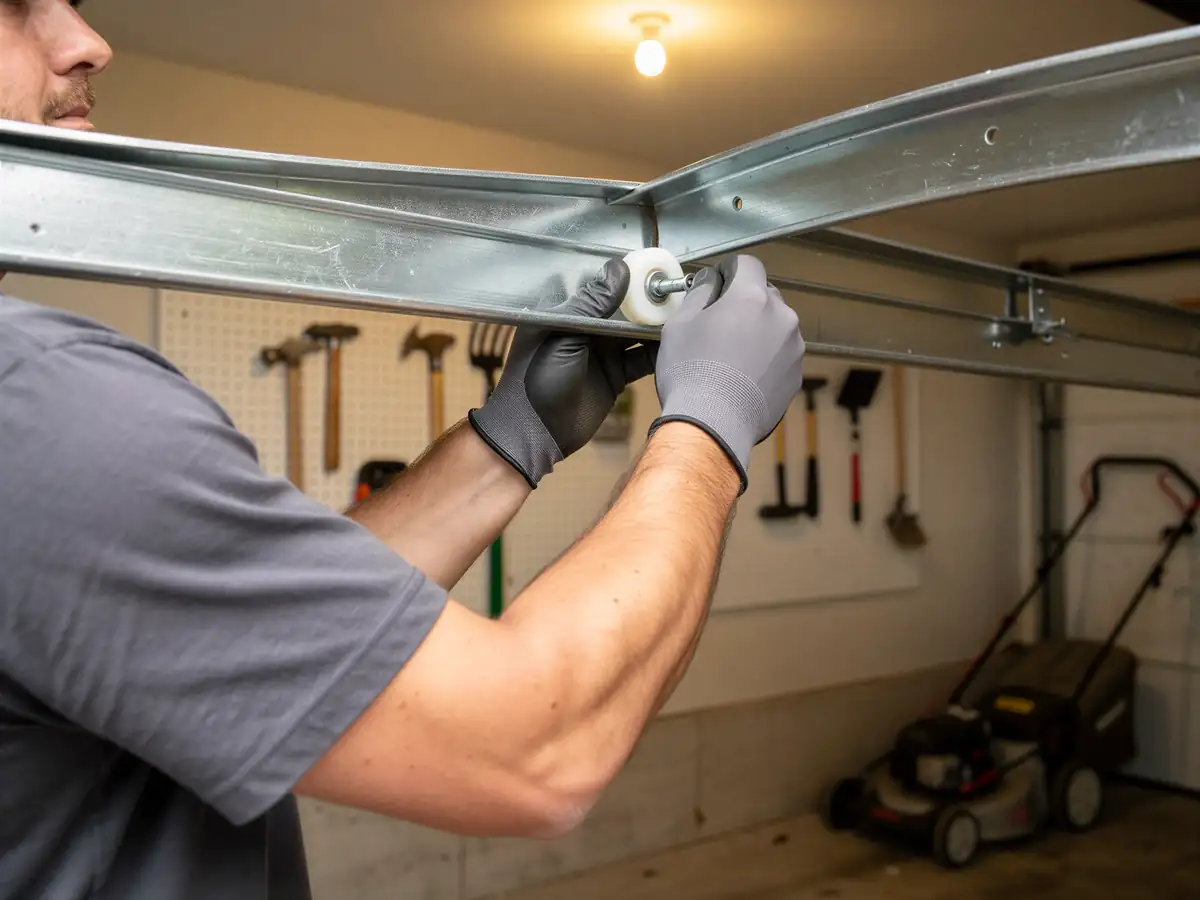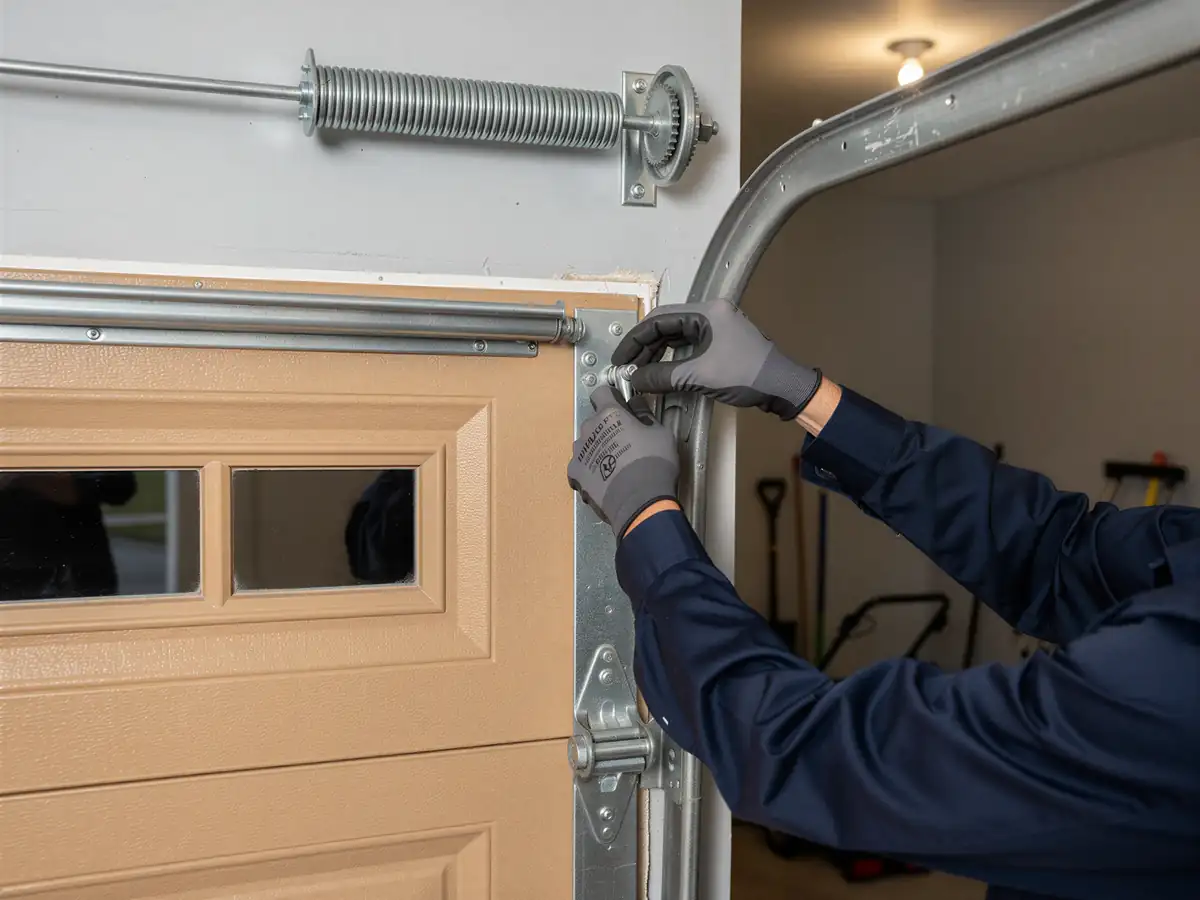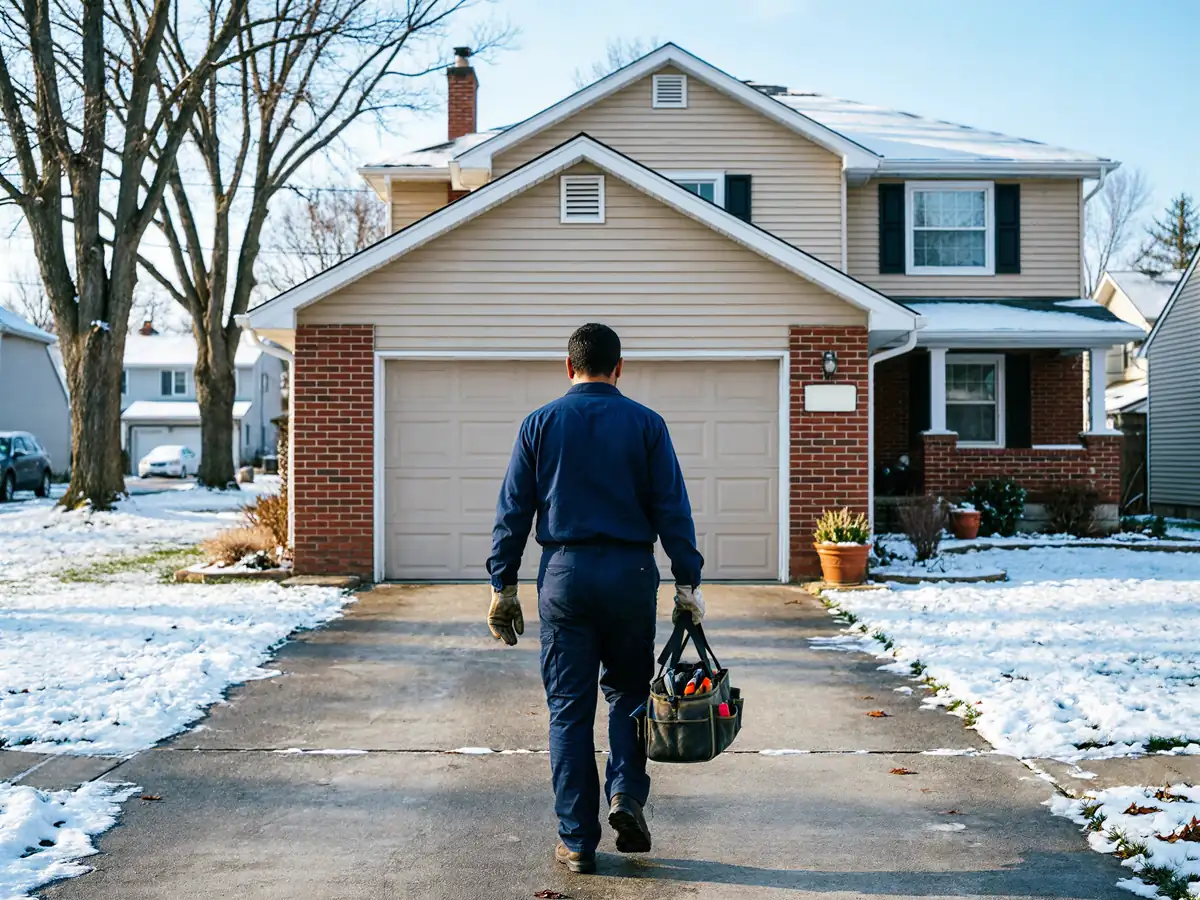
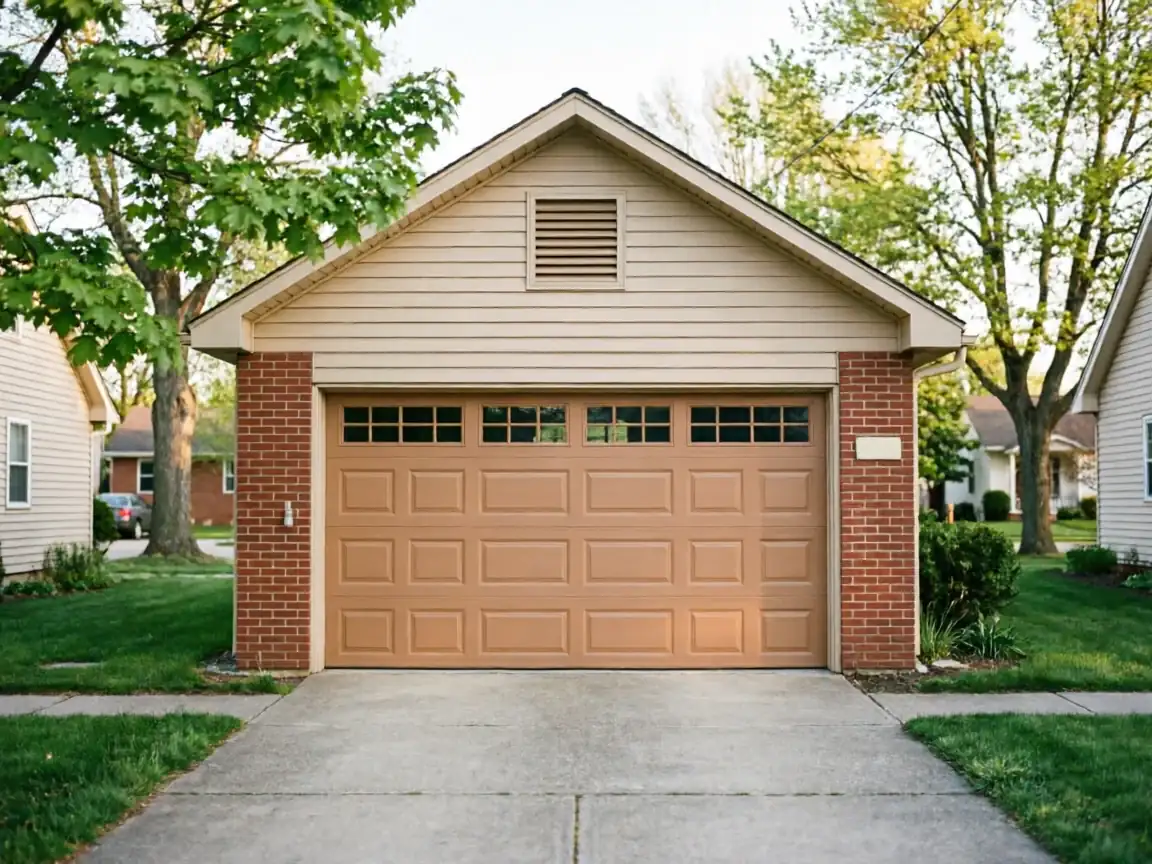
What You Are Seeing
The call we get most out of Mequon isn't a door that won't open at all
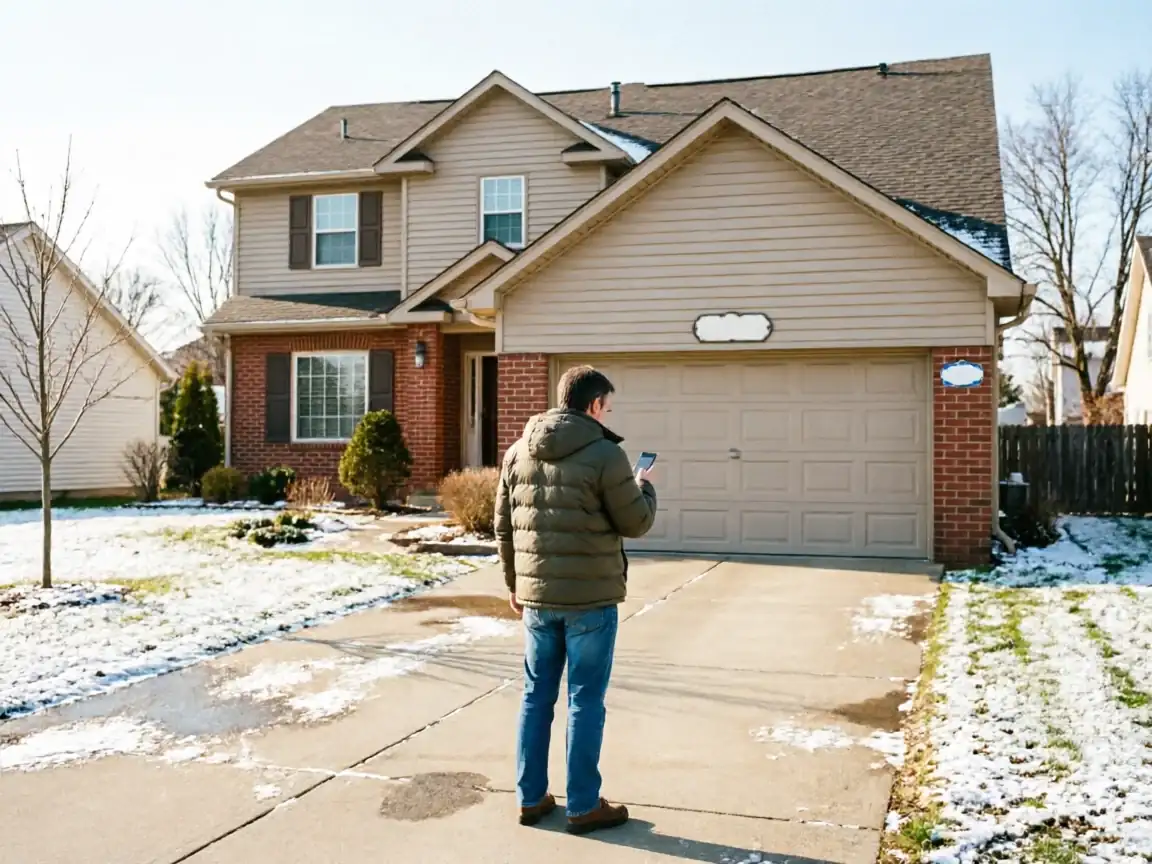
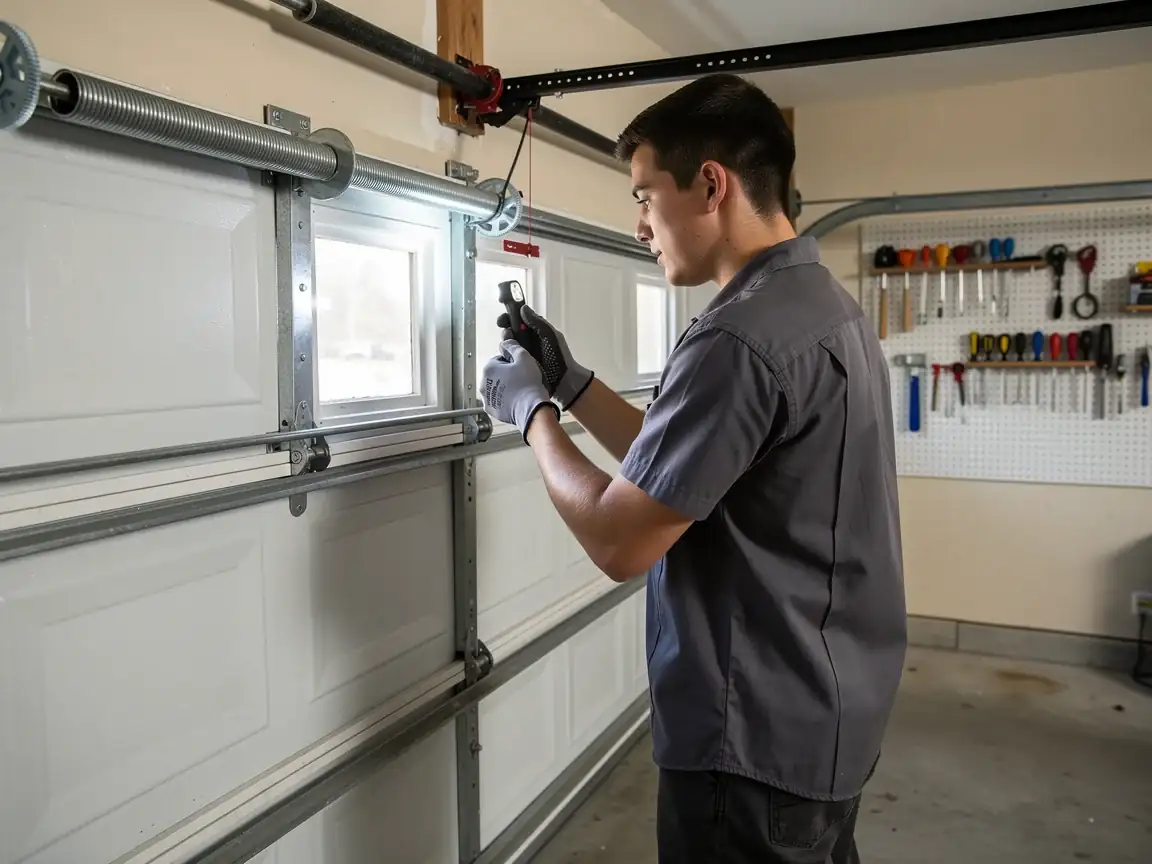
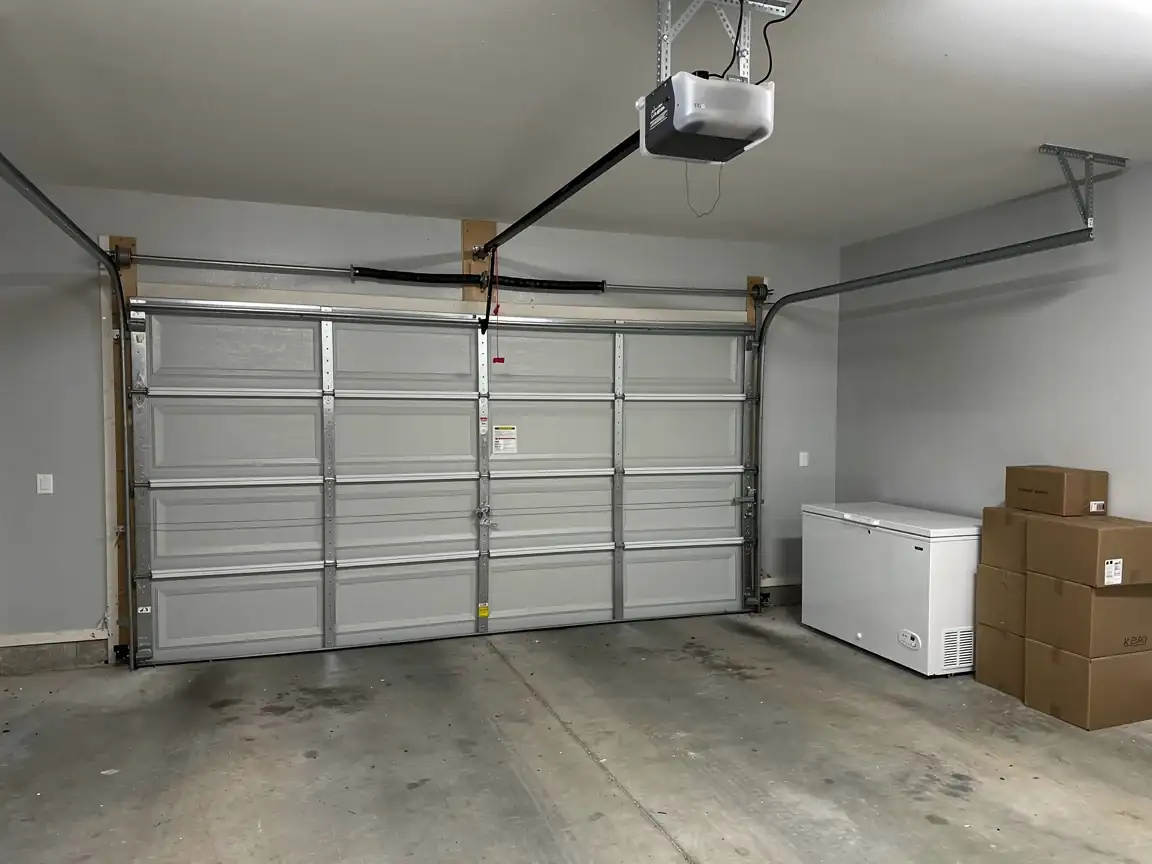
It's a door that's gotten loud, heavy to lift by hand, or slow to close the last foot of track. That points to a torsion spring that's past its working life, and in Mequon that's common because of when the houses went up.
Most homes here were built around 1982, about six years later than the median build year across the rest of our service area
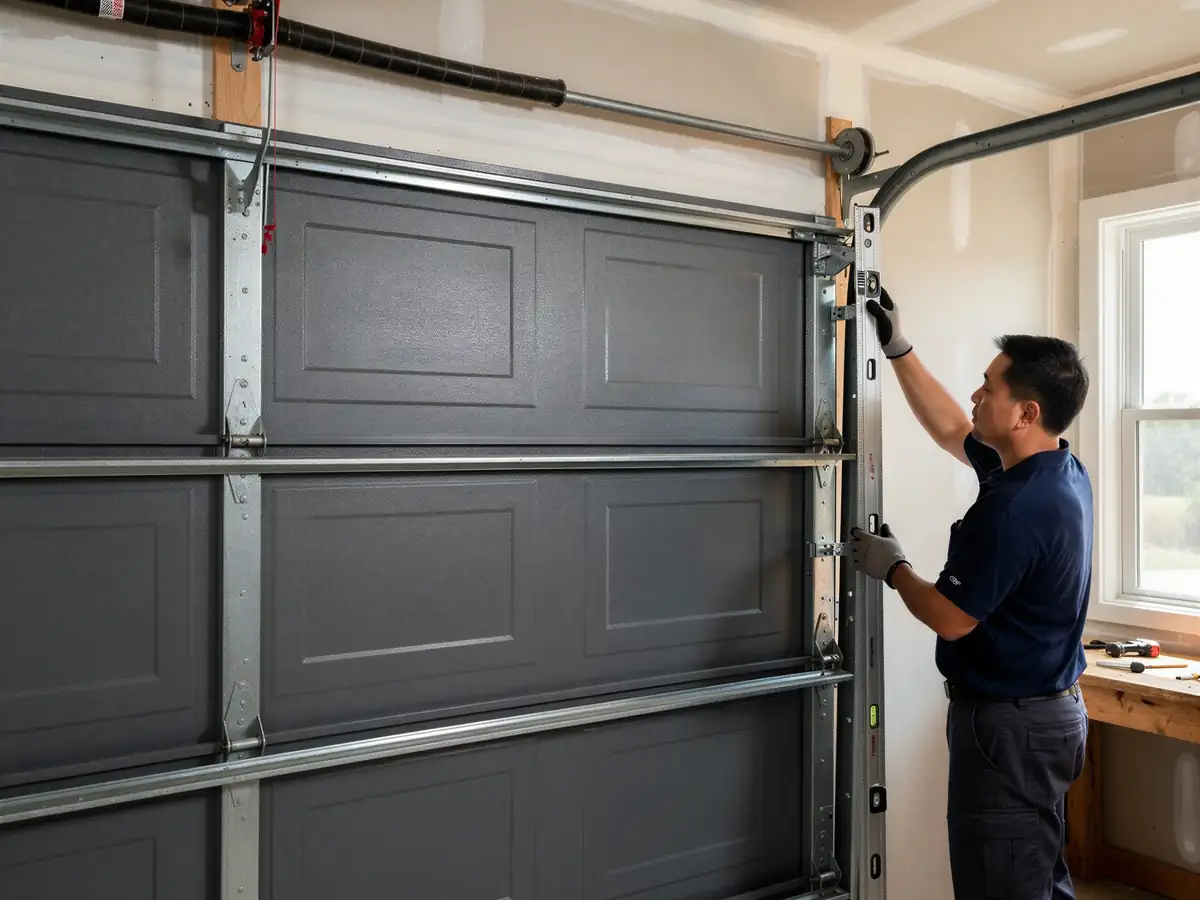
That doesn't sound like much, but it means a different generation of garage door hardware. Doors from that era were often steel sectional with a single torsion spring rated for a certain number of open-close cycles - usually somewhere between seven and twelve years of normal use before the spring fatigues. If the house still has its original door, that spring has likely been replaced once or twice already, and the drum, cable, and bearing plate it rides on are worth checking at the same time, since they wear together.
An opener from that same vintage is usually chain-drive, and if it's never been swapped
The gears inside the motor housing are the next thing to go. None of this is unique to one house - it's a function of the neighborhood's age, which is why we look at the build year before we look at anything else when a Mequon homeowner calls.
The DIY Question
A sagging panel or a noisy roller is something a homeower can look at. A torsion spring is not - it's wound under enough tension to break a hand or a face if the winding bars slip, and that's true whether the door is five years old or forty. We're not going to talk anyone through replacing one over the phone.
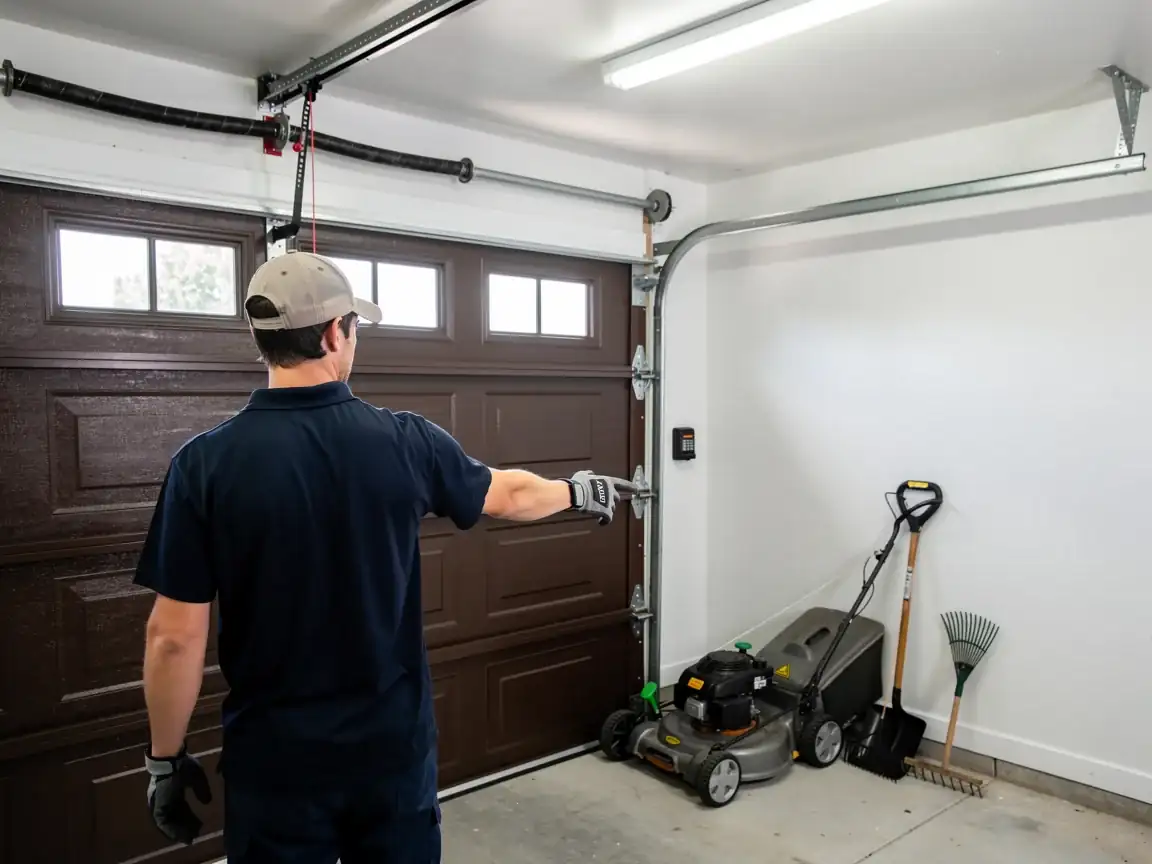
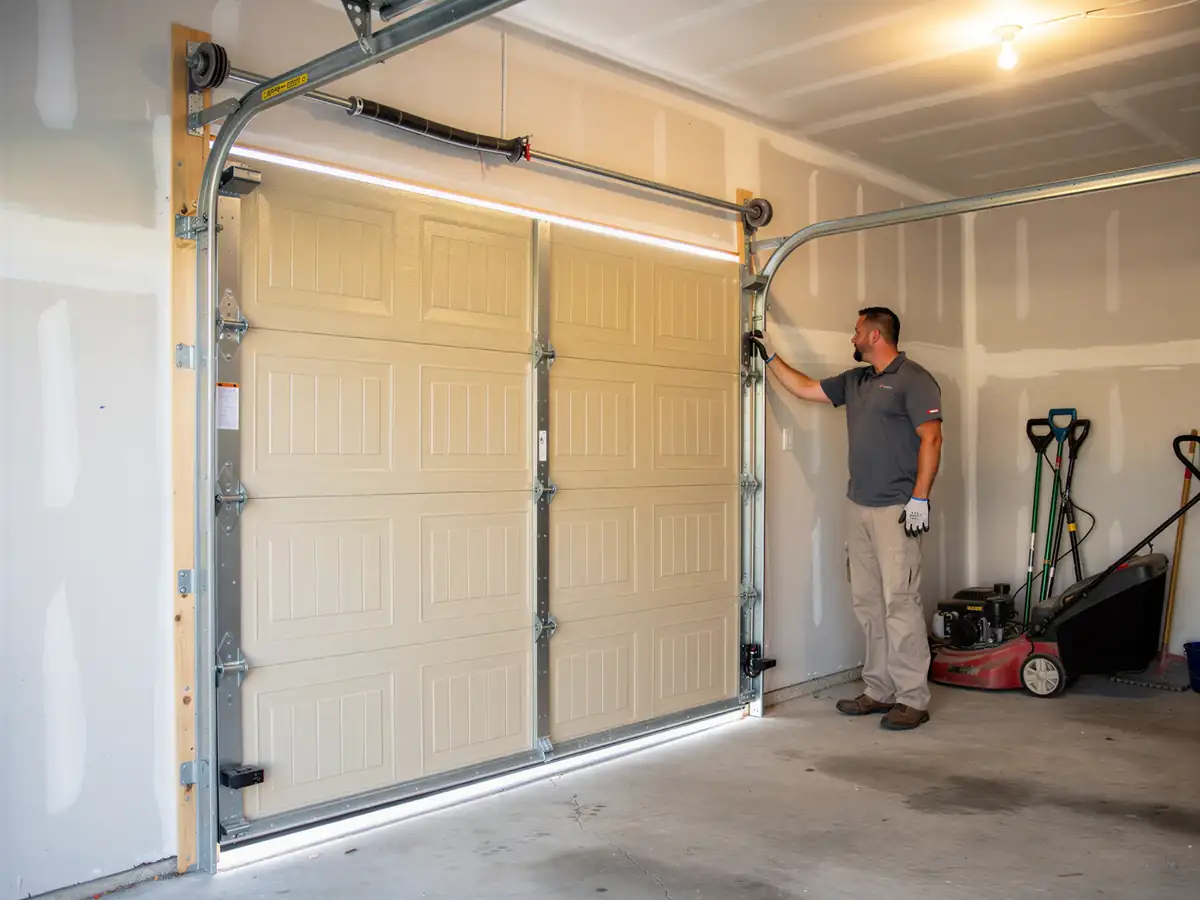
What you can safely check yourself: the weatherstripping along the bottom and sides, the photo-eye sensors near the floor (clean the lenses, make sure nothing's blocking the beam), and the track for visible dents or gaps where the rollers ride. If the door reverses on its own partway down, that's almost always a sensor alignment issue, not a spring issue, and it's a five-minute fix.
Where we draw the line: once you're touching the spring, the cable drums, or anything under tension, that's a call to make. It's also the point where a mistake costs more than the service call would have.
What Can Go Wrong
Winters here are the kind that find every gap in a door seal, and homes built in the early 1980s often have insulation specs that look thin by current standards. A worn bottom seal on an un-insulated or lightly insulated steel door lets cold air sit against the slab, and on the coldest mornings that can be enough to make a torsion spring stiffen and bind - which reads to the homeowner as 'the opener is struggling' when the actual problem is the spring.
Cables fraying at the bottom bracket are the other thing we see on doors from this build era that haven't had the hardware updated. A frayed cable under full spring tension can let go without much warning, and when it does, the door usually drops hard on one side.
We'll also say plainly where replacement beats repair: if the door is original to a 1982-era build and the bottom section has rusted through or the track is bent in more than one place, patching it panel by panel usually costs more over two or three service calls than putting in a new door does.
Getting It Booked In
We run out of West Allis, about 14 miles from Mequon
So when you call we'll ask what the door is doing - stuck, loud, off-track, won't close - and get a sense of whether it's a same-visit fix or a parts order first. Springs, cables, and standard openers we carry on the truck; less common panel sizes sometimes need to be ordered, and we'll tell you that up front rather than guess.
- 14 miles
With roughly 9,192 households in Mequon and a median income well above the rest of the area we cover
We see a fair number of higher-end doors and openers out here too - insulated steel, sometimes custom wood-look panels - and those come with their own parts lead times if something needs replacing rather than repairing.
- 9,192 households
If you're not sure whether what you're hearing is a spring, a track, or an opener problem, describe the noise and when it happens
That's usually enough for us to know what to bring.