Greenfield homes mostly went up around 1973, which means specific spring and track hardware. West Allis Garage Door Pros carries the parts and comes from 3 miles away.
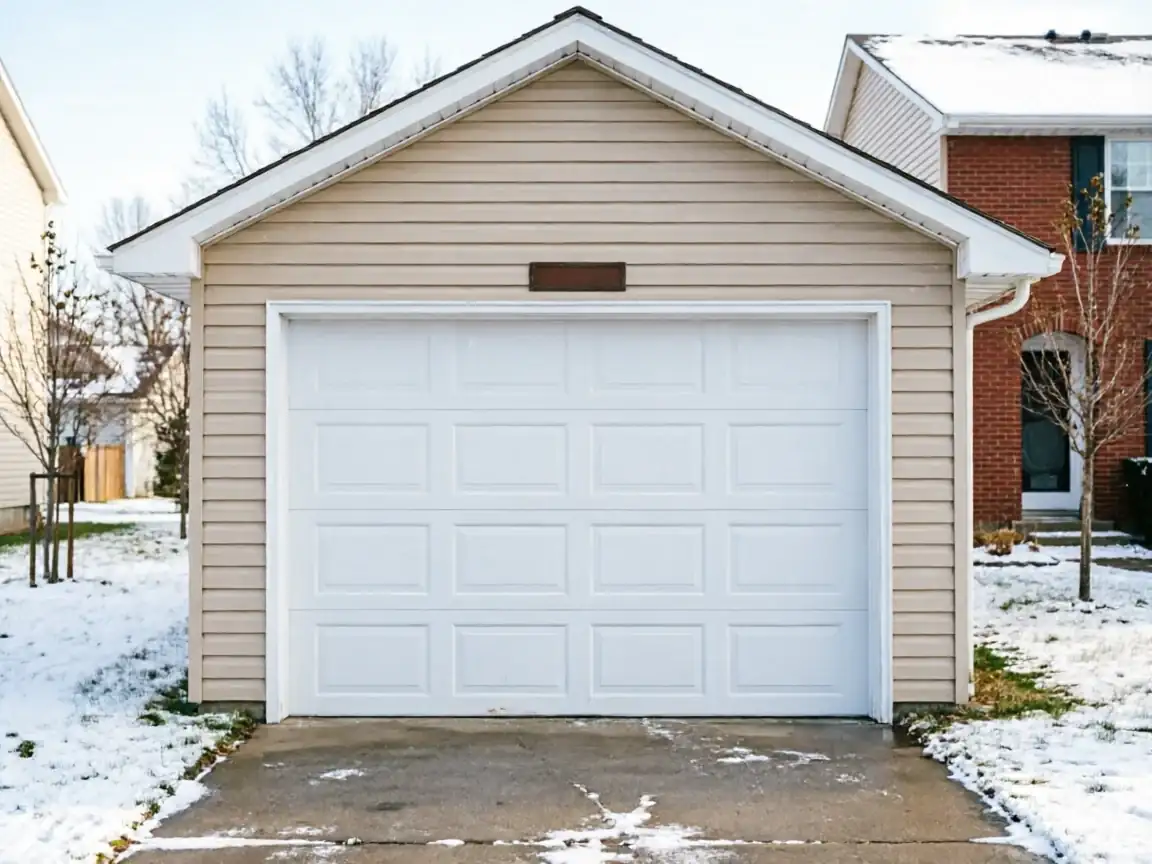
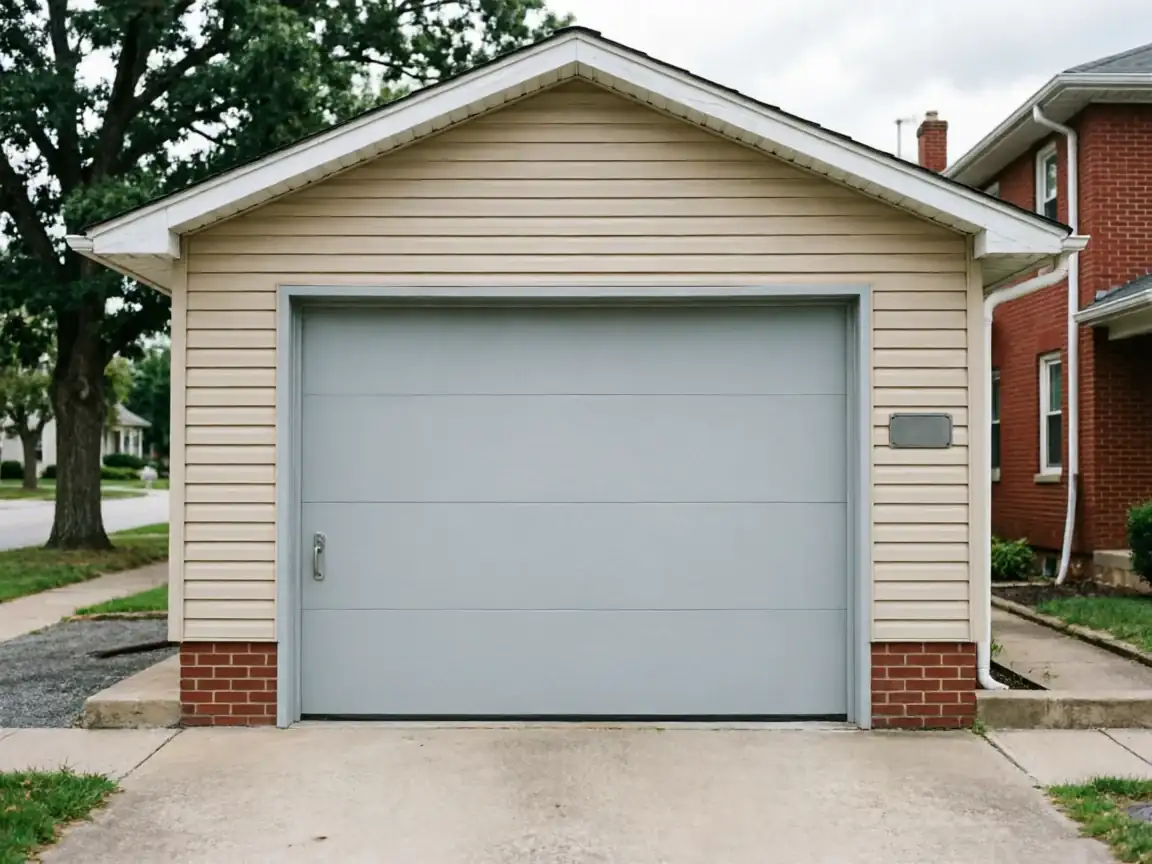
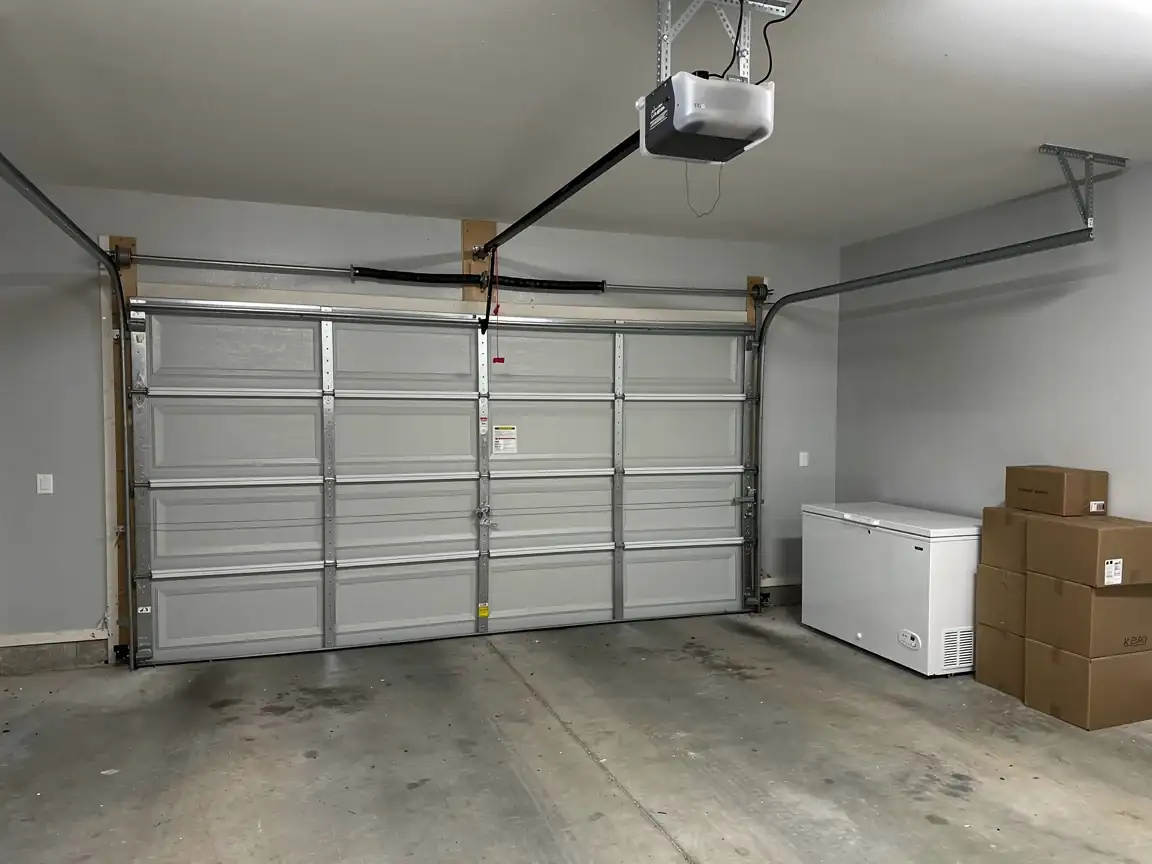
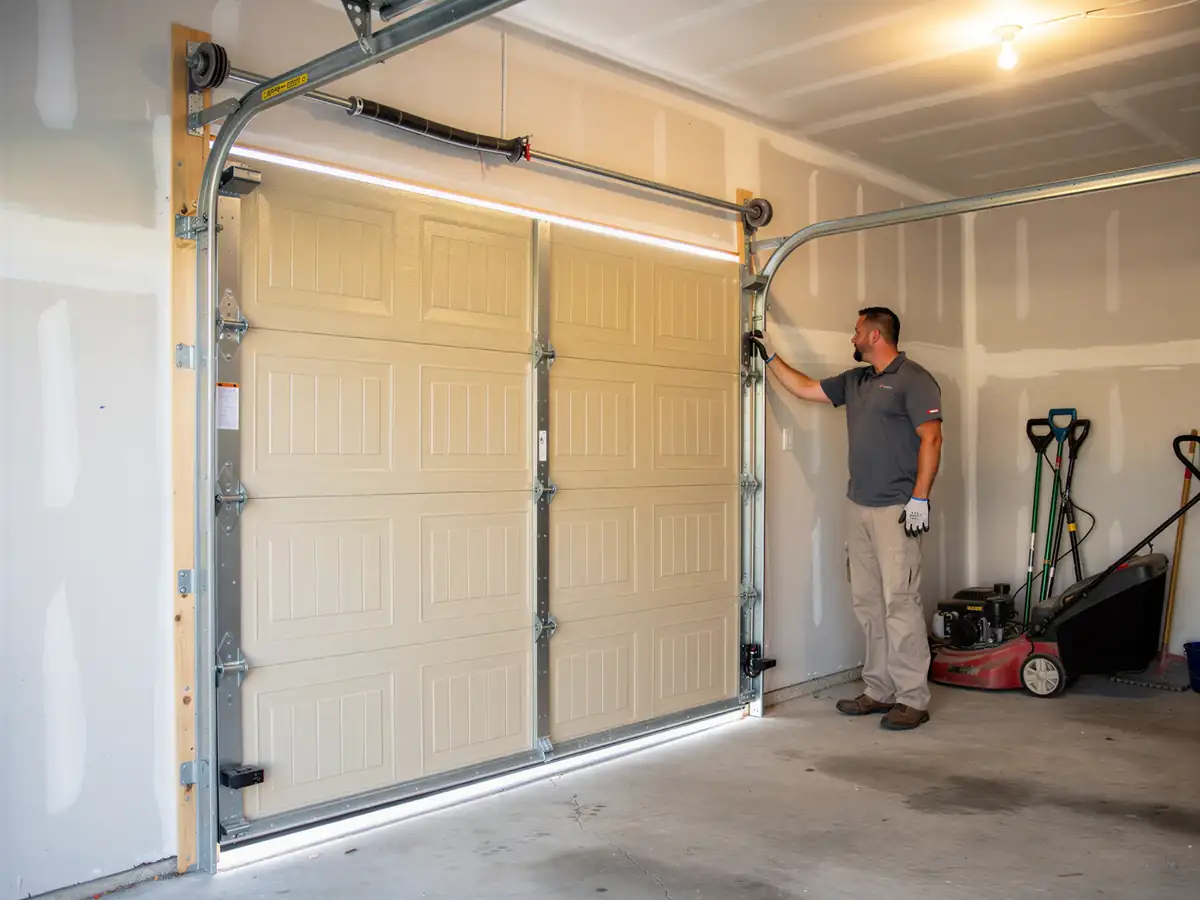
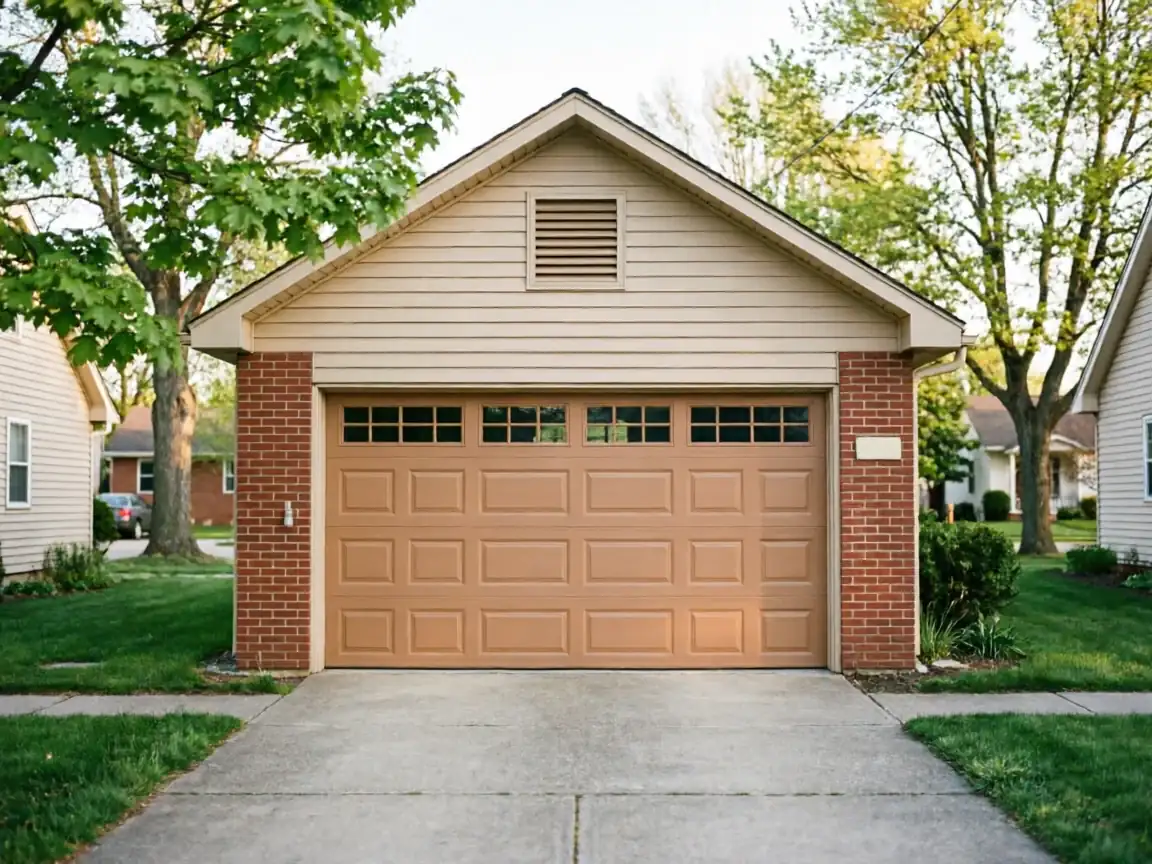
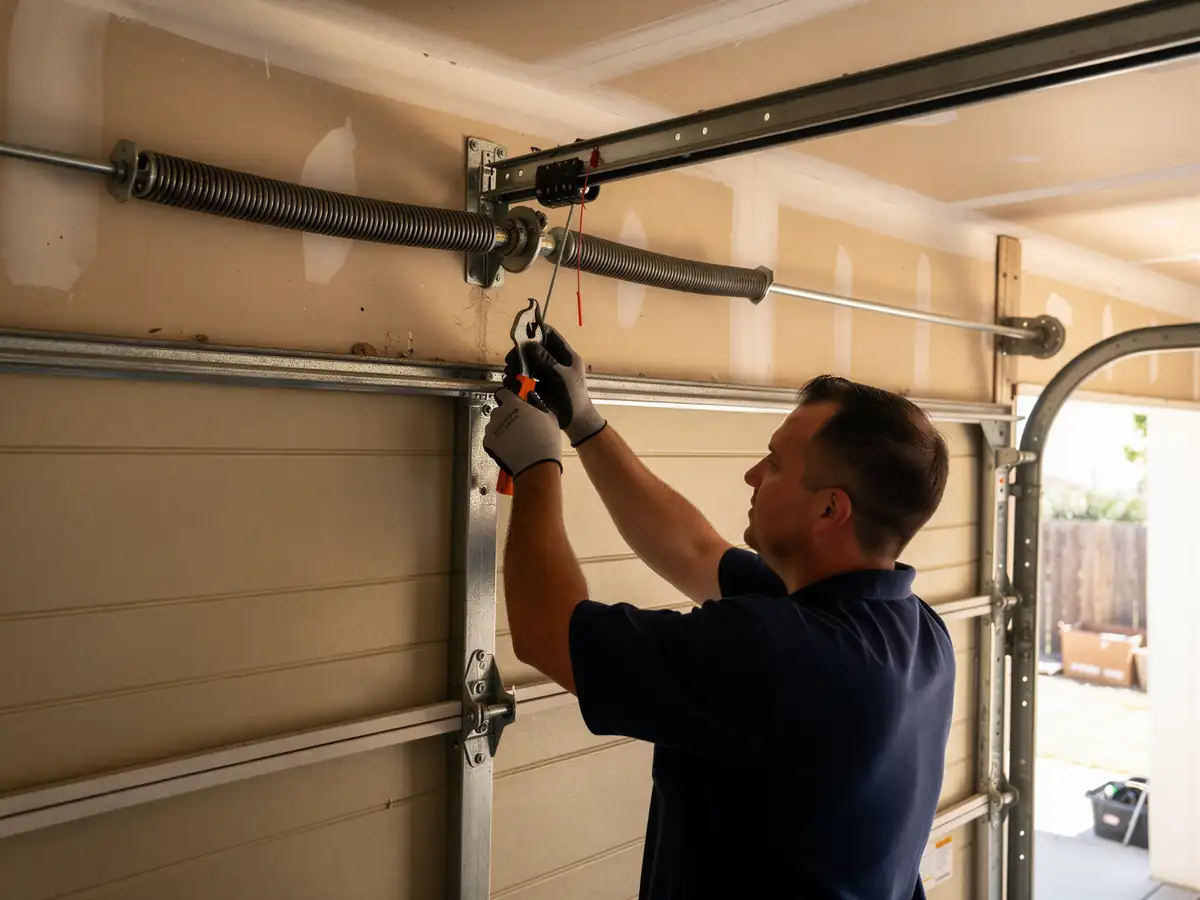
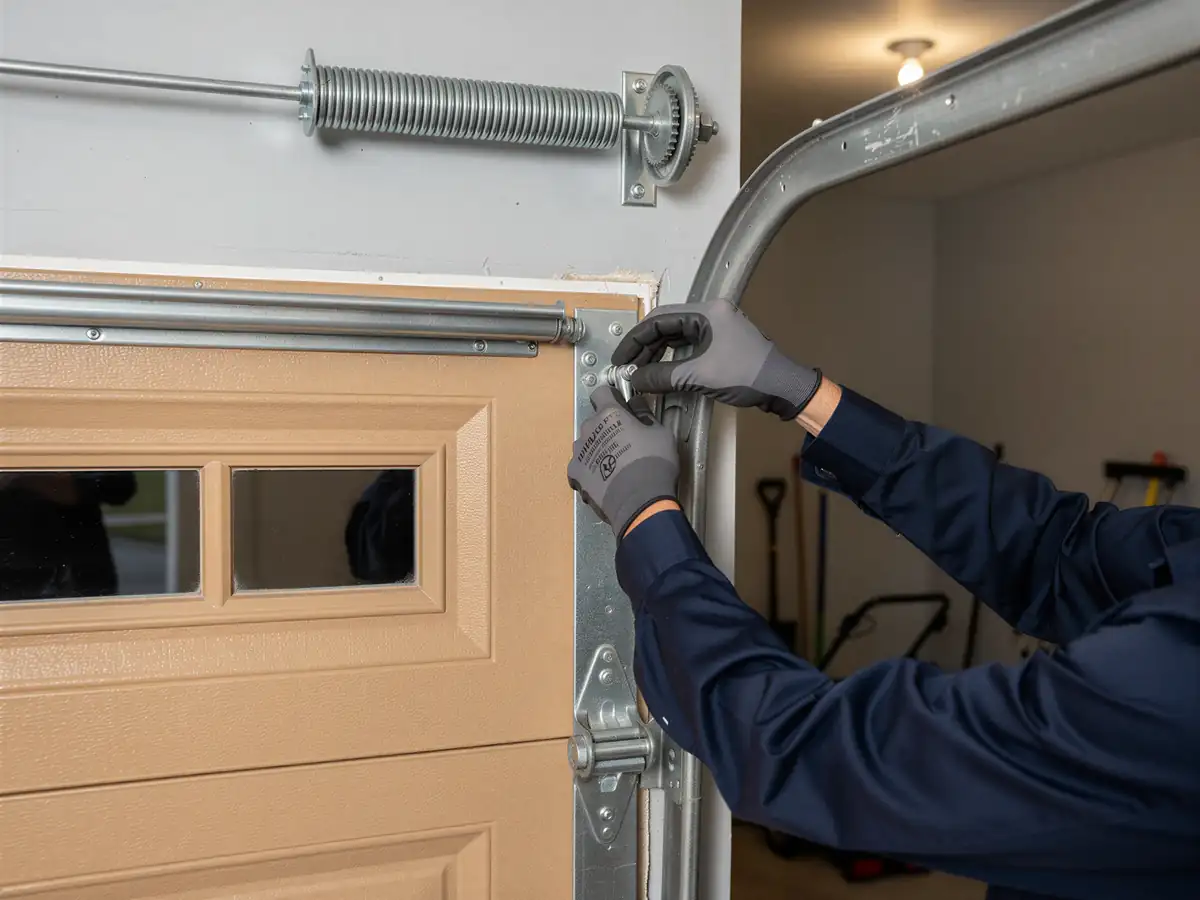
Most houses in Greenfield were built around 1973, square in the middle of the 1960s-70s wave that shaped this whole corner of the service area. That build year matters more than people think when a door stops working. A 1973 garage almost always came with a single torsion spring mounted on a center bracket, steel tracks bolted straight to the framing, and an opener that's probably been swapped out once or twice since but is still sitting on the original track and header bracket. When that spring lets go, or a cable jumps the drum, it's original-era hardware failing, not some new-construction part. Winters here are the other half of the story. This is a cold-climate area with real seasonal swings, and cold steel gets brittle and lubricant gets thick, which is exactly when a 1970s spring that's been flexing for decades finally snaps. If your door went dead on a frigid morning, or the panel won't lift past knee height and then drops, that's consistent with what a torsion spring failure looks like on a house this age. We come from West Allis, about 3 miles out, so we're not describing a depot here, just the hardware we expect to find when we open the panel.
Parts We Carry
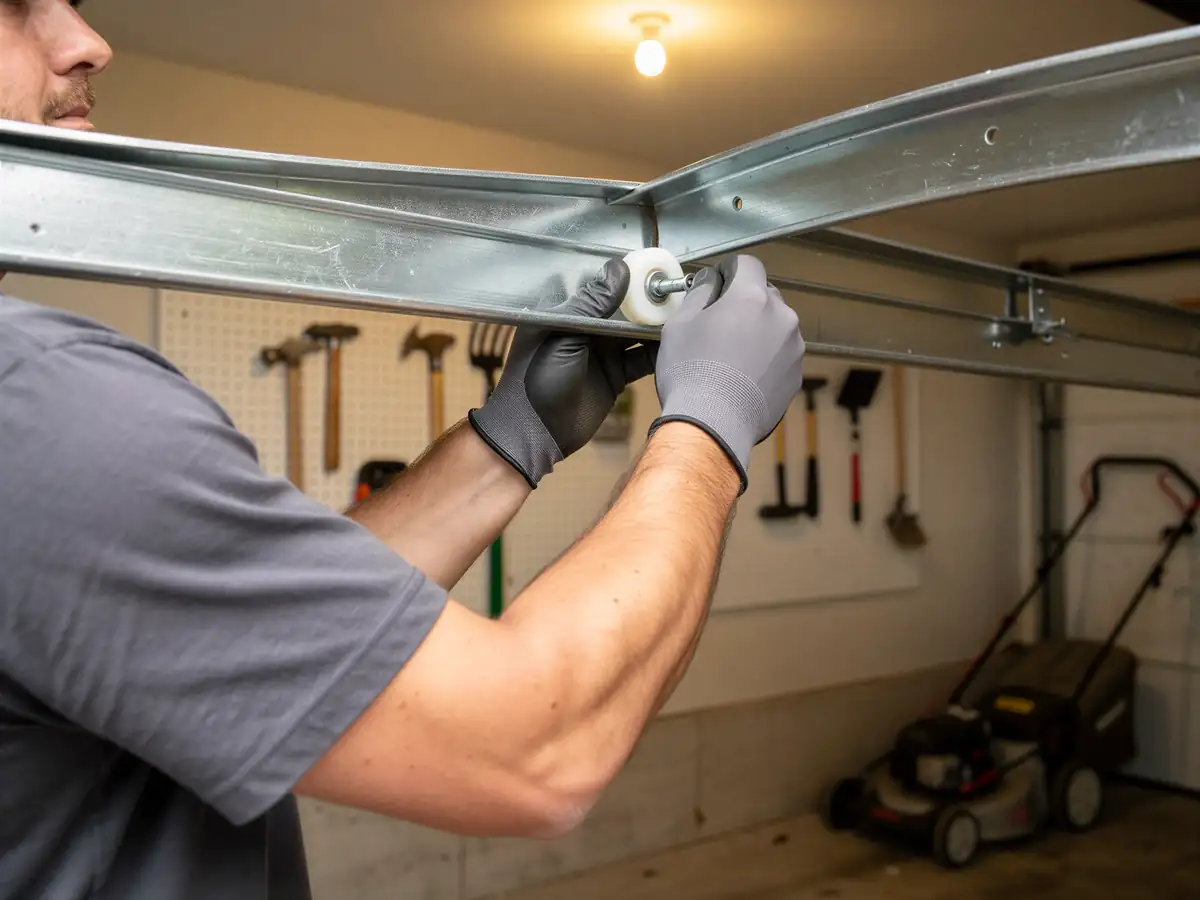
Because so much of Greenfield's housing stock dates to the early-to-mid 1970s, we stock the torsion springs, drums, and center bearing plates sized for that era's standard door openings, along with the cable gauges that era of garage used. We also carry extension spring kits for the smaller number of homes built earlier, since the broader area runs from 1938 up through 2000 with a median around 1976 - not every house here is identical, and we don't assume. What we don't carry on the truck is anything custom-width or architectural - a door that was special-ordered or widened later than original construction sometimes needs a part we have to source, and we'll tell you that straight instead of jury-rigging something that'll fail again in a month. For a standard torsion setup on a house from the Greenfield era, though, the spring, the end bearings, and the cable are parts we're almost always carrying already, which is the difference between a same-visit fix and a second trip.
The DIY Question
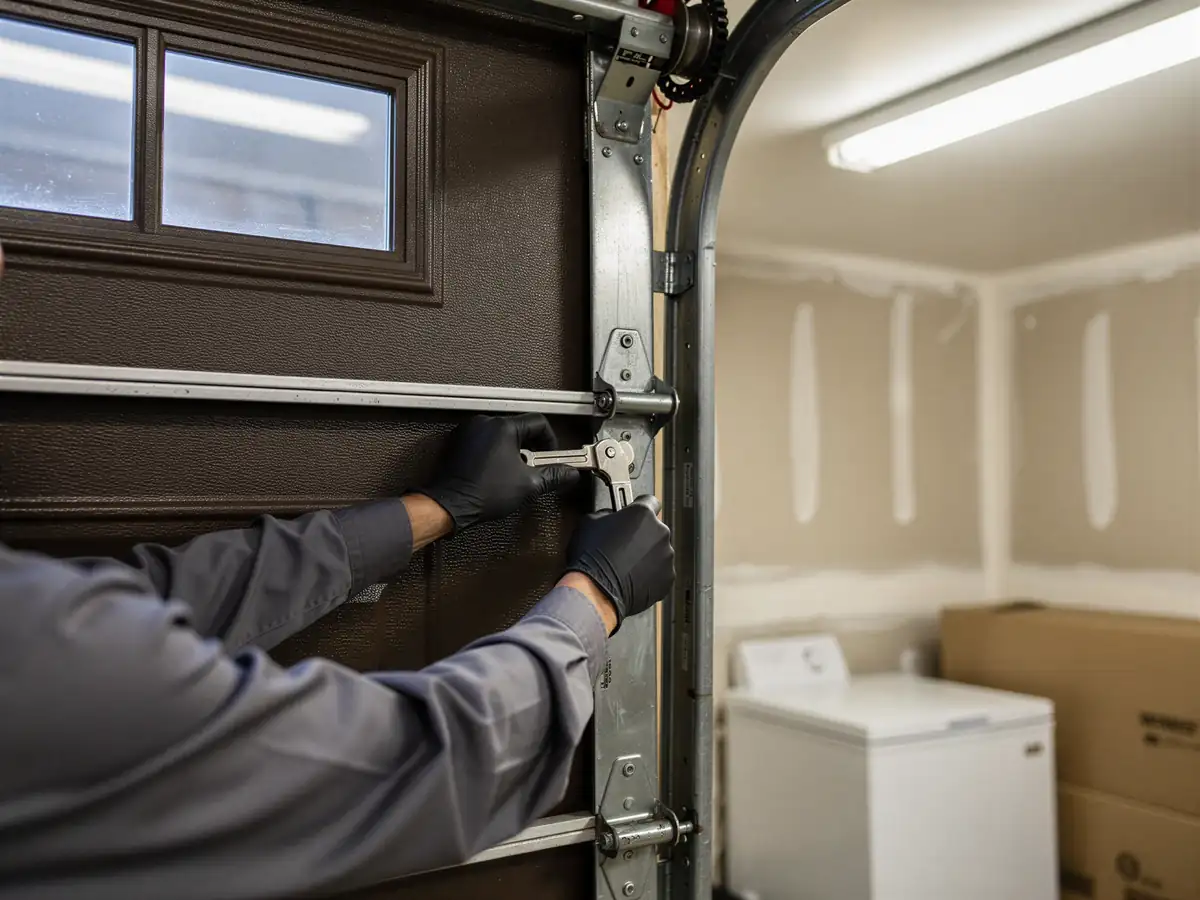
A broken torsion spring is not a job to do yourself, full stop - the spring is wound under enough tension to break a wrist or worse, and that doesn't change based on how old the house is. What does change with a 1973-era door is what you're likely to find once the cover plate comes off: original hardware that's been through fifty winters of cold-steel flexing, mounting bolts that may have loosened in framing that's settled over that many decades, and sometimes a replacement opener bolted onto a bracket that was never meant for it. None of that is a reason to panic, but it is a reason not to guess. If the door won't open and the spring looks intact, check the obvious things first - a disconnected opener cord, a sensor that's gotten bumped out of alignment - before assuming the worst. But if a spring is visibly separated or the door is off its track, that's a call-us situation, not a weekend project.
What the Fix Involves
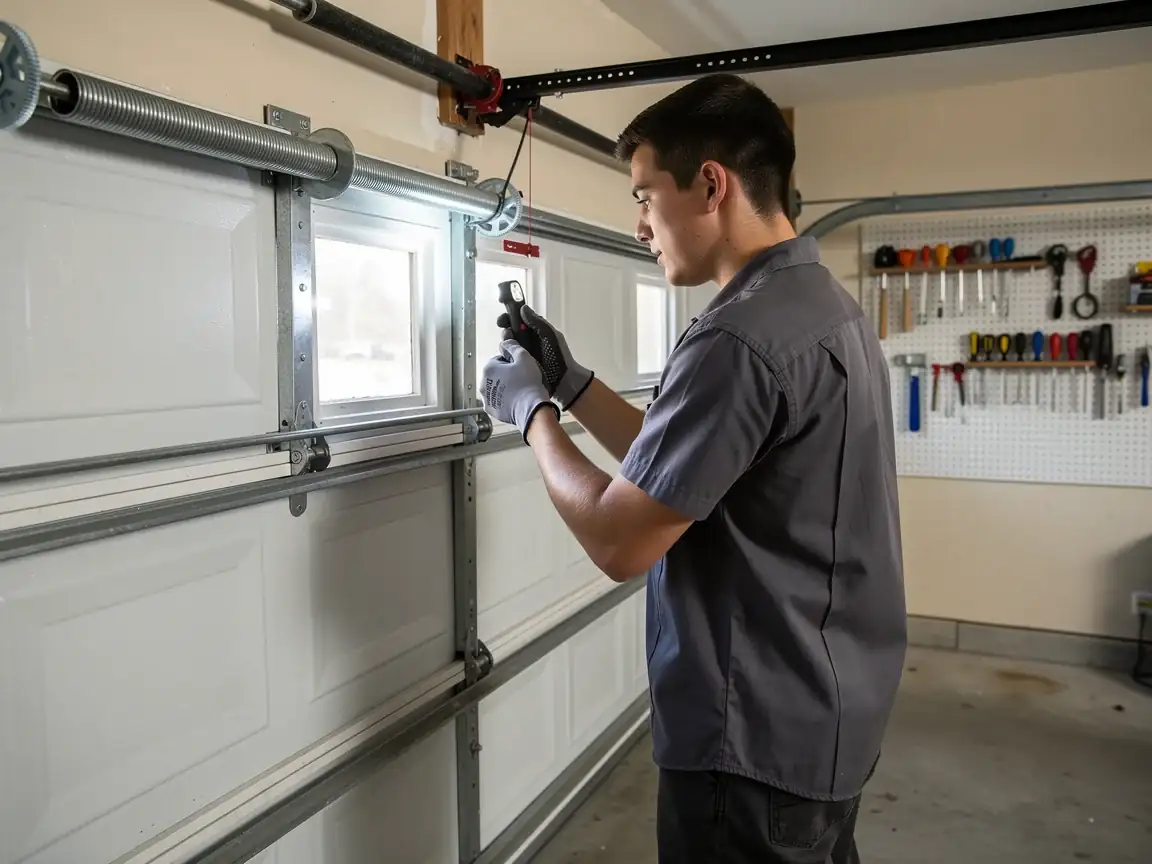
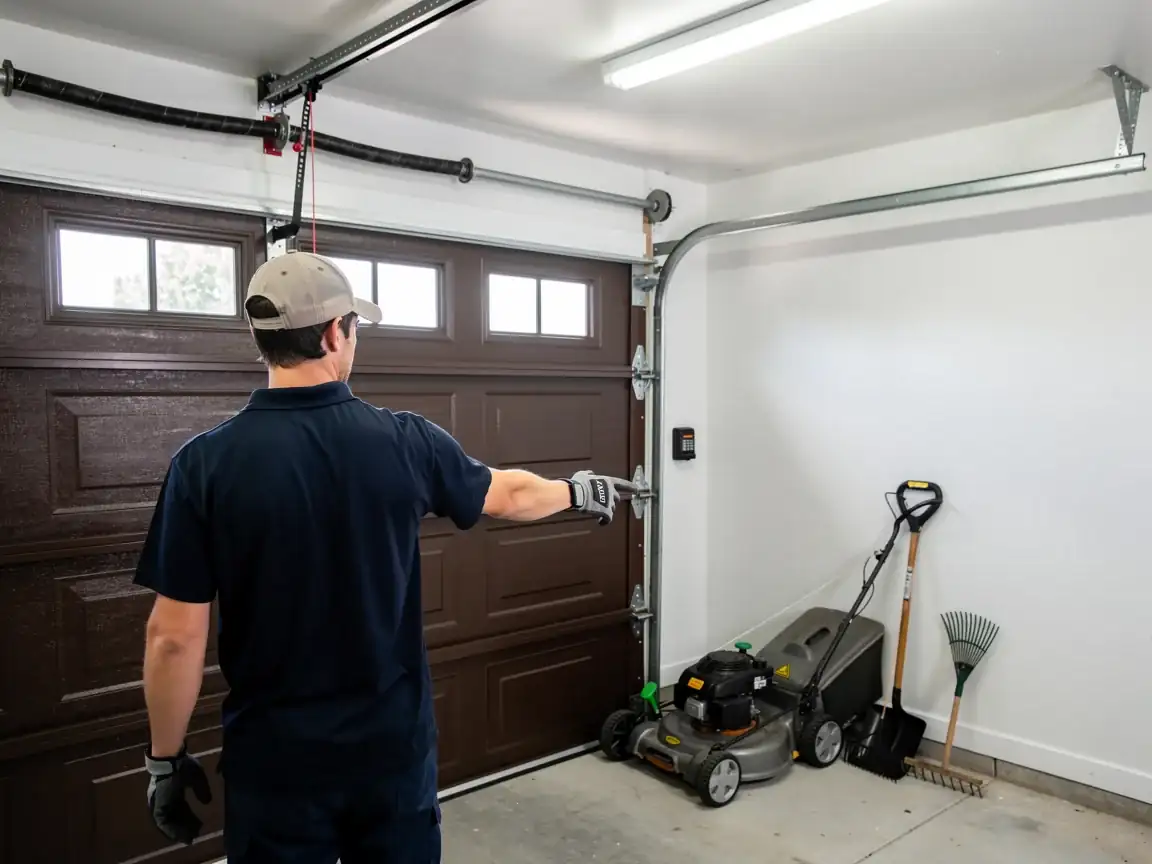
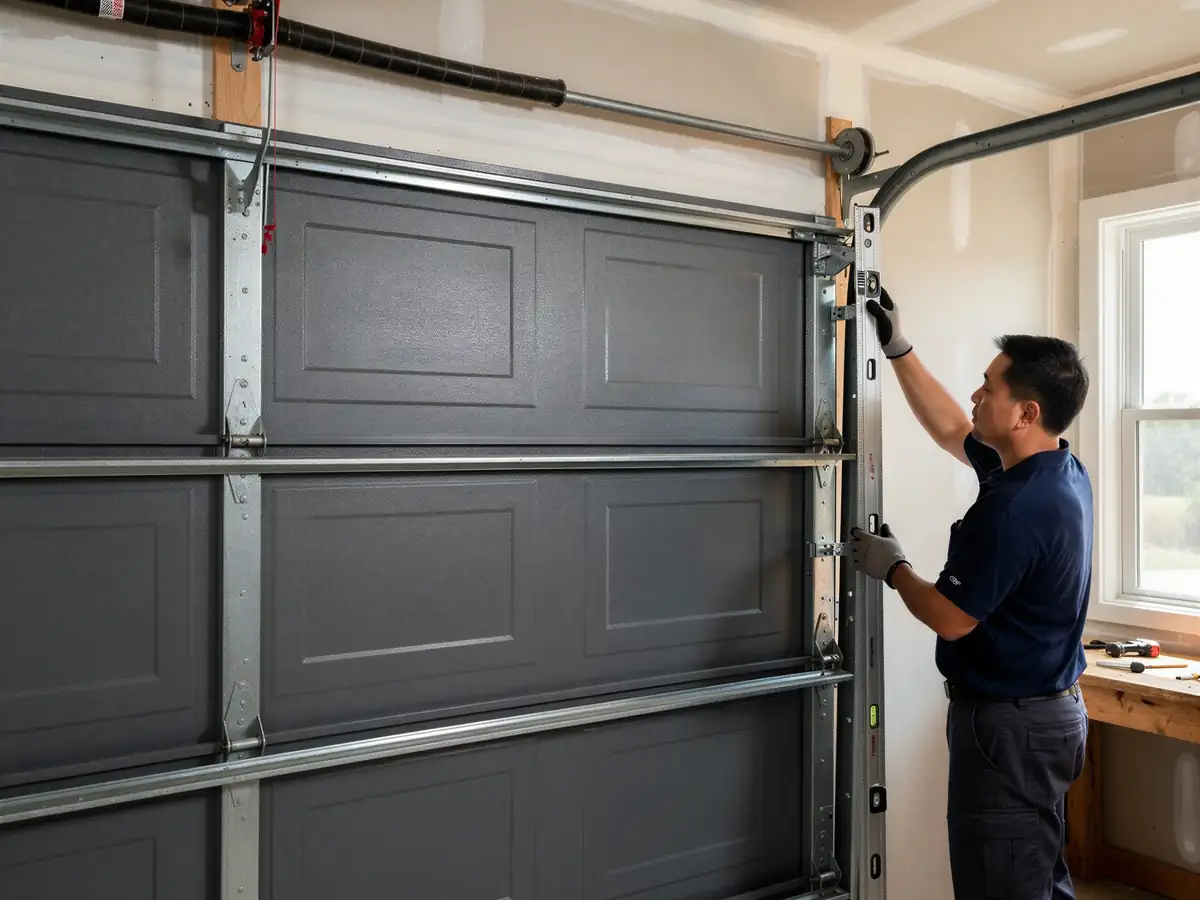
On a typical Greenfield call, we're replacing a torsion spring rated for the door's weight and cycle count, checking the drums and cables for wear since all three usually age together, and inspecting the center bearing plate, which on a house this age has often outlived its grease. If the opener is original or close to it, we'll flag whether it's worth replacing outright rather than patching - sometimes a 1970s-era opener motor is the weak link and fixing the spring just moves the failure point. We're honest when a repair isn't worth it: if the track is bent badly enough from age or impact, replacement panels usually cost more and fit worse than a new door section. We travel the 3 miles from West Allis for these calls, so there's no separate branch pricing or different crew - same trucks, same stock, just a short drive into Greenfield.
How it works
From “it’s stuck” to “it’s fixed”
01
Tell us what’s wrong
Describe the symptom - won’t open, loud bang, opener runs but the door won’t move.
02
On-site diagnosis
A technician tests the door under power and by hand and finds what actually failed.
03
Clear, up-front plan
You get the fix that’s needed and what drives the cost - before any work starts.
04
Repaired & tested
The repair is done, the door is set true and tested, and the work area left clean.
Not sure which repair your door needs in West Allis, WI? Describe what it’s doing - every job starts with a diagnosis.
Straight answers about garage door repair in West Allis. Still unsure? Ask us directly.
Why does the age of my house matter for a garage door repair?
Houses built around 1973, which describes most of Greenfield, came standard with torsion-spring hardware and track mounting that differs from newer construction. Knowing the era tells us what spring size, drum type, and bearing setup to expect before we even open the panel, which usually means fewer return trips.
Do you have a branch in Greenfield?
No. We work out of West Allis, about 3 miles away, and travel in for calls. We don't carry a separate price list or response promise for Greenfield specifically - it's the same crew and the same stocked parts as any nearby call.
Can cold weather really break a garage door spring?
Yes. This area sits in a cold climate band with real winter severity, and steel springs get more brittle as they age and as temperatures drop. A spring that's flexed for decades on a 1970s-era door is more likely to finally give out on a cold morning than in mild weather.
Is it ever not worth repairing the door?
Sometimes. If the track is bent badly or the panels are warped from age or impact, patching the spring or cable just moves the next failure down the road. In those cases we'll say so rather than charge for a repair that won't hold.