What You Are Seeing
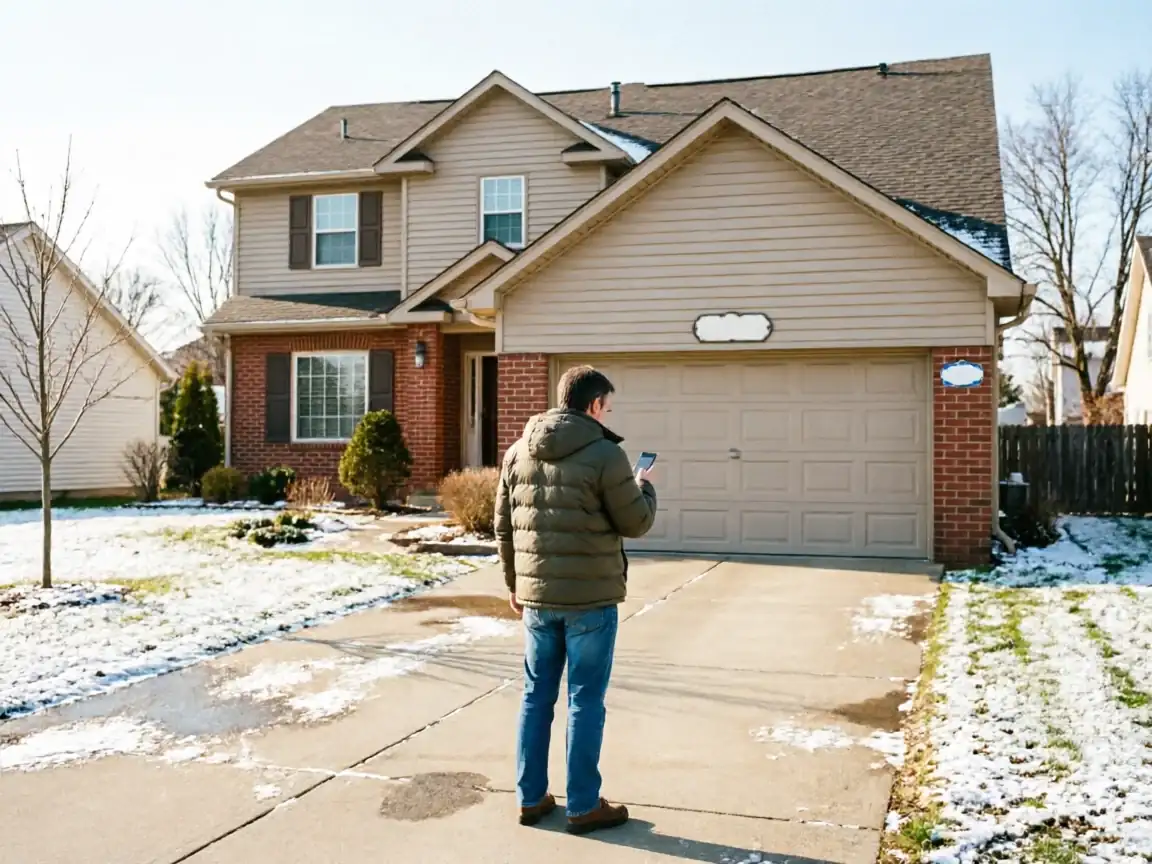
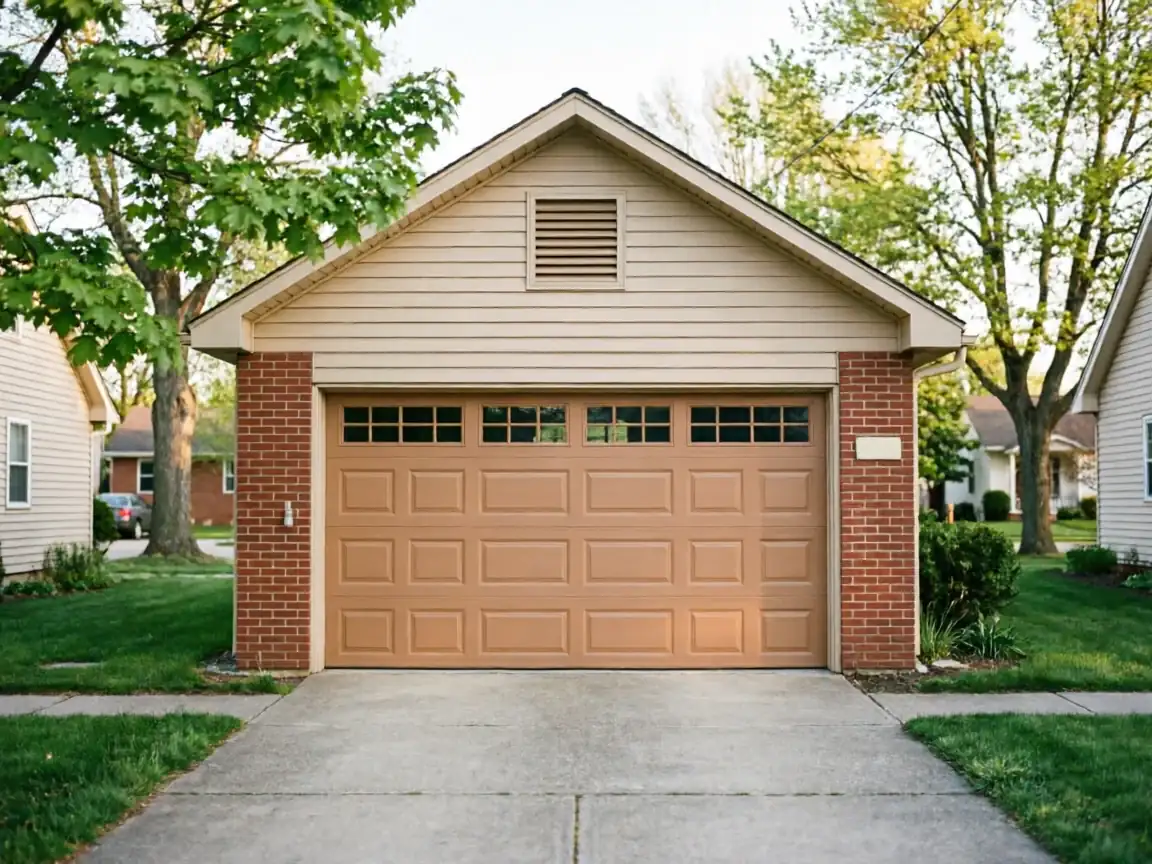
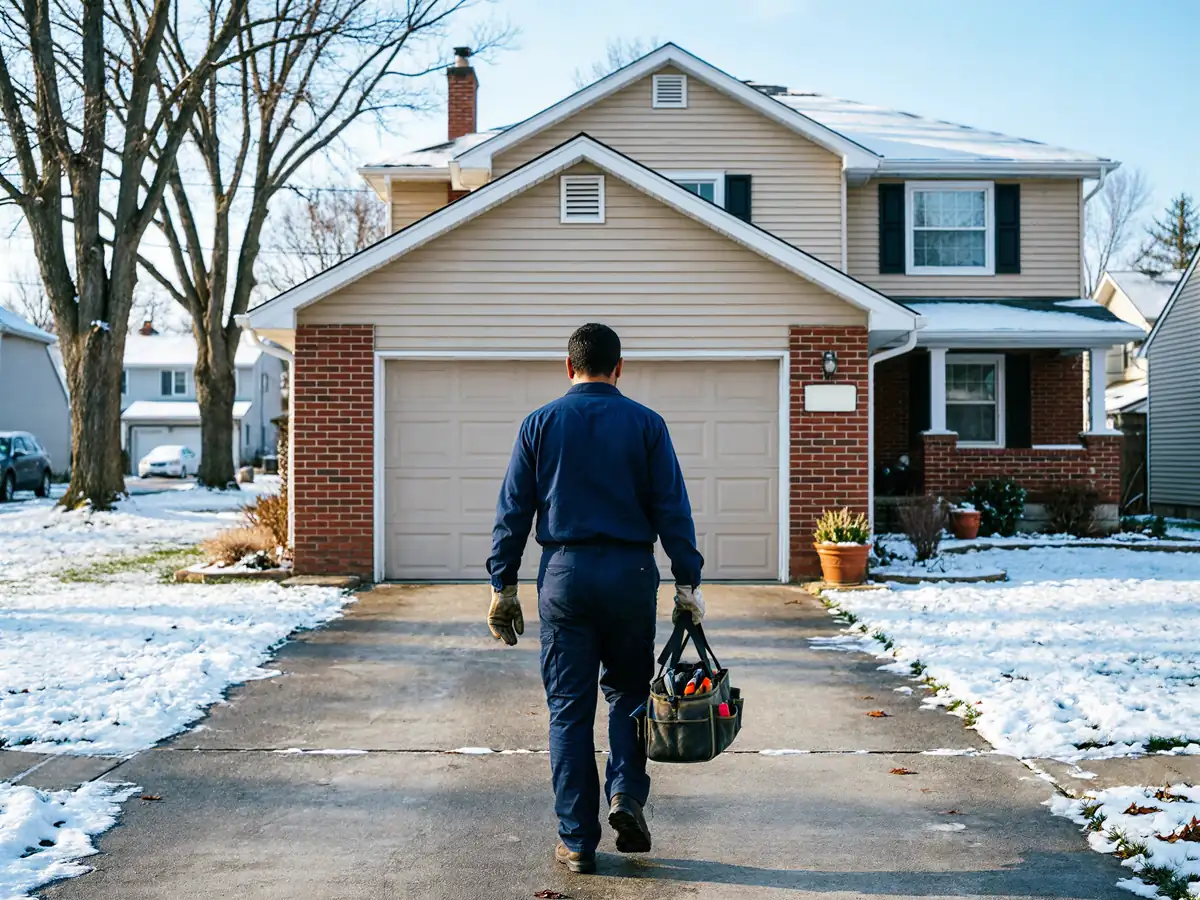
Greenfield is a mid-size suburb by local standards
About 17,440 households - which means the off-track calls we get from here aren't random. They cluster. A door that's run its rollers off the rail usually shows one of two faces: the door is cocked in the opening, hanging low on one side with a gap at the top of the other, or it's come all the way out of the track and is resting against the frame, jammed partway up.
- 17,440 households
Most Greenfield houses date to around 1973
Which puts a lot of this housing stock squarely in the era of steel track sections held with bent tabs rather than bolted brackets, and rollers that were never nylon. Those tabs loosen over decades, the track walks out of alignment a few degrees, and one hard open or close - a kid leaning on the door, a cable catching - is enough to pop it loose. We also see it after a cable snaps on one side and the door racks sideways under its own weight.
Don't force it
Running the opener against a door that's off its track bends the track further, sometimes tweaks the top panel, and turns a $150 adjustment into a $400 track-and-panel job. If the door won't move smooth, kill the opener and call before anyone touches the wall button again.
Parts We Carry
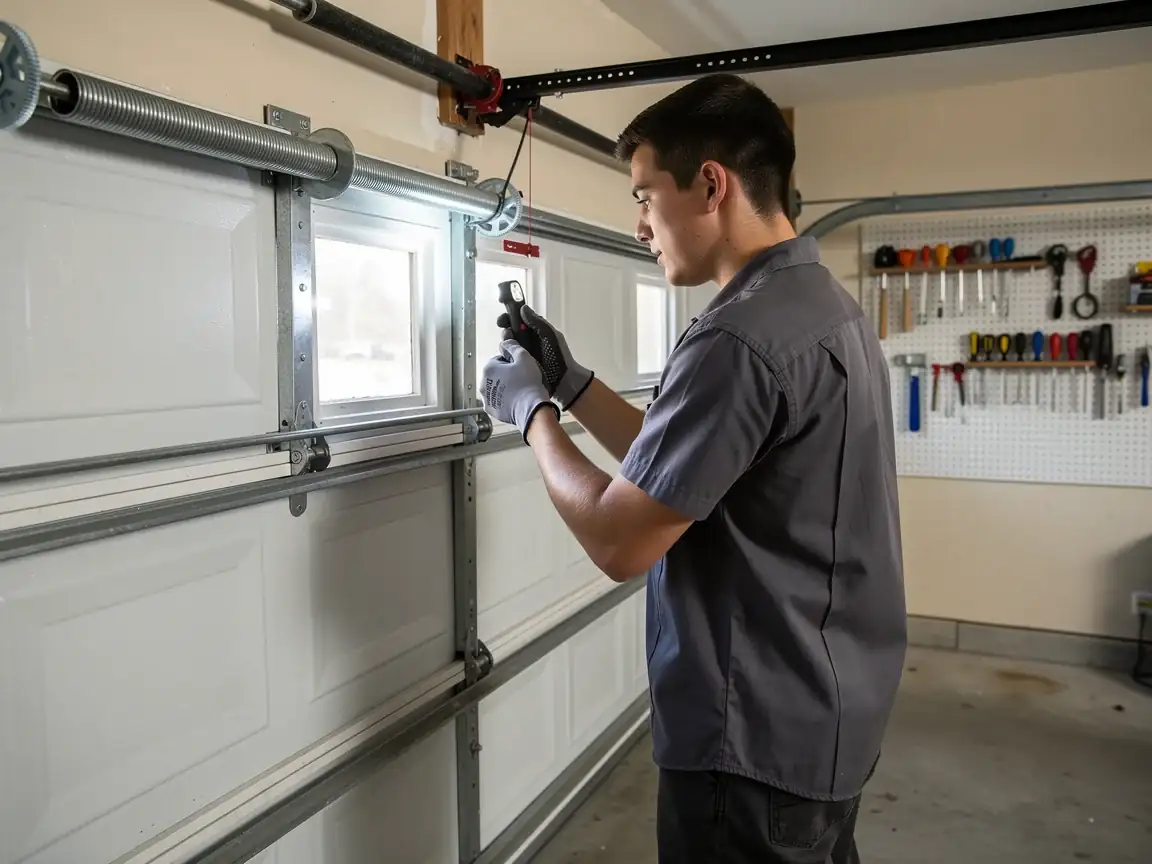
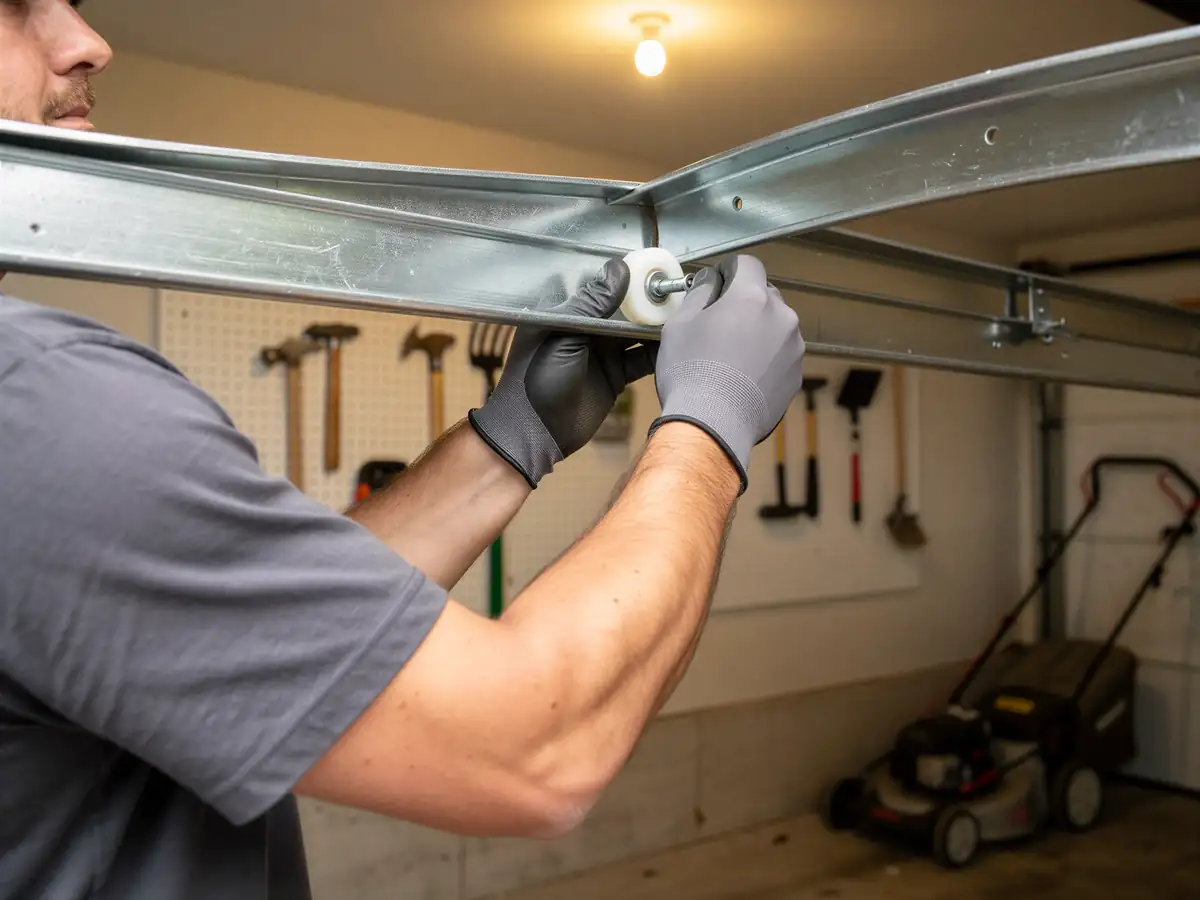
We stock the rollers and track hardware that actually fit Greenfield's housing - mostly 1960s-70s era single and double doors with steel rail sections and the bracket spacing that era used. Galvanized steel rollers, the sealed-bearing nylon upgrades homeowners ask for once they've had a roller fail, track splice plates, and the lag bolts and tab brackets that hold the vertical and horizontal rail to the jamb and header.
Winter here matters for this repair specifically. The climate band is cold and severe, and a track that's a quarter-inch out of plumb in August can bind hard once the steel contracts in January - that's when a marginal alignment finally throws a roller. We carry extra of the common roller sizes through the cold months for that reason.
One limit worth saying plainly: if a door has been run off-track more than once and the track itself is bent in multiple spots rather than just walked out of alignment, we don't try to hammer it straight on site. Bent rail gets replaced, not reshaped - a straightened section looks fine and fails again within a season.
The DIY Question
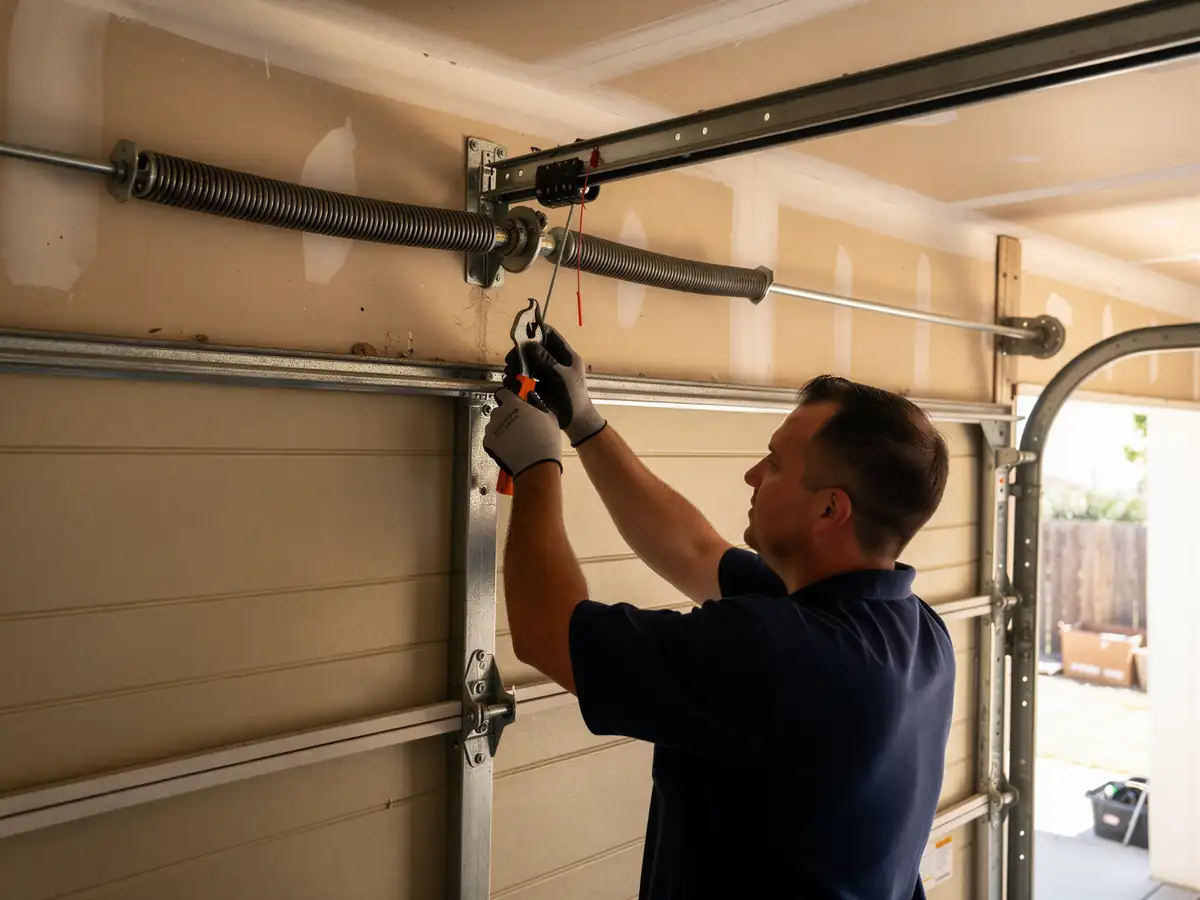
An off-track door is not a safe DIY repair if the door is under spring tension, which almost all of them are. The torsion or extension springs are still loaded even when the door is sitting crooked in the opening, and releasing that tension without the right bars is how people lose fingers or get hit by a cable under load.
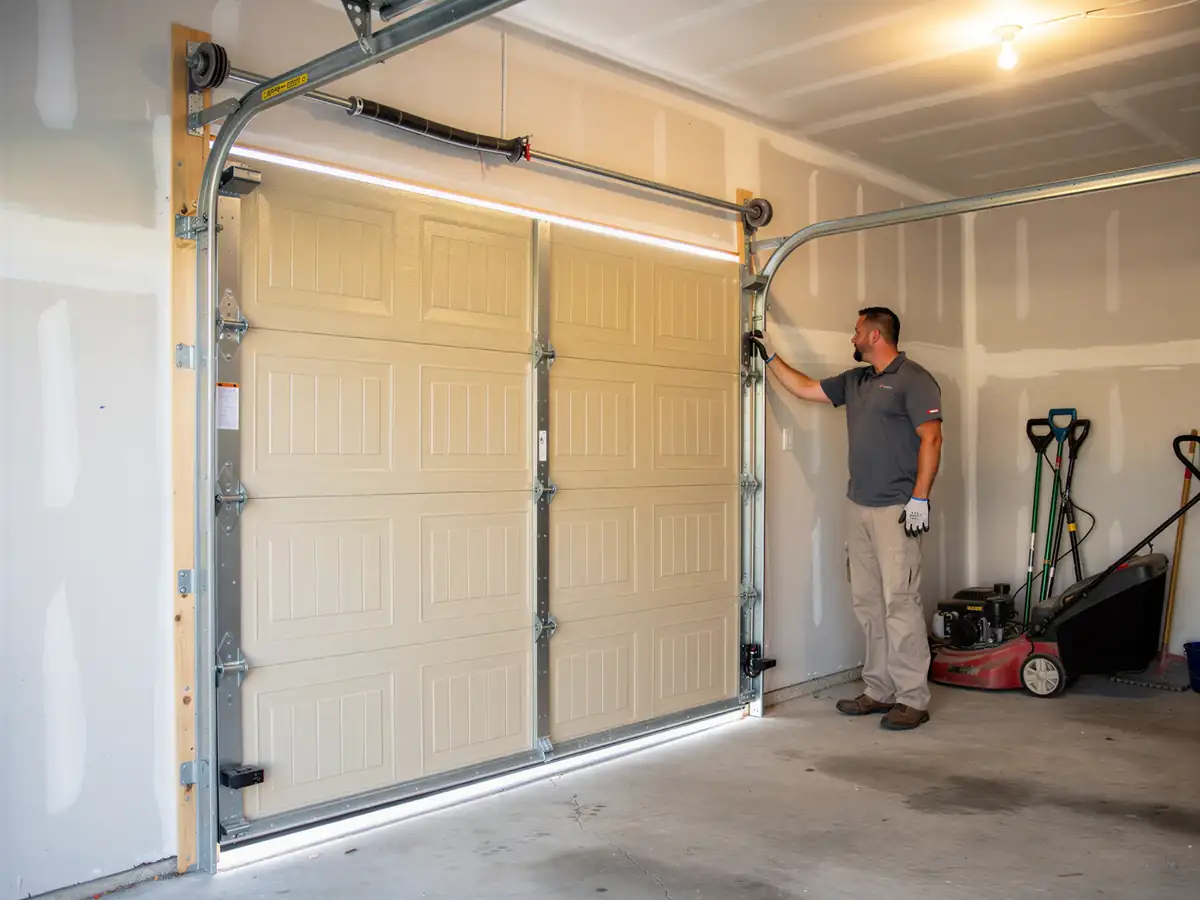
If the door is only off at one roller near the bottom and it's unplugged from the opener, some homeowners can walk it back onto the track by hand with the door mostly closed and the tension low. That's the exception, not the rule. Once the door is more than a few inches out, or it's a double door - heavier, more leverage, more spring force - this is a two-person job with clamps and a track bar, and it's not worth the risk of a trip to urgent care to save a service call.
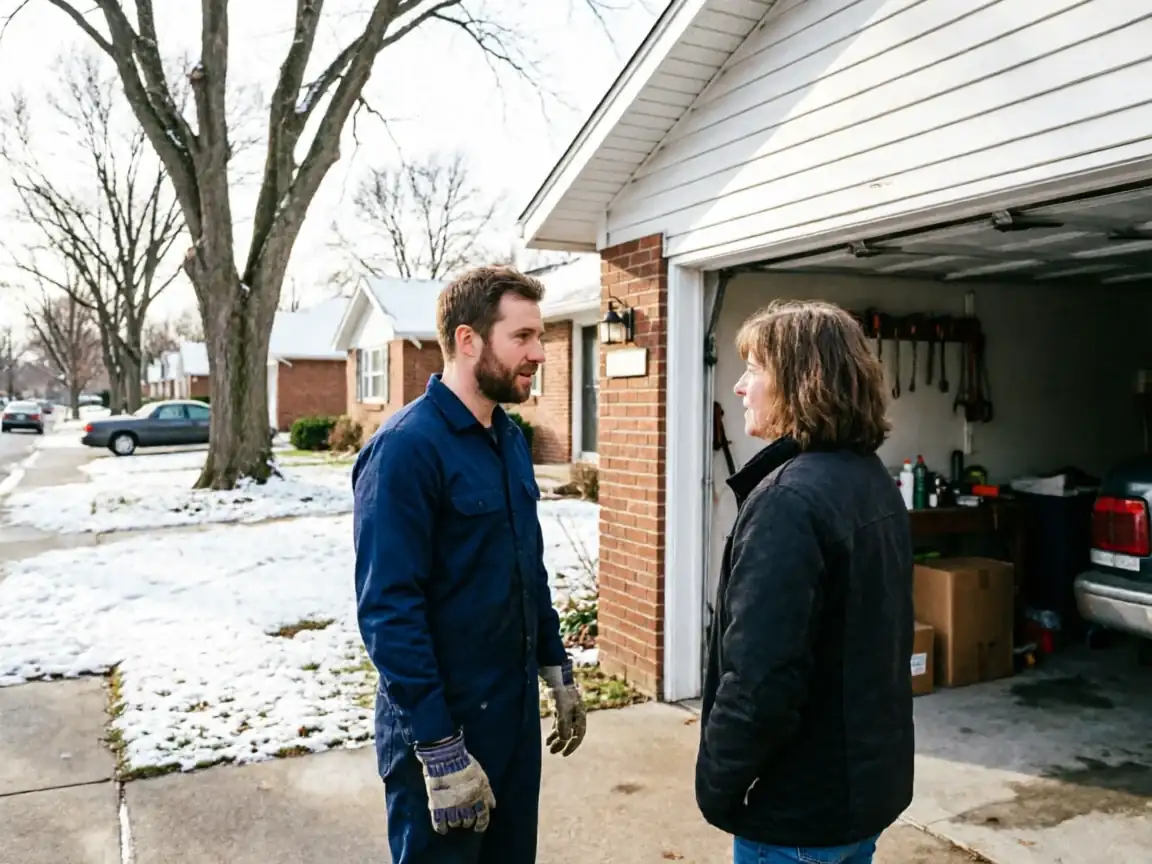
Greenfield's median household income runs lower than some of the closer-in suburbs we cover, and we get that cost is part of this decision. We'd still rather tell you to wait and call than watch someone try to muscle a double door back onto steel rail alone.
What the Fix Involves
We're coming from West Allis, 3 miles out
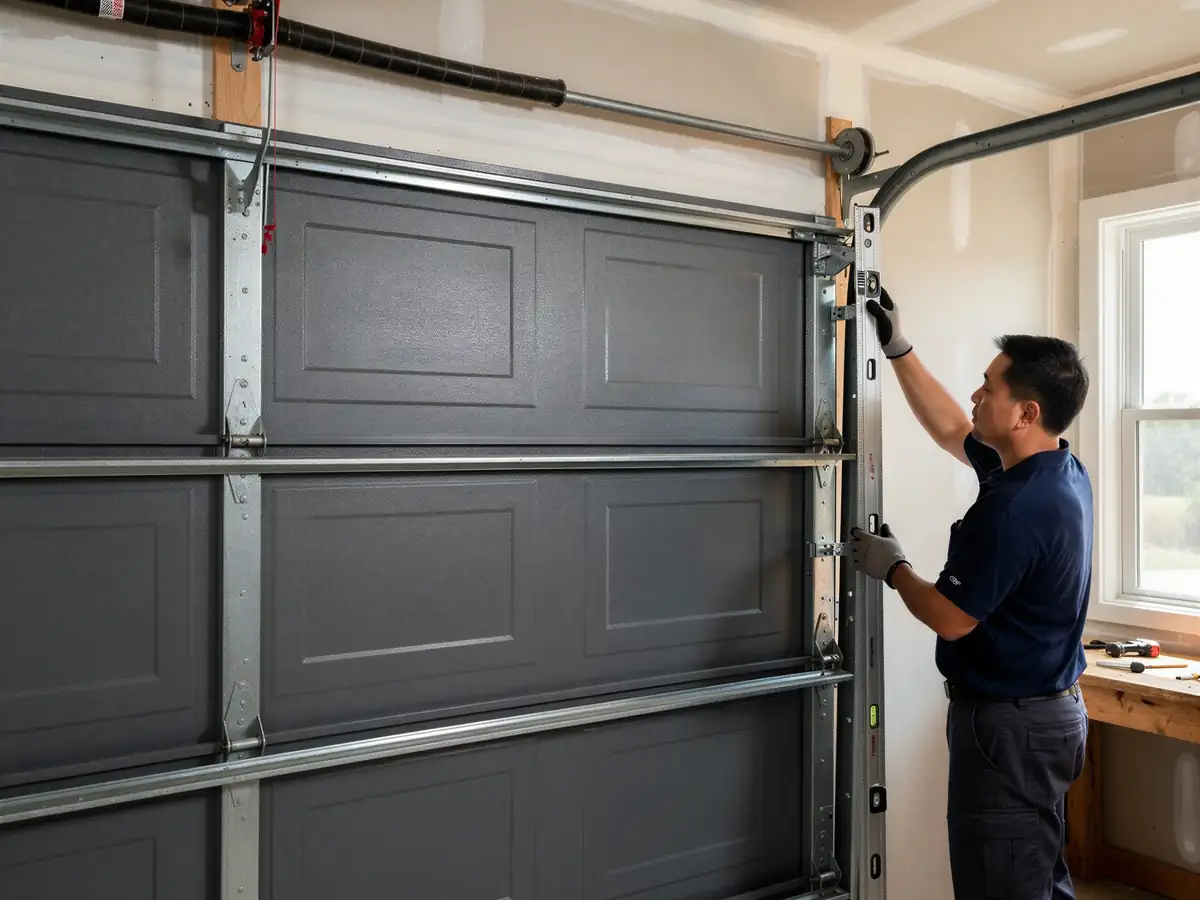
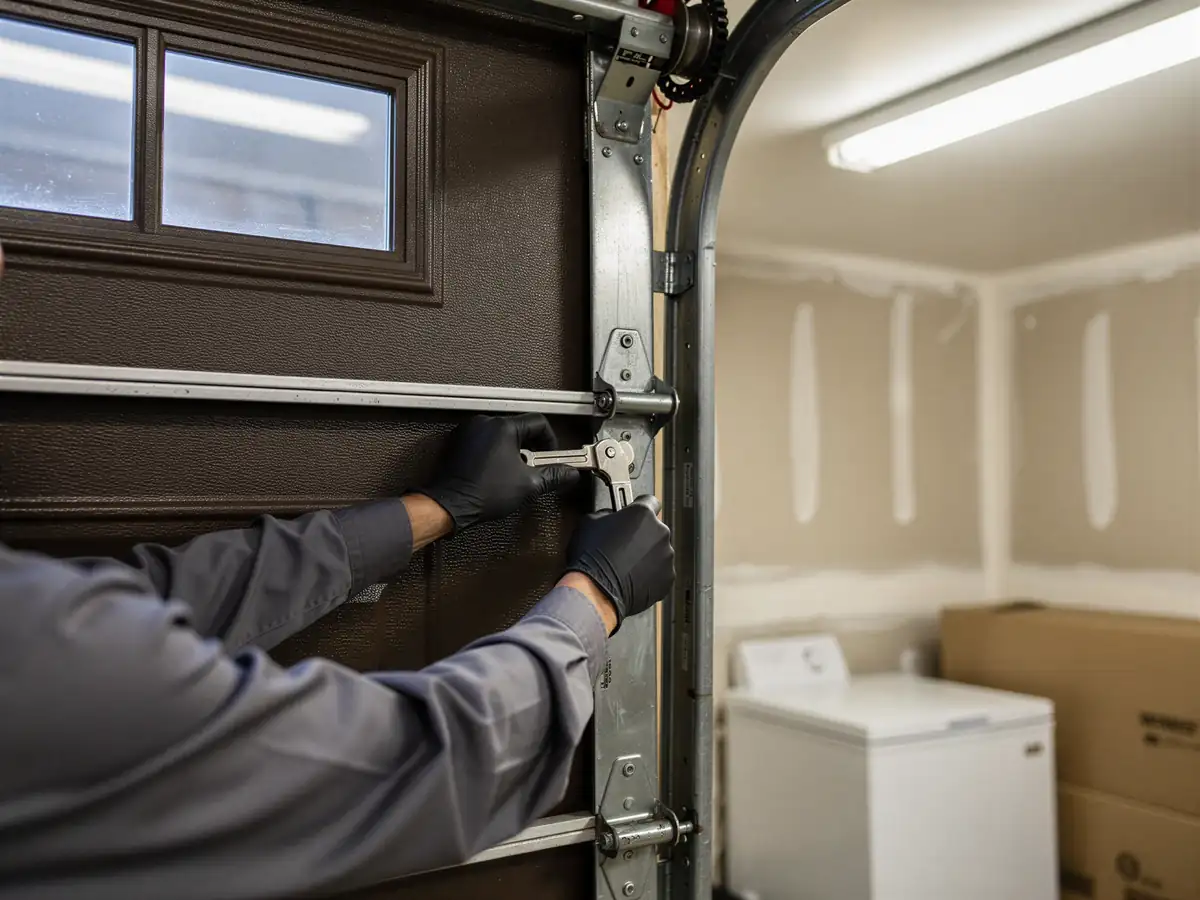
So travel time to a Greenfield address isn't the long part of the job. The work itself is: unload spring tension safely, pull the door off whatever's left of the track engagement, check the rail for bends versus just misalignment, and re-set or replace rollers depending on how worn they are.
- 3 miles
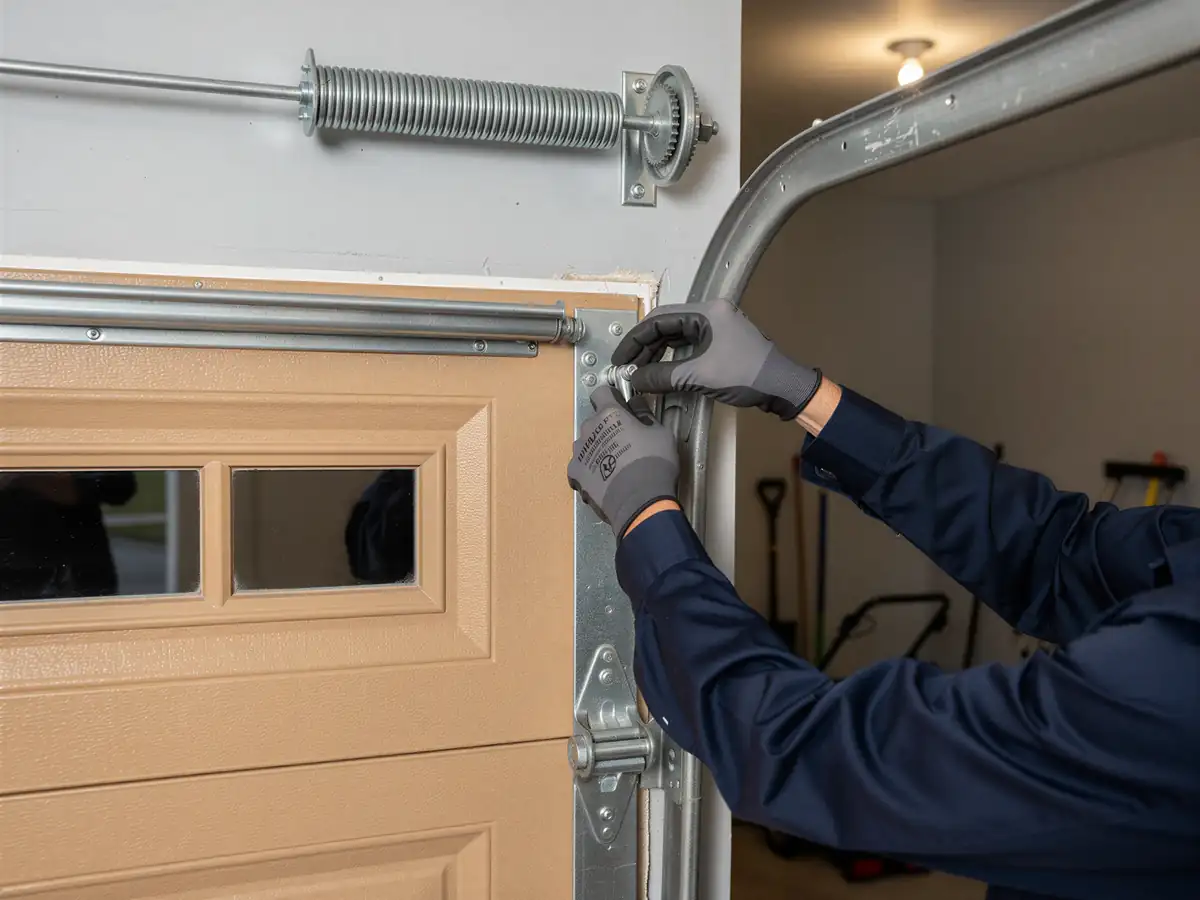
On a lot of the 1973-era doors we see here, the rail brackets themselves have loosened over fifty years of use
That's often the root cause, not just a bad roller. We'll re-anchor those brackets to the jamb while the door's apart rather than put it back up on hardware that's going to walk loose again in a year.
If the track is bent from the door having been forced while jammed
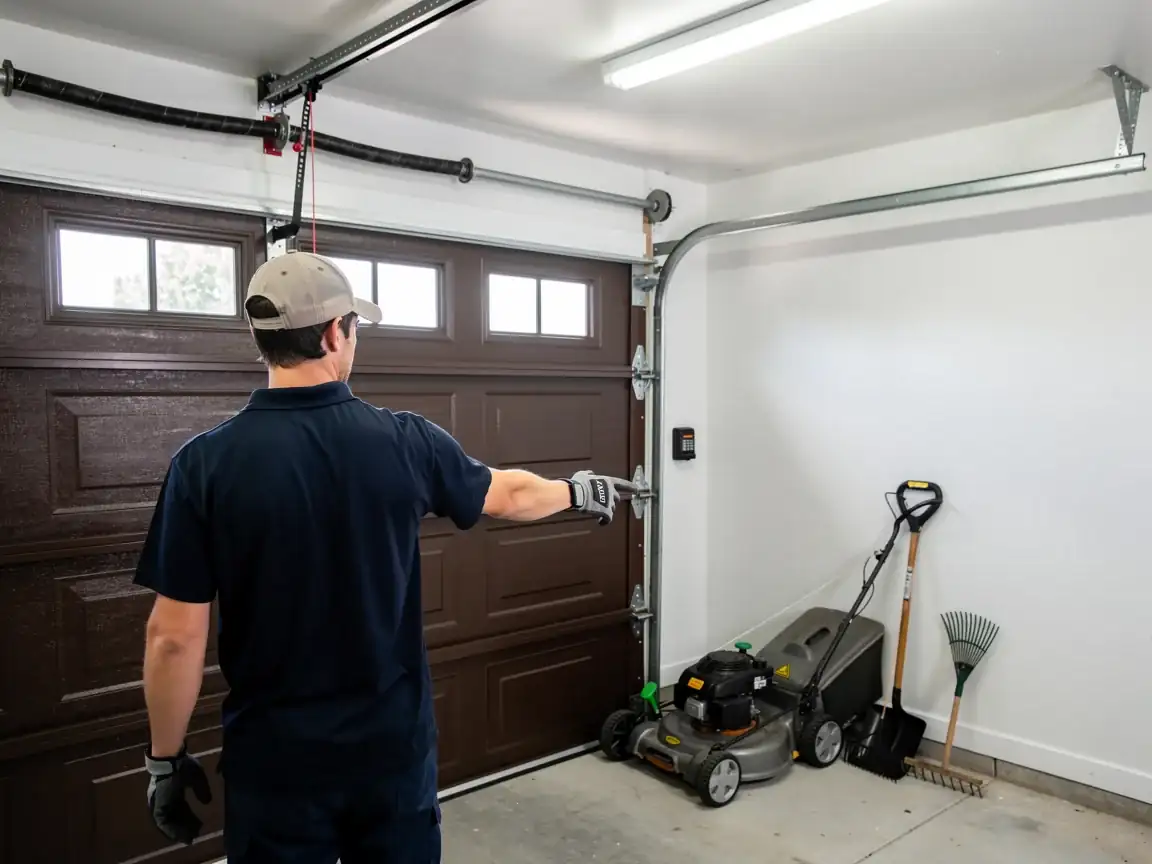
We replace that section rather than bend it back - bent rail that's been straightened loses its shape again under the first hard winter cycle. Once it's back on track, we run the door through a full open-close cycle under power before we call it done, checking both roller tracks are taking the weight evenly.