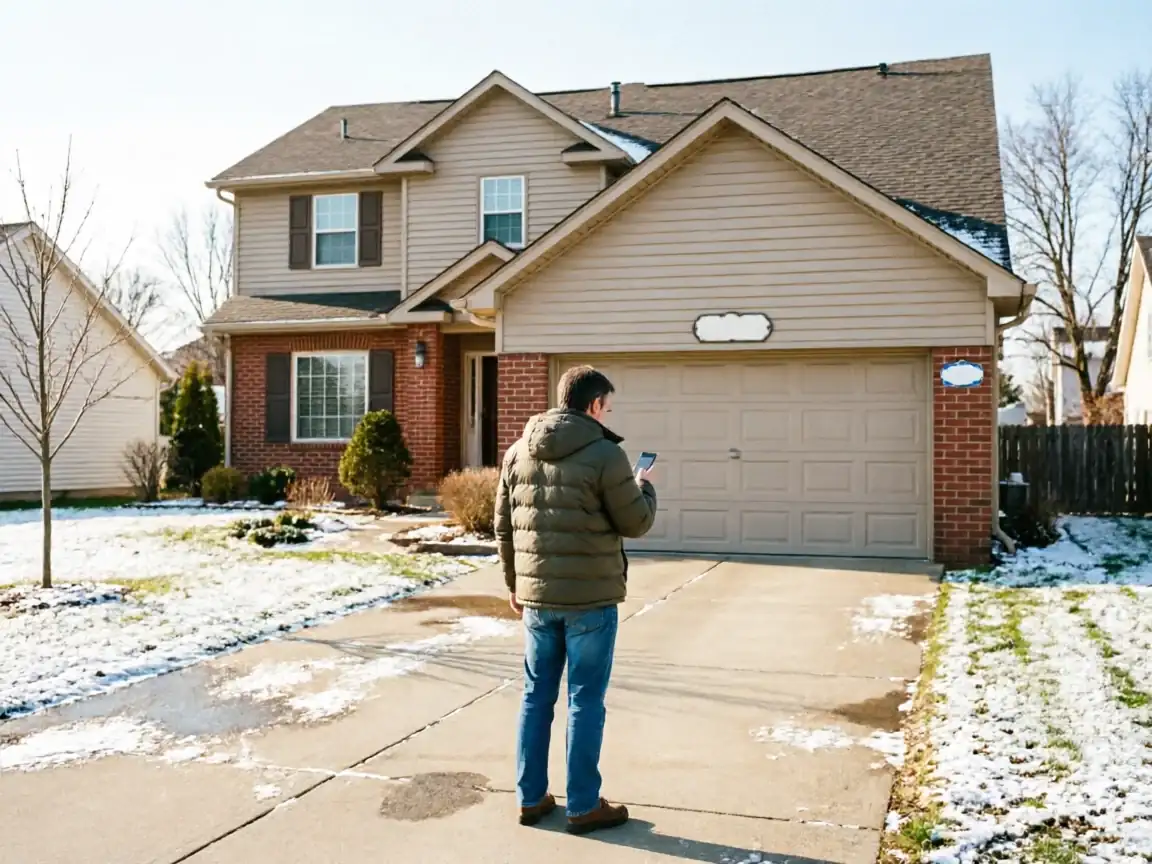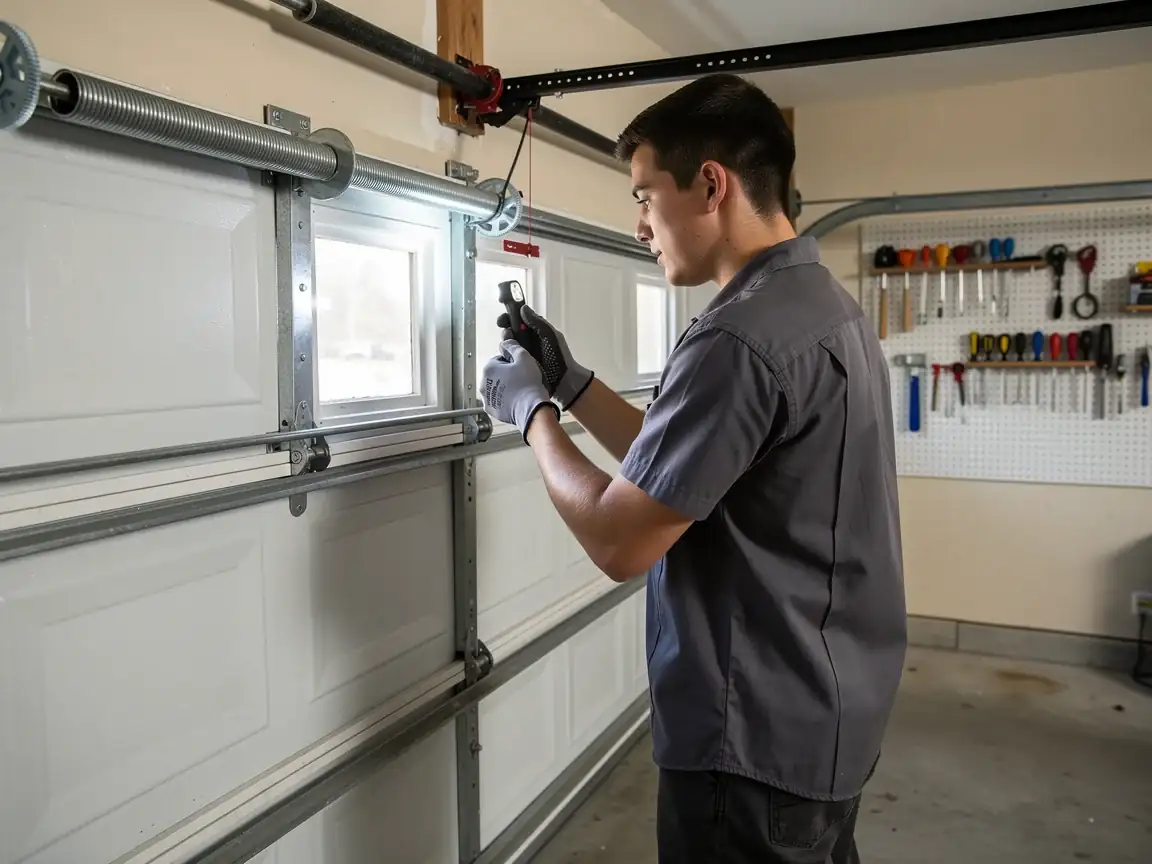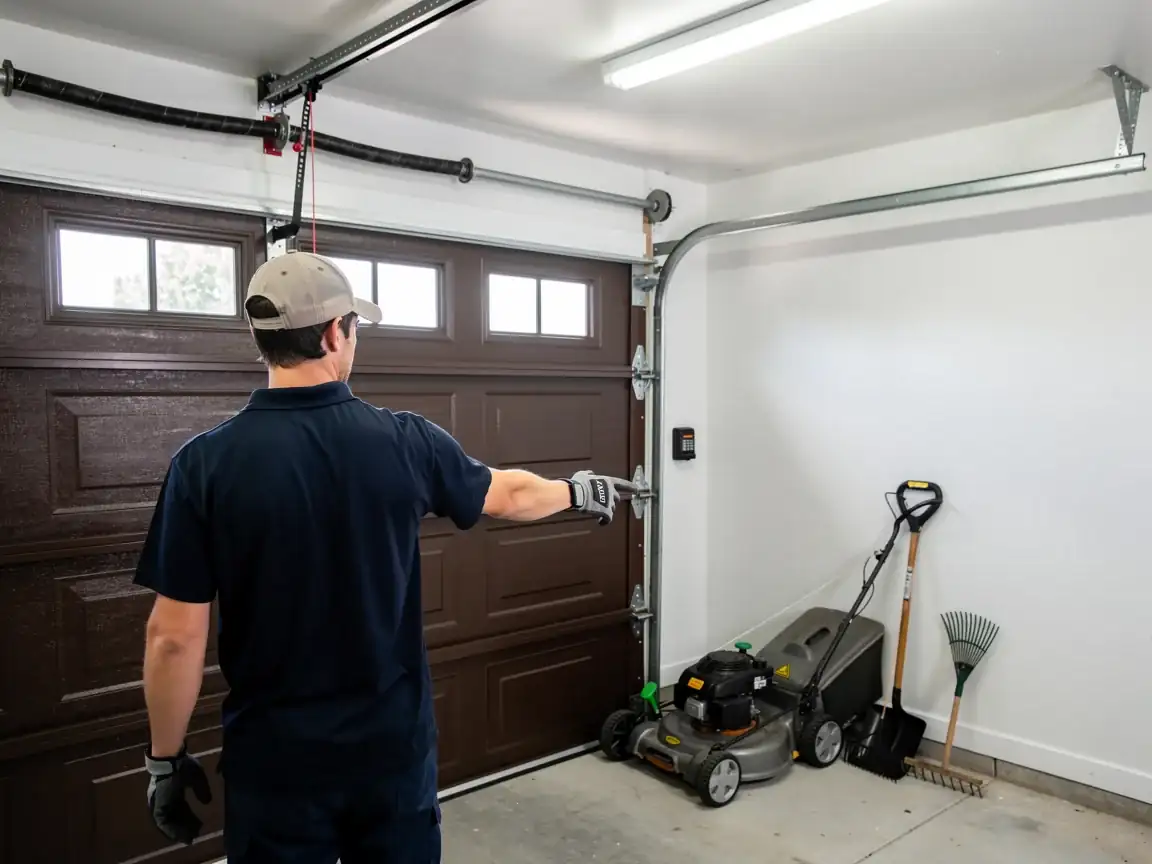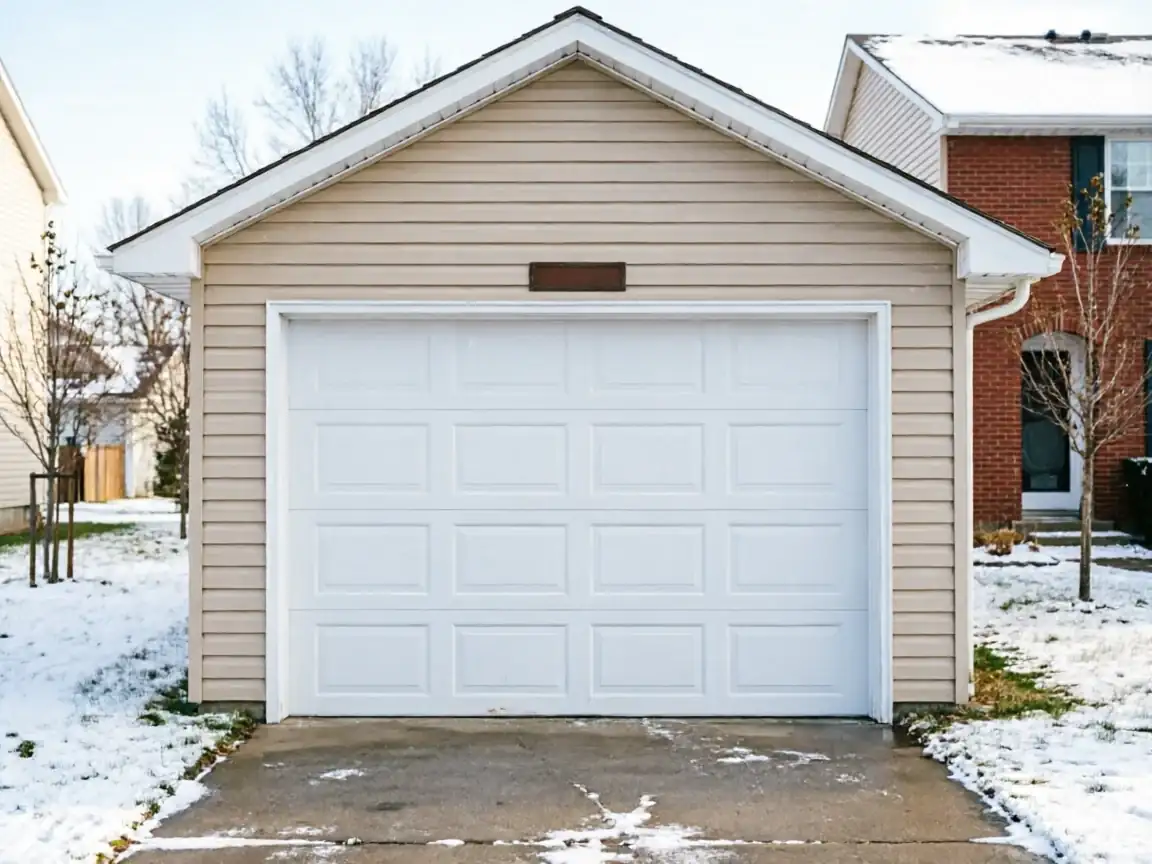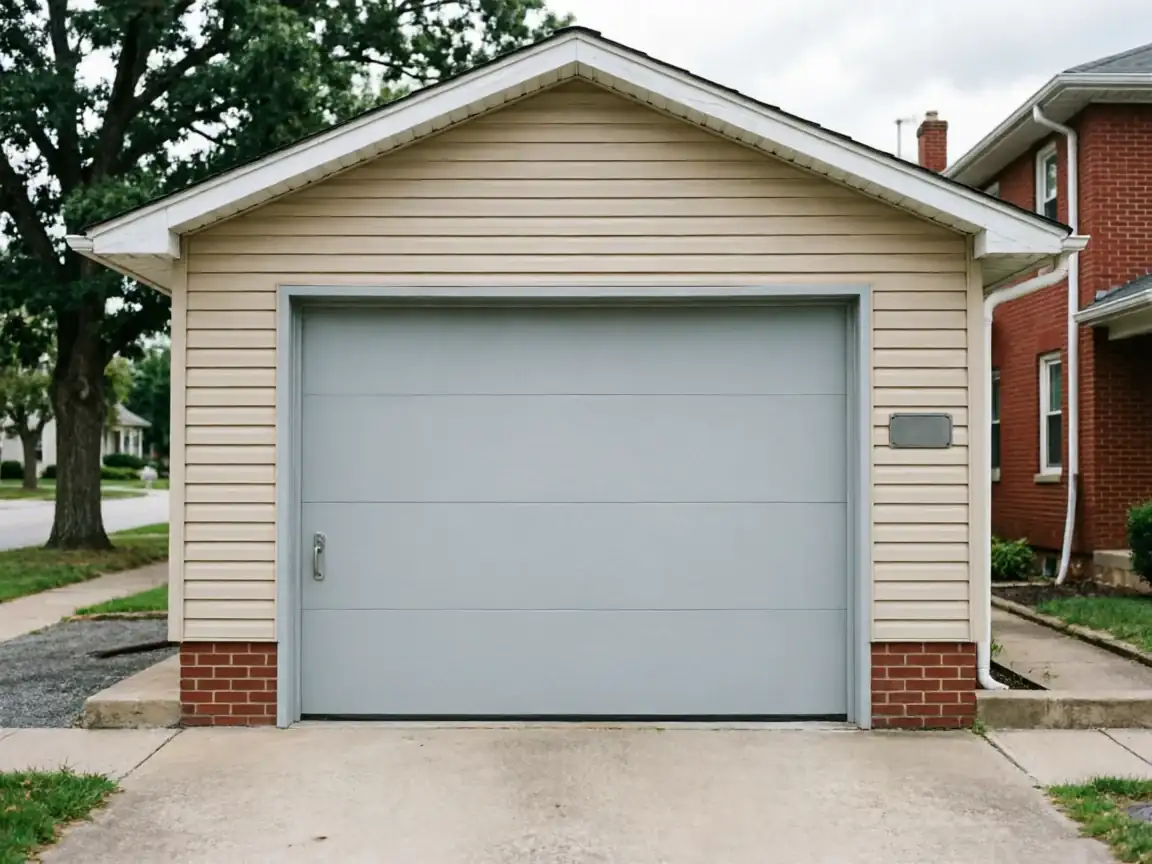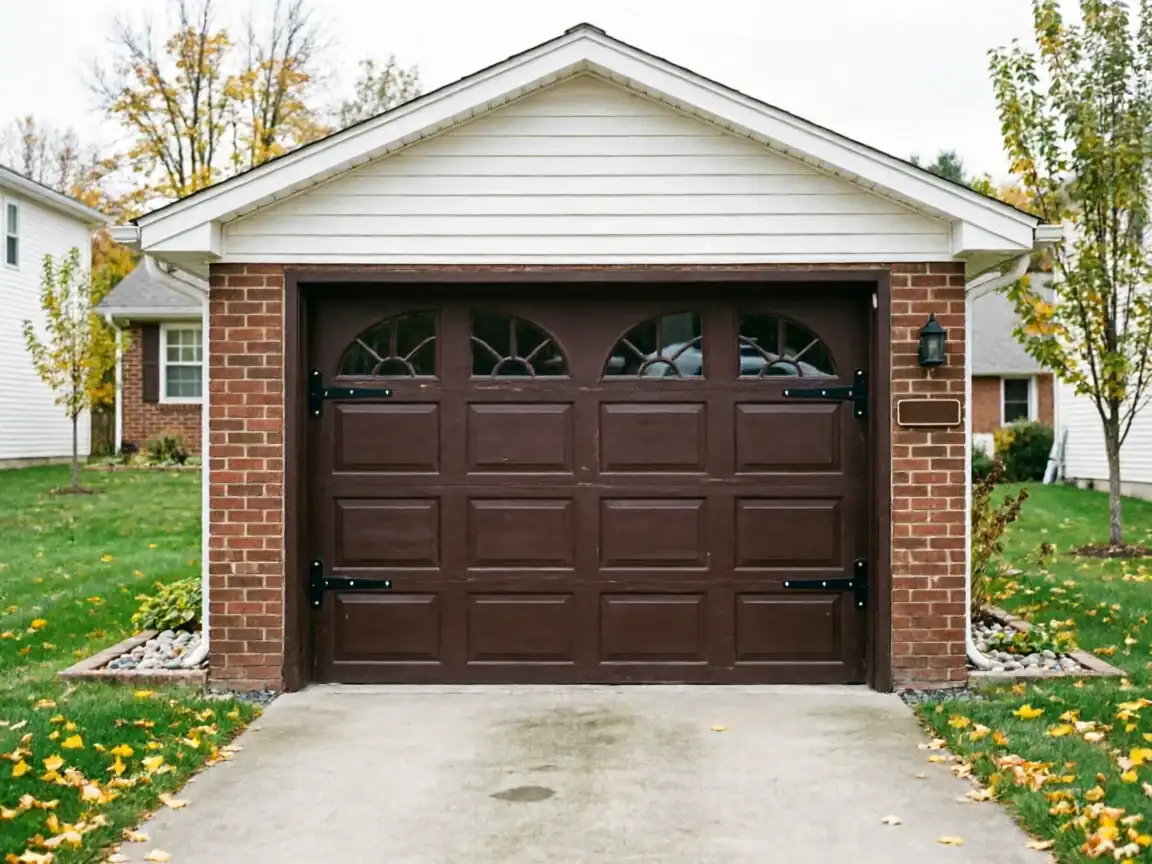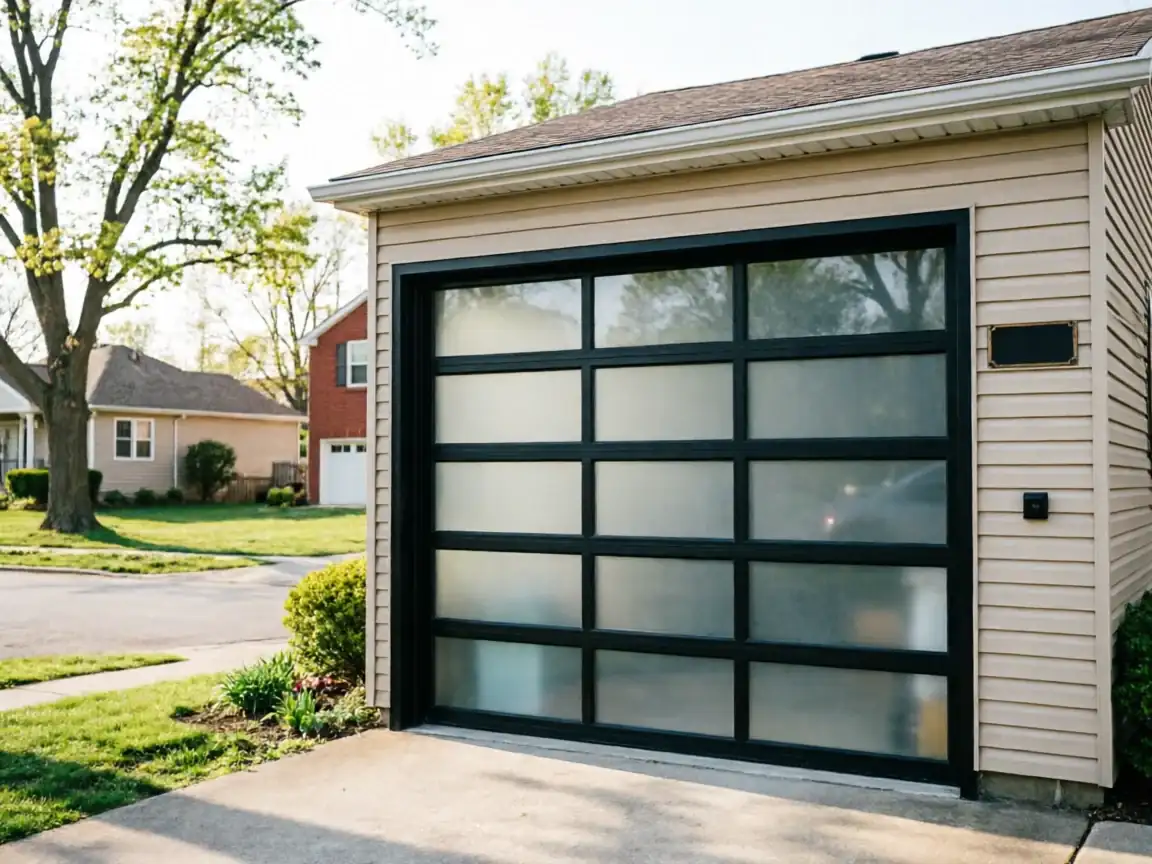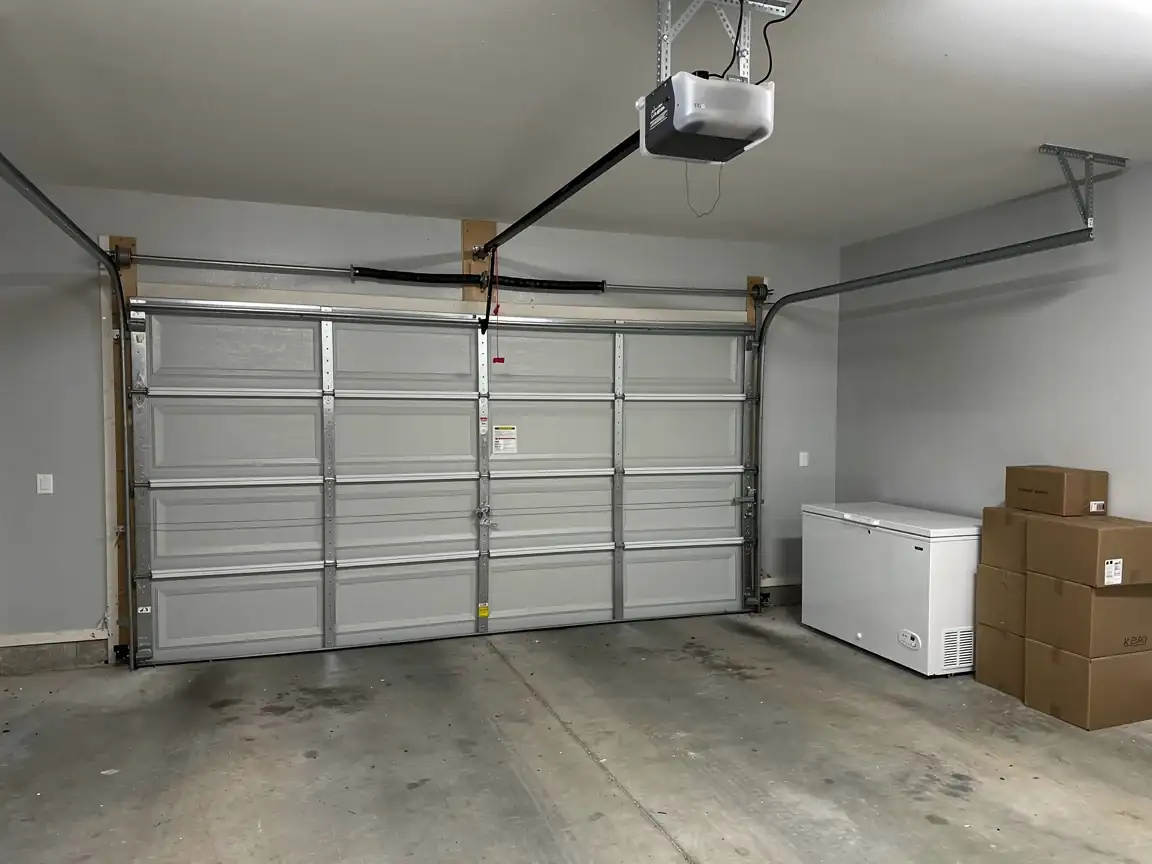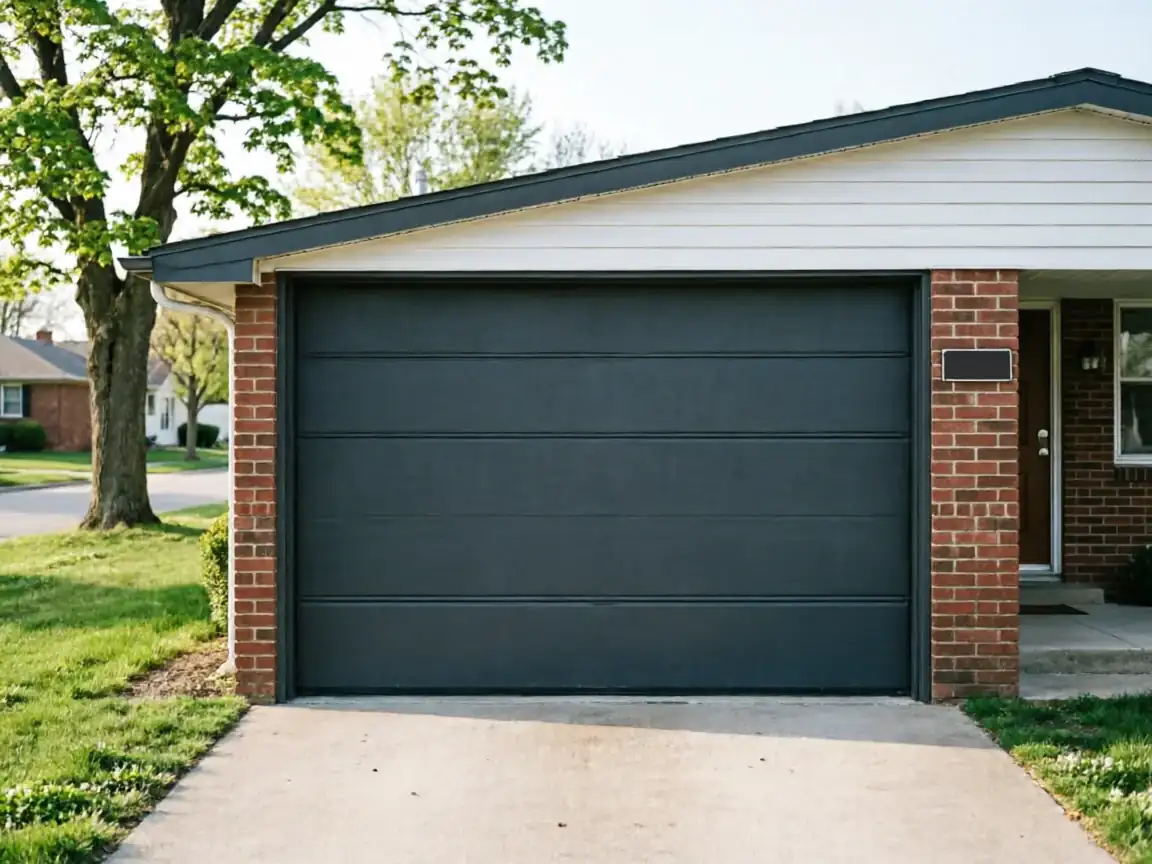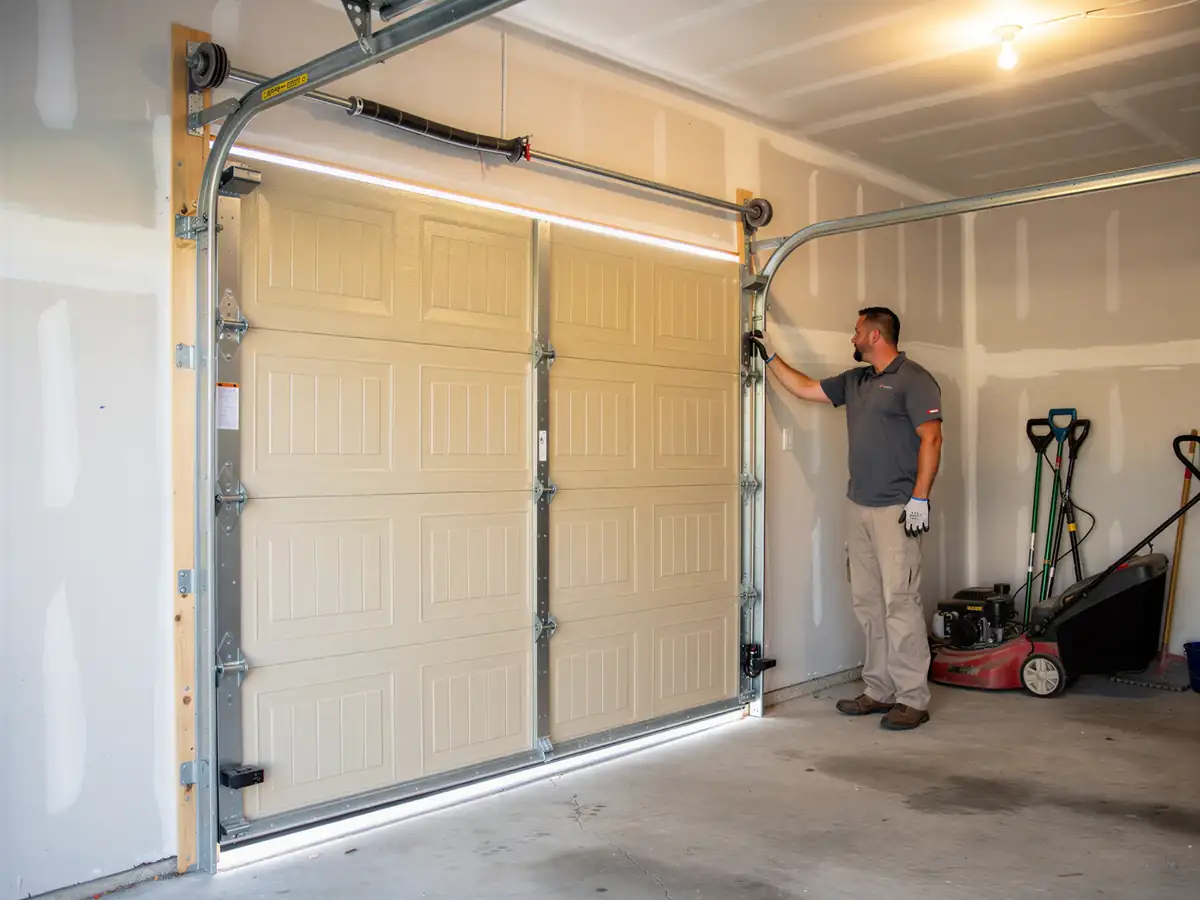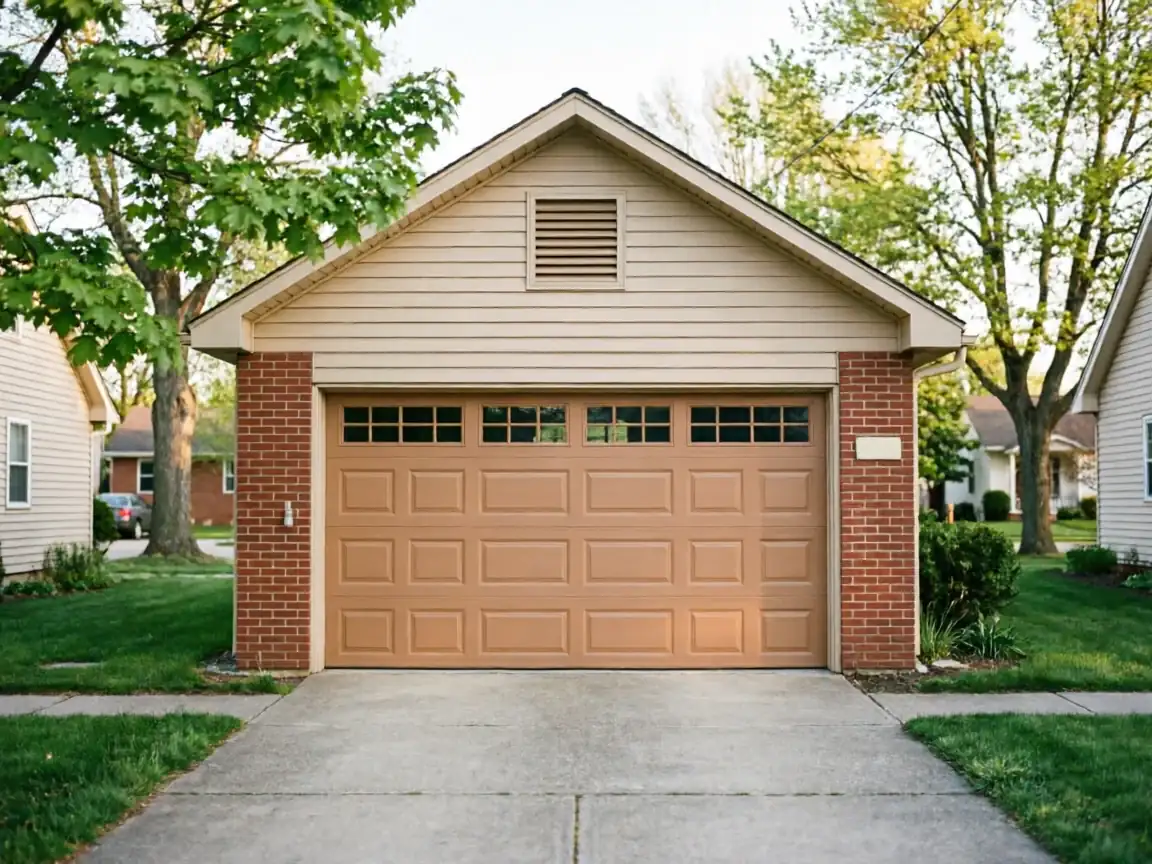
What You Are Seeing
Most of the repair calls we get from Greenfield start the same way
The door won't budge, or it slams the last foot of track instead of settling. That's almost always a spring problem, not an opener problem, and it tracks straight back to when these houses were built.
Greenfield's housing stock centers on 1973
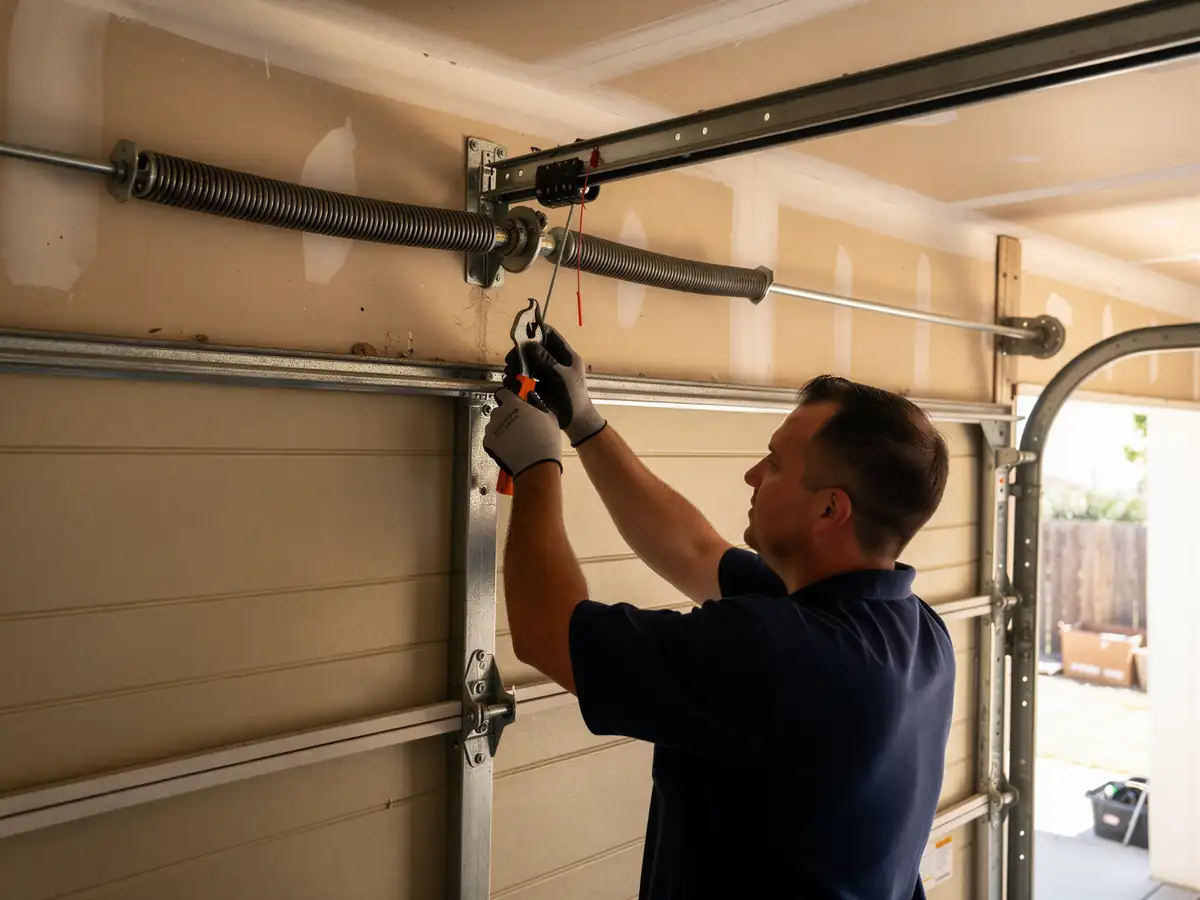
Right in the stretch of Milwaukee-area suburbs that went up with steel sectional doors on extension springs mounted above the horizontal track, rather than the torsion springs over the header that became standard later. Fifty-plus years on, those extension springs are well past any reasonable service life, and the safety cables meant to contain a snapped spring are often missing, frayed, or were never retrofitted at all. If your door is original to a 1973-built house and you haven't had the spring system touched, that's the first thing we check.
Cold plays into it too
Wisconsin winters stiffen the lubricant in old rollers and tracks, and steel panels from that era contract more than modern insulated doors. A door that worked fine in September can bind or jump track in January for no reason other than temperature - it's not a new problem, it's an old part finally meeting a cold snap.
Parts We Carry
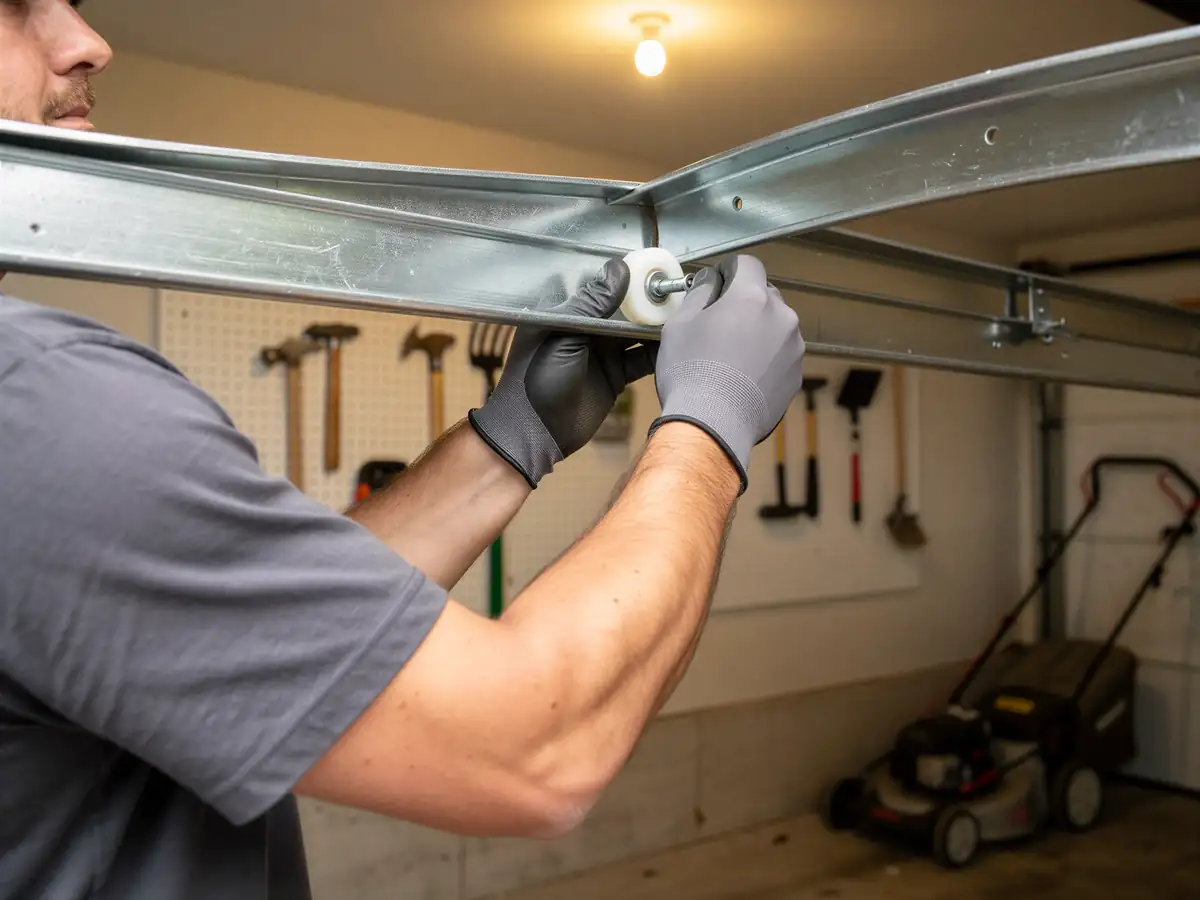
Because so much of Greenfield's housing dates to the same few years, we carry the parts that era actually needs, not a generic bin. That means extension springs in the sizes that match early-70s single and double doors, galvanized safety cables, and the nylon rollers that replace the steel ones original to these doors (steel rollers are loud and don't hold up to cold the way nylon does).
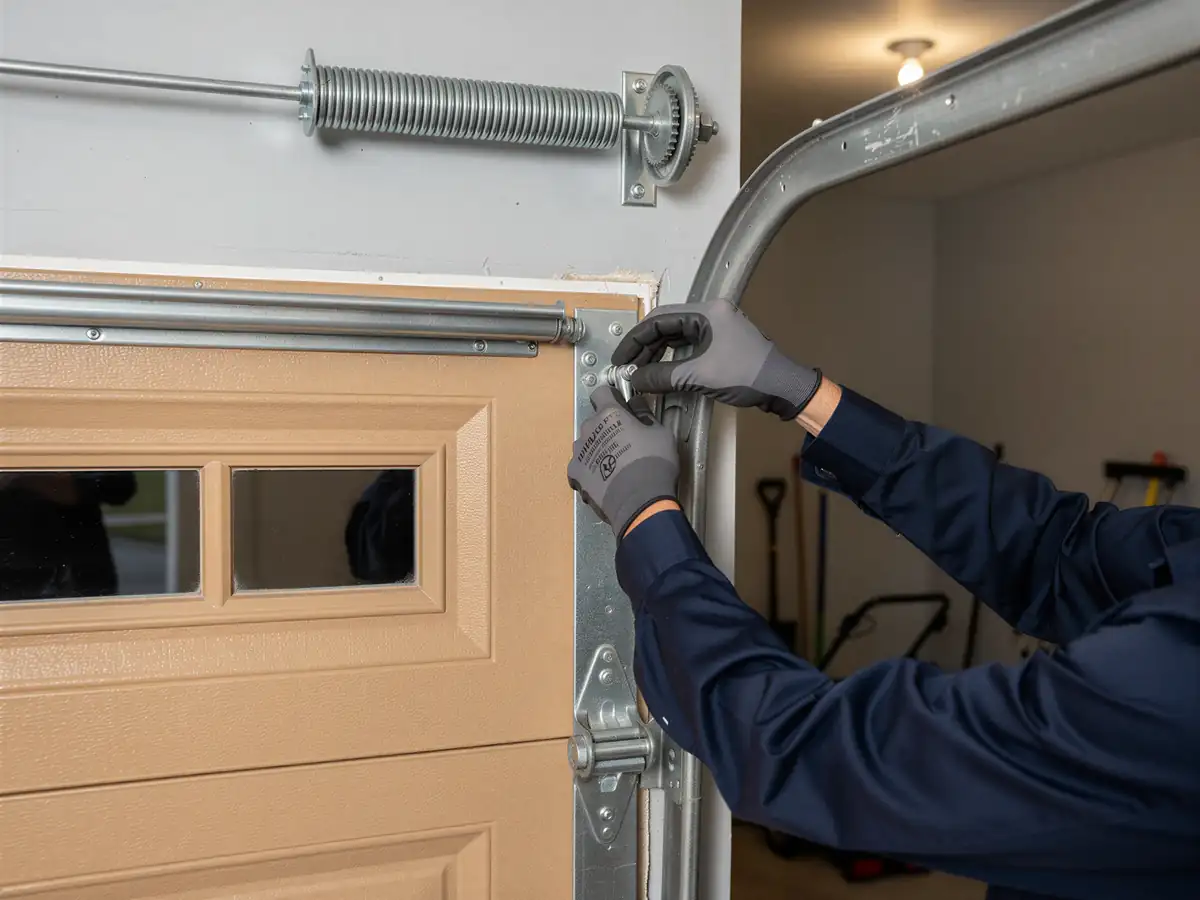
We also stock torsion conversion hardware for homeowners who want off extension springs entirely - torsion springs sit over the header, out of the way, and don't carry the same snap-and-whip risk a worn extension spring does. It's not required, but for a door that's original to a 1973 build, it's often the better long-term fix than just swapping like for like.
One honest limitation: we don't stock every obsolete track bracket or hinge pattern a 50-year-old door might have. On some of the oldest original doors in Greenfield, we may need to source a part or recommend replacing the section rather than chasing a discontinued bracket. We'll tell you which situation you're in before we start, not after.
The DIY Question
A spring job is the one garage door repair we tell people flat out not to do themselves. An extension spring under tension can take a finger off, and a torsion spring can do worse. That's not scare talk, it's why we carry winding bars and clamps on the truck instead of a screwdriver.
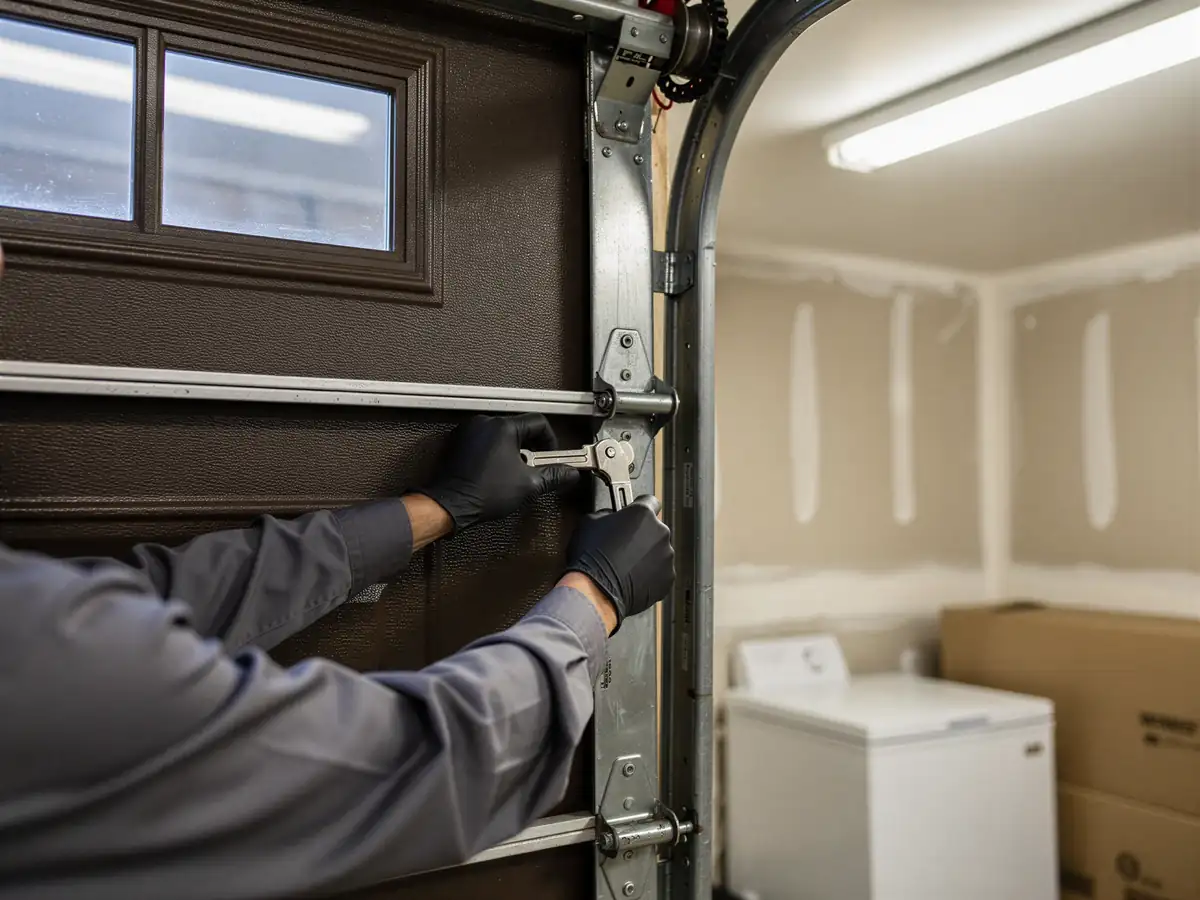
What you can reasonably check yourself: whether the rollers are visibly cracked or flat-sided, whether the track bolts are loose, and whether the door is noticeably harder to lift by hand in winter than in summer (if it is, that's a spring losing tension, not an opener problem).
Greenfield's median household income sits around $69,016, well under the roughly $108,690 median across our wider service area, and we bring that up because it shapes the advice we give: we'd rather tell you a $40 roller swap will hold for another two winters than sell you a full door replacement you don't need yet. When the door really is done - rusted-through bottom panel, warped track, springs that have stretched past spec - we'll say so plainly, because patching that costs more in the long run.
What the Fix Involves
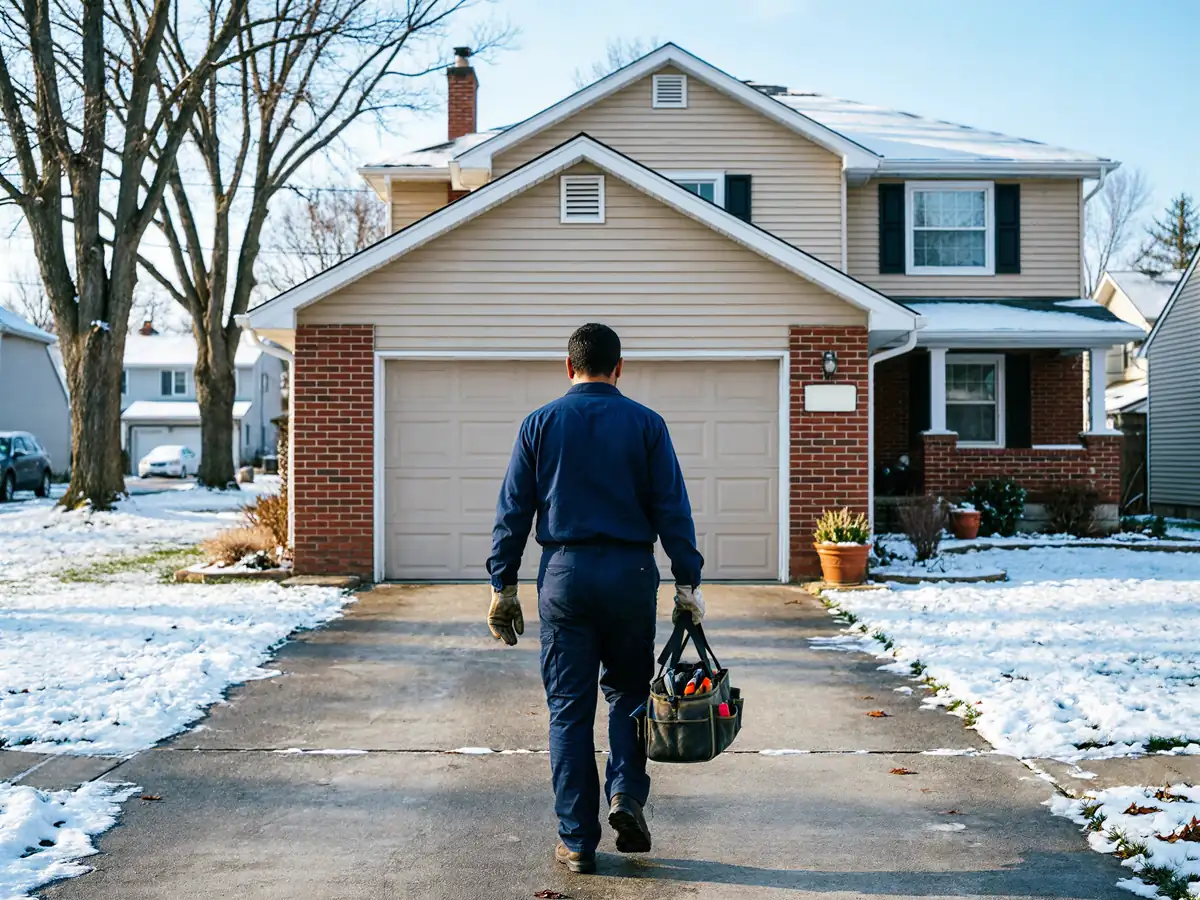
For a typical Greenfield call
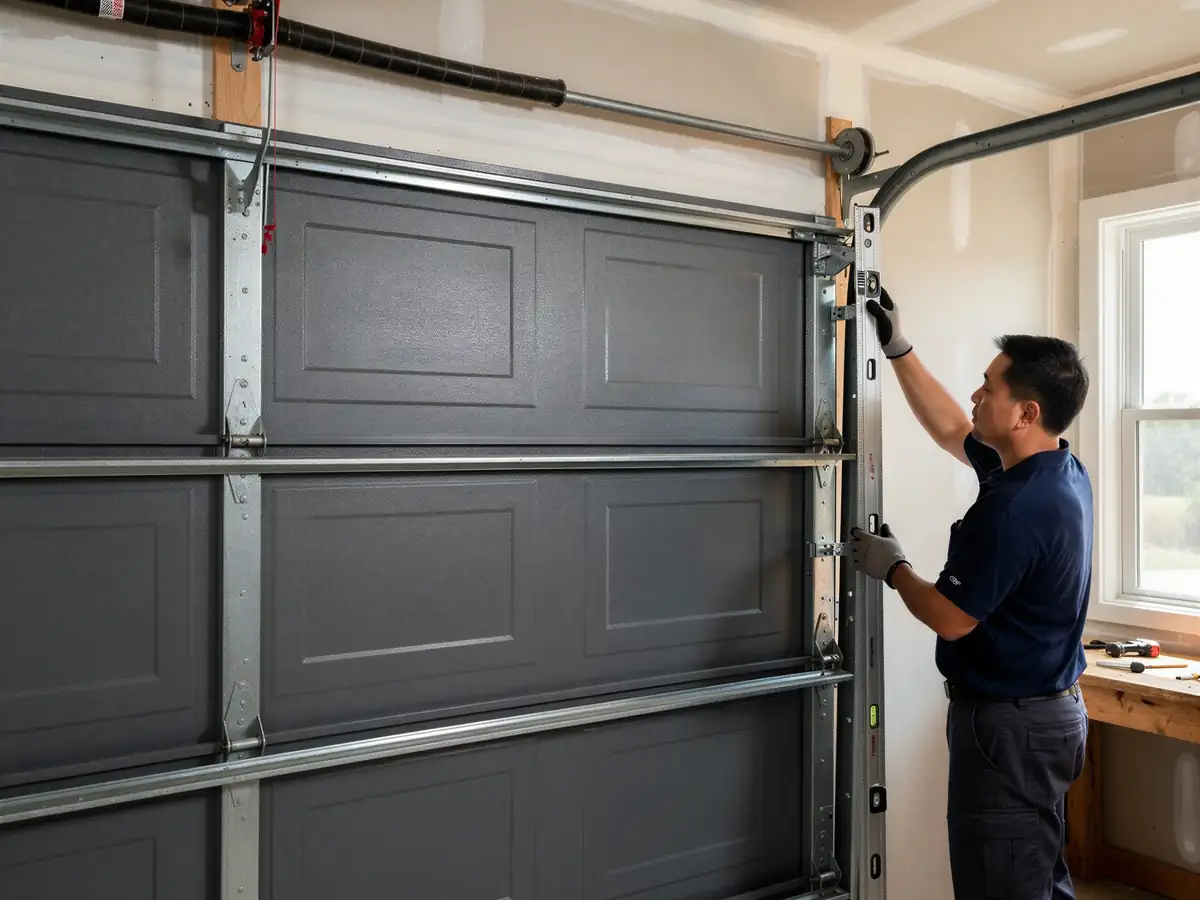
Worn extension springs on a 1970s steel door - the job is: release tension safely, pull the old springs and cables, install matched replacements rated for your door's weight, and re-balance so the door holds still at waist height with the opener disconnected. We check rollers and track alignment while we're in there, since cold-weather binding usually shows up in the same visit as a tired spring.
At three miles from our West Allis shop, Greenfield is one of the closer stops on our route
So there's no long haul built into the job - the truck carries the parts list above on every run through the area. If your door needs a part we don't have on hand, we'll say so and give you a real timeline rather than guess.
We don't do cosmetic panel painting or custom door builds
Our work here is mechanical repair: springs, cables, rollers, track, and opener hardware. If you're after a new wood-look door for curb appeal rather than a fix for a door that's stuck or noisy, that's a different conversation than the one this page is for.