The Cost of This Job
We don't publish a flat maintenance price because the job here tends to cost more labor time than a newer build, not because the parts are pricier. A door on original 1940s-era track usually needs the track reset, lubricated, and checked for square before anything else happens, and that eats time a 1990s door wouldn't need. Household income in this town runs lower than the service area's $108,690 median - this town's median is $48,976 - which is one reason we try to be straight about what's actually worth doing versus what's cosmetic. If a spring or roller is original to a door this old, replacing it now is usually cheaper than waiting for it to fail on its own schedule. We'll tell you flat out when a repair isn't worth it and replacement makes more sense, especially on hardware this age.
How Long It Takes
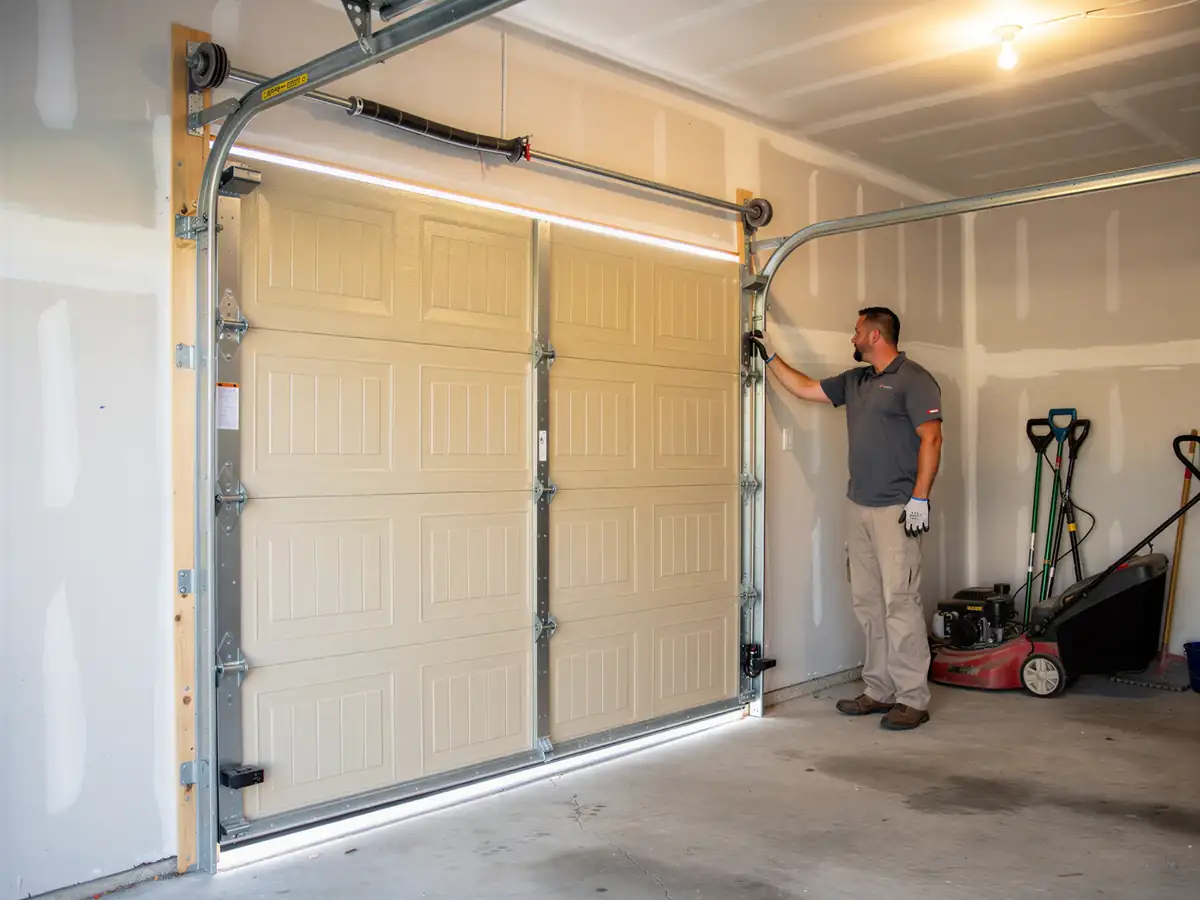
A standard maintenance visit - lubrication, hardware inspection, spring and cable check, opener safety test - runs the same length of time regardless of the town. What changes here is what we find once we're in it. On a door with original 1940s track and hinges, we often spend extra time resetting alignment that's drifted over the decades, which can turn a routine visit into something closer to a tune-up with adjustment work. We won't quote a response time for getting to West Milwaukee specifically - we run out of West Allis, about 3 miles away, and scheduling depends on the day's route, not a fixed window. If a job turns up something beyond maintenance, like a cracked panel or a spring at the end of its life, we'll say so on the spot rather than let it ride.
What the Fix Involves
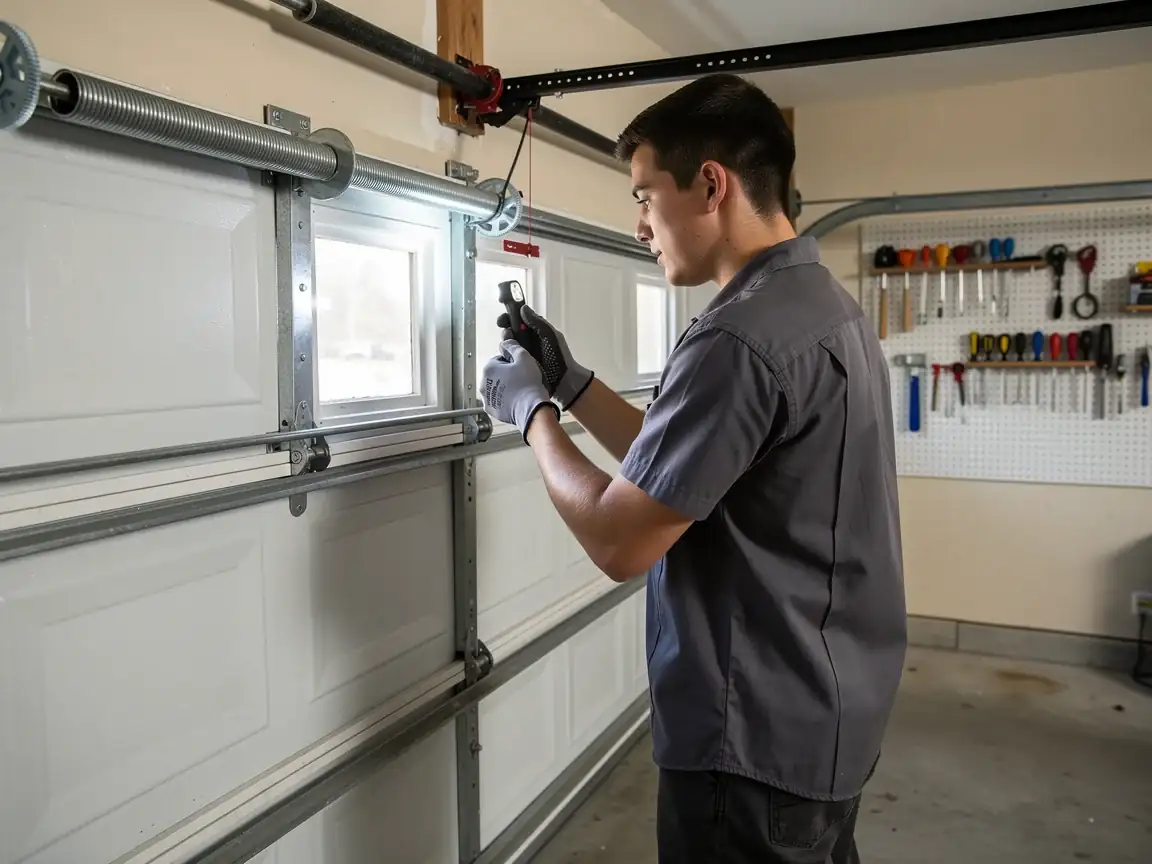
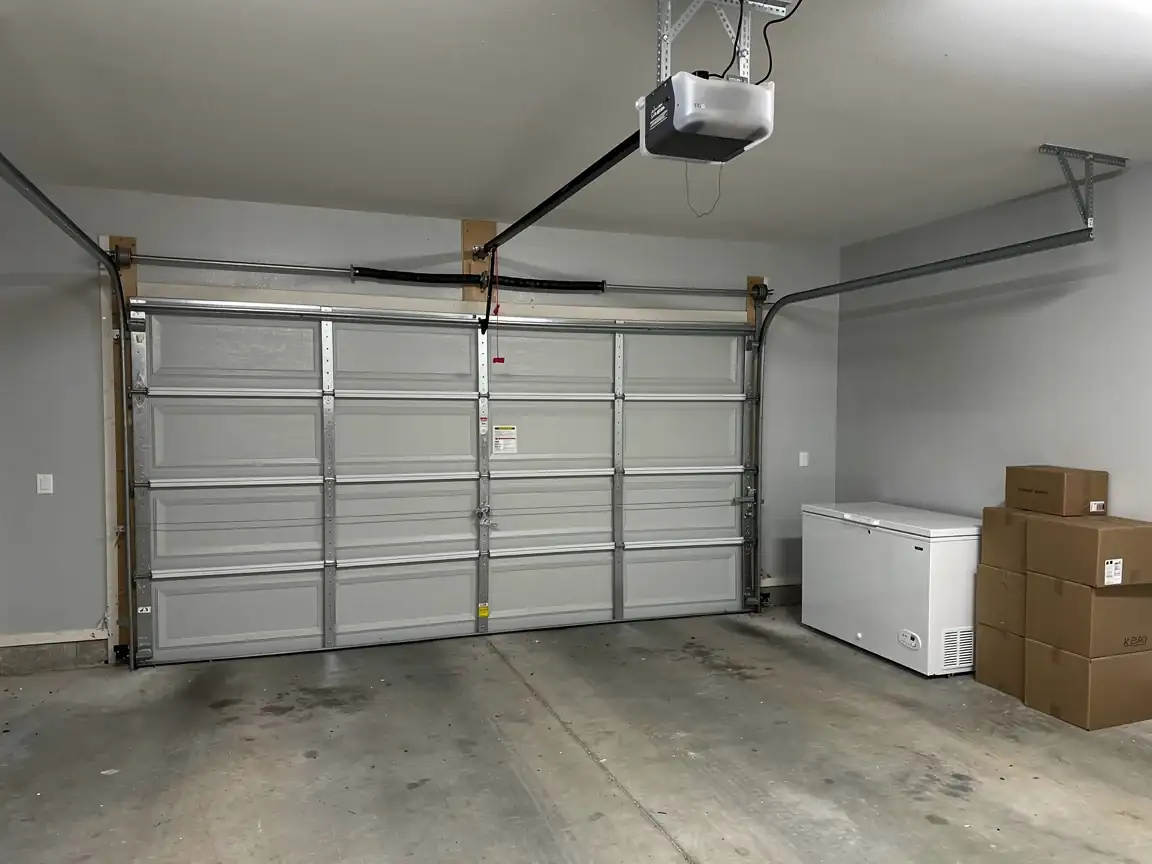
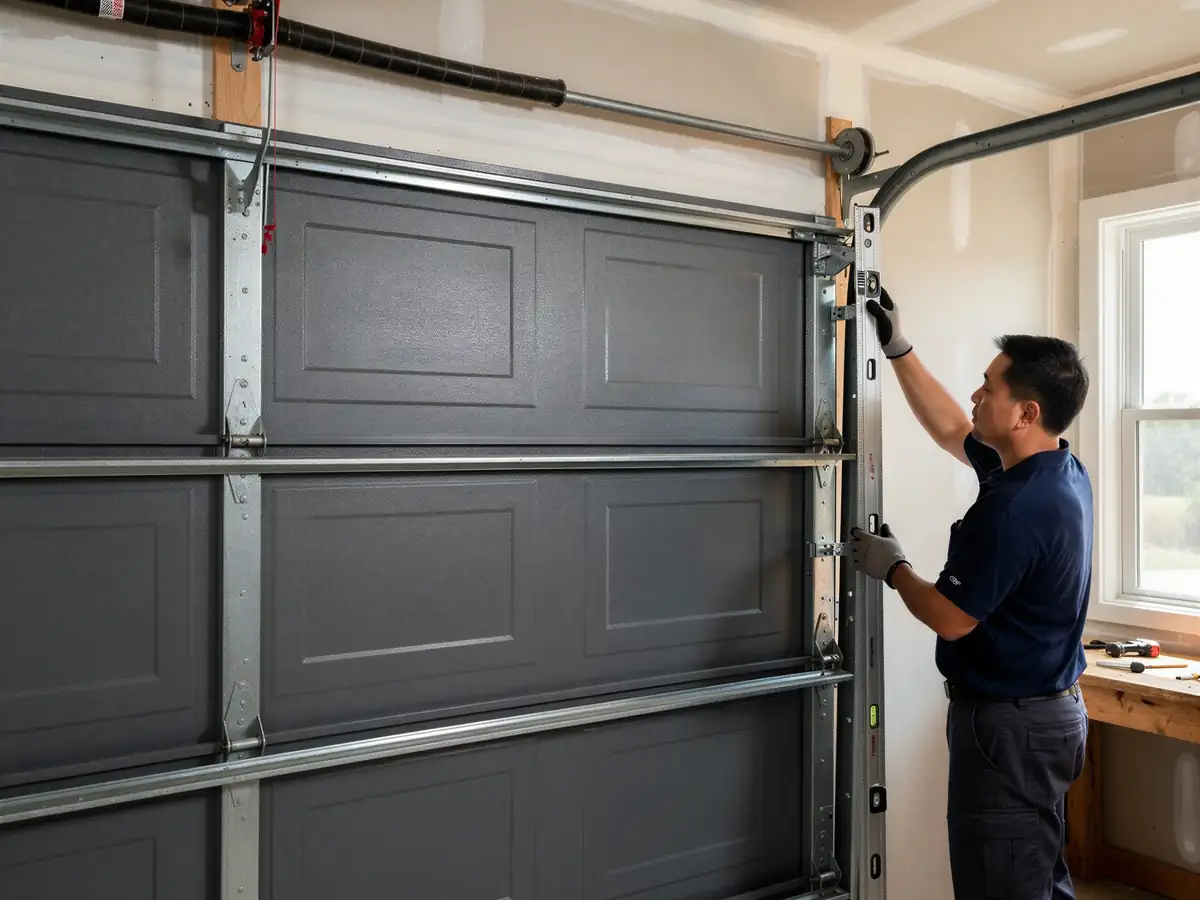
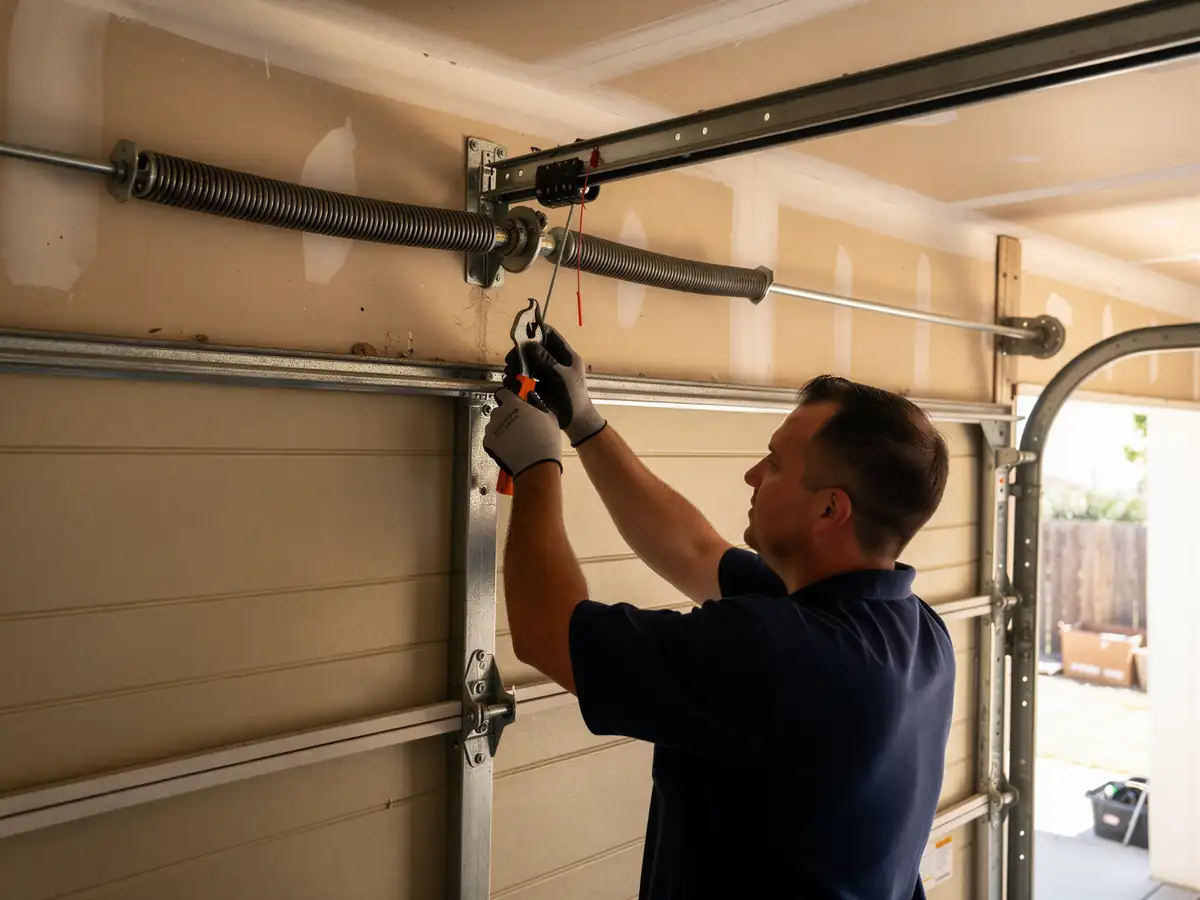
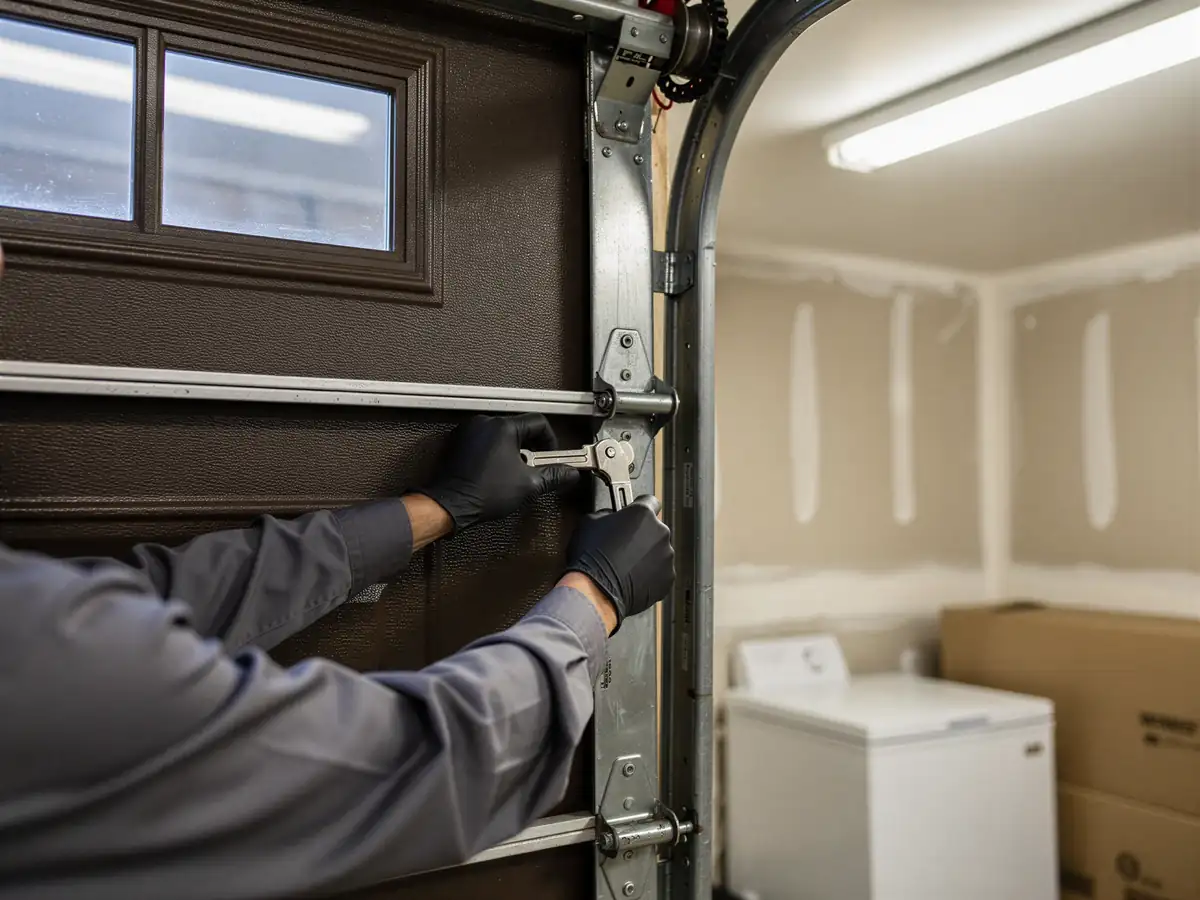
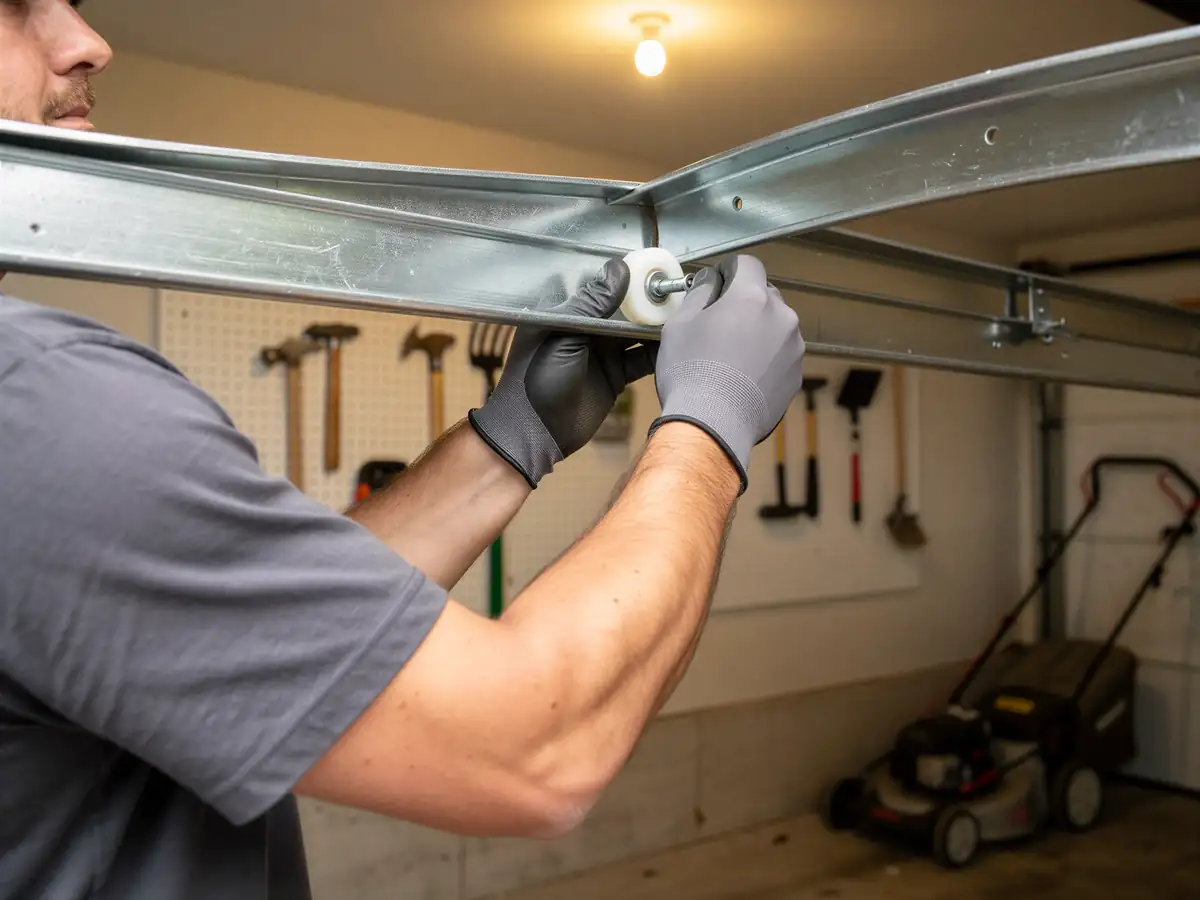
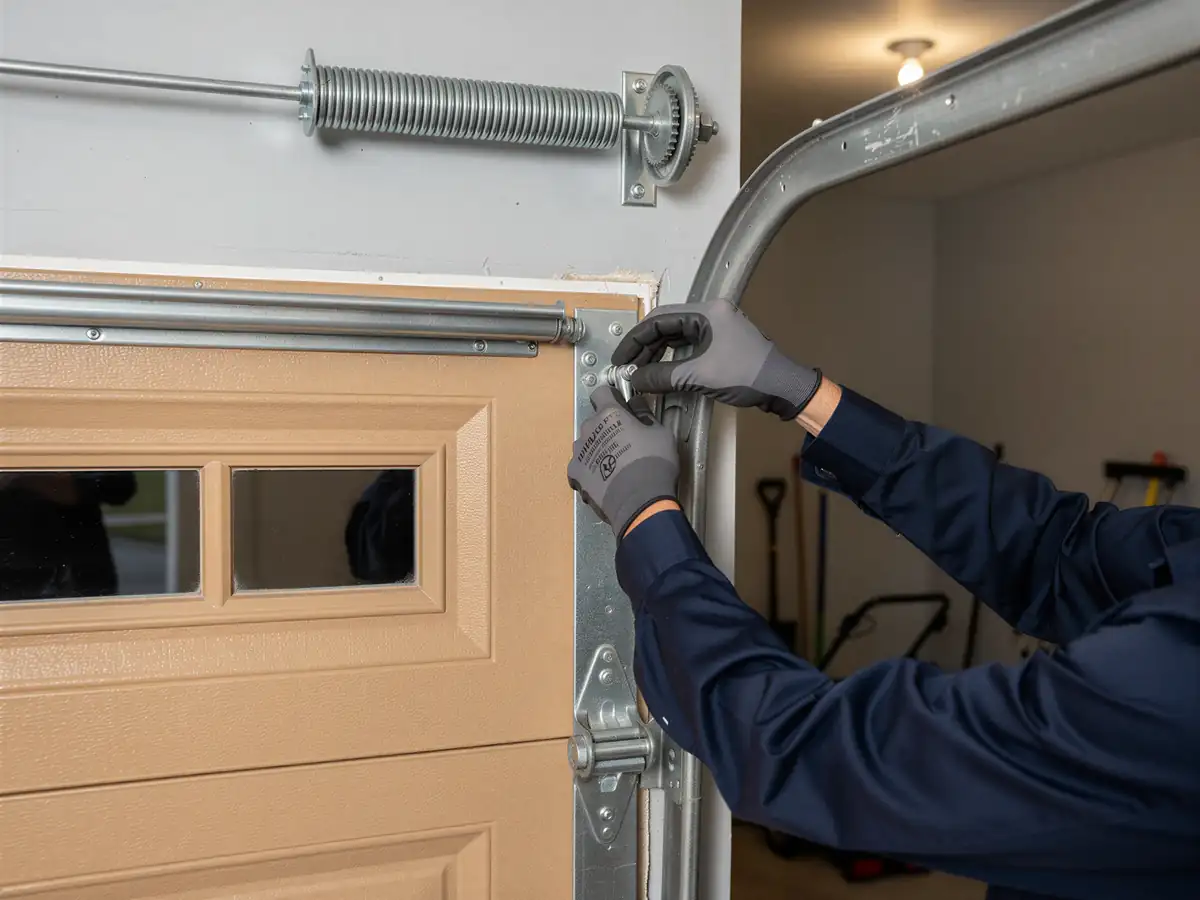
On a 1946-median house, a maintenance visit usually starts with the track and hinges, not the opener. We check for the kind of wear you get from decades of use: elongated hinge holes, rollers worn flat on one side, track that's pulled slightly away from the jamb as the framing settled. We lubricate moving parts, tighten hardware, and test spring tension and balance - a door this old is more likely to be out of balance than a newer one, since springs sized for the original door weight sometimes got swapped out over the years without a proper recalculation. We also check the opener's safety reversal, since a lot of these doors had an opener added well after the original installation and the two don't always match up cleanly. We don't do structural framing repair - if the jamb itself needs rebuilding, that's a carpentry job, and we'll say so rather than force a door fix onto a problem that isn't one.
Parts We Carry
We stock the rollers, hinges, cables, and standard torsion springs that cover most doors built across the service area's 1938-2000 range, which includes the older end of that window where West Milwaukee's housing sits. Where we run into trouble is original hardware specific to a door that predates standard sectional sizing - those pieces aren't something any truck carries, and if we hit one, it usually means a special order rather than a same-visit fix. Given this area's cold climate, we also carry weatherstrip and bottom seal stock sized for older door widths, since a worn or missing seal on a door this age tends to let in more than the newer doors nearby. We'll tell you up front if a part needs to be ordered rather than pretend we can finish it in one trip.