What You Are Seeing
West Milwaukee is a small town
About 1,990 households packed into a tight footprint three miles from our West Allis yard. That size matters more than it sounds like it should. In a town this compact, there isn't a lot of new construction driving fresh garage openings. Almost every installation call we get here is a replacement: a door that's failed, an opener that's given out, or an owner who's tired of patching a door that was never built for the way the house is used now.
- 1,990 households
The housing stock backs that up
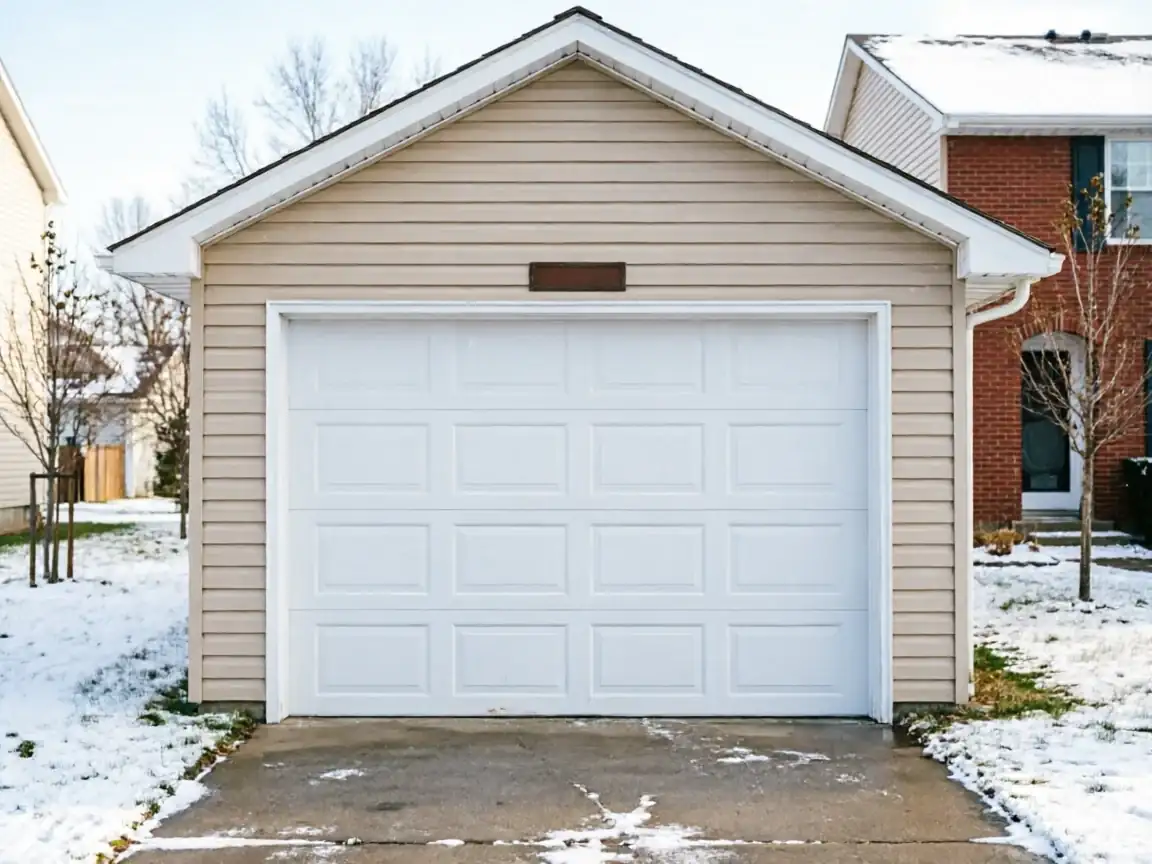
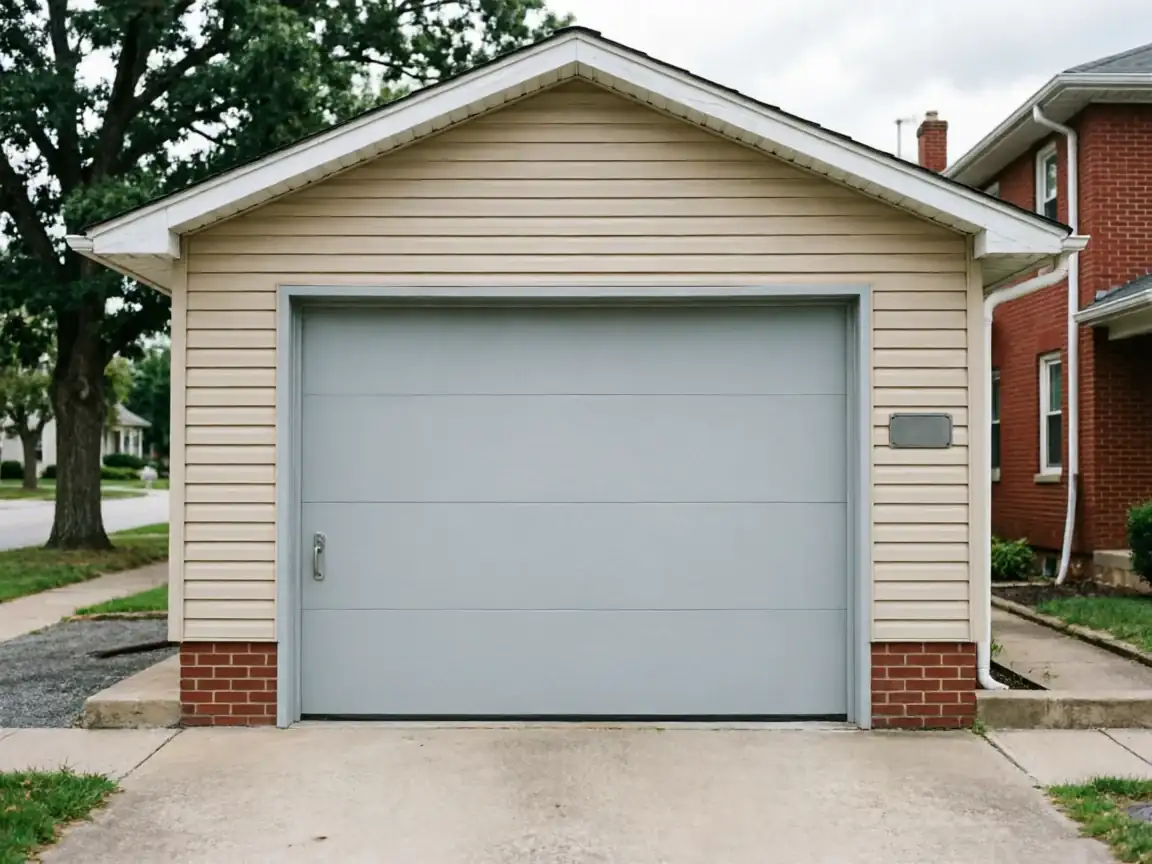
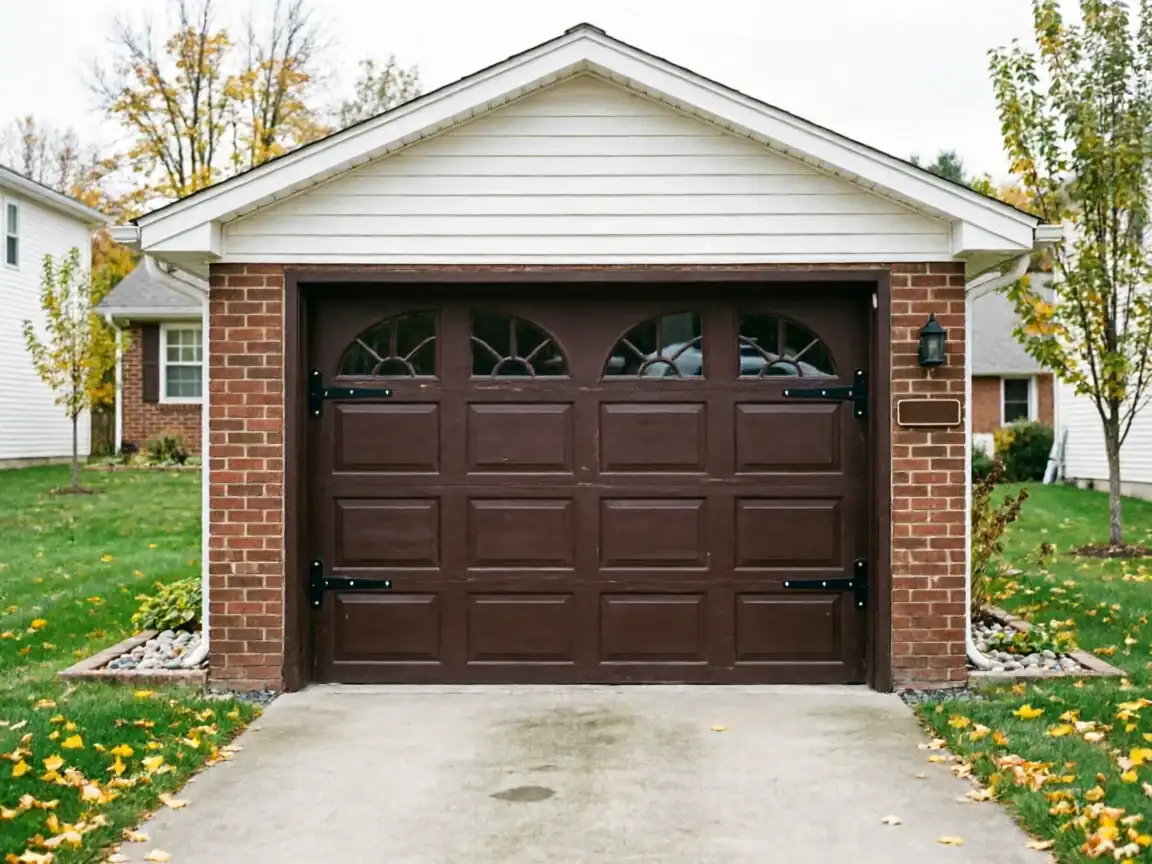
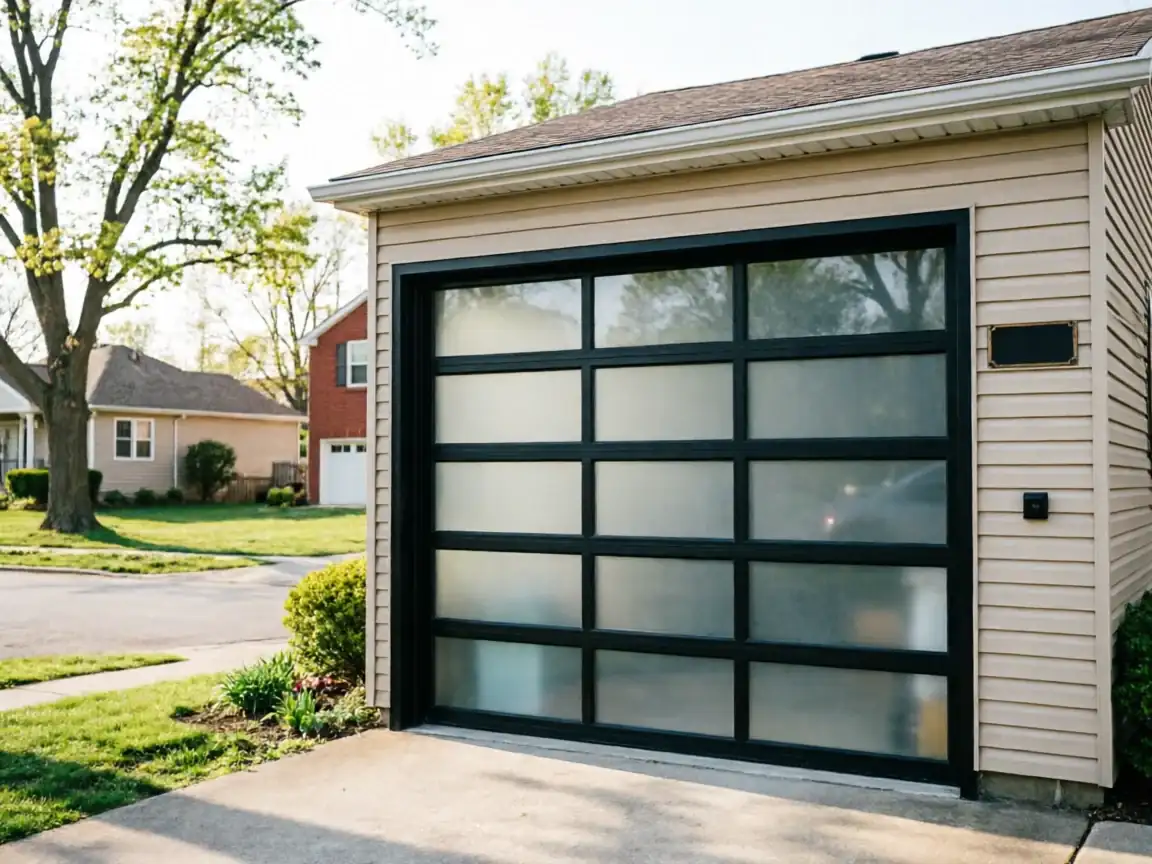
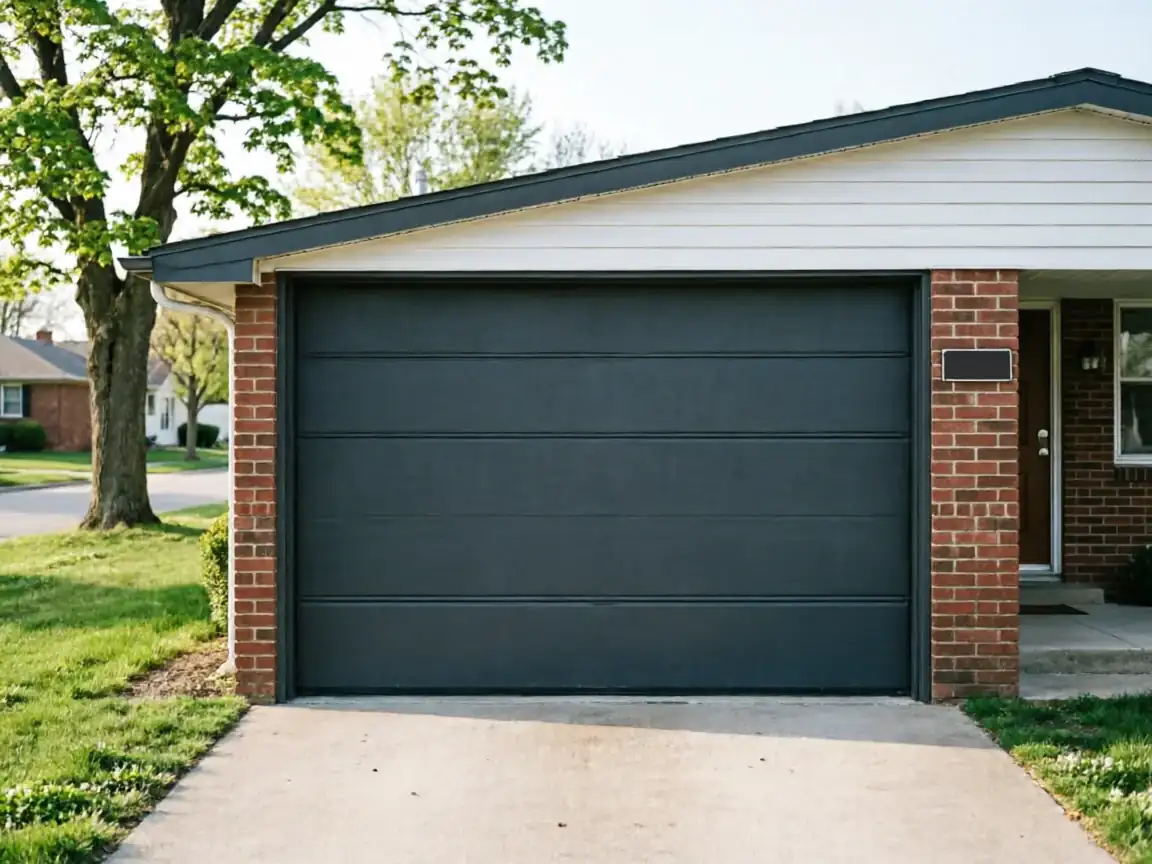
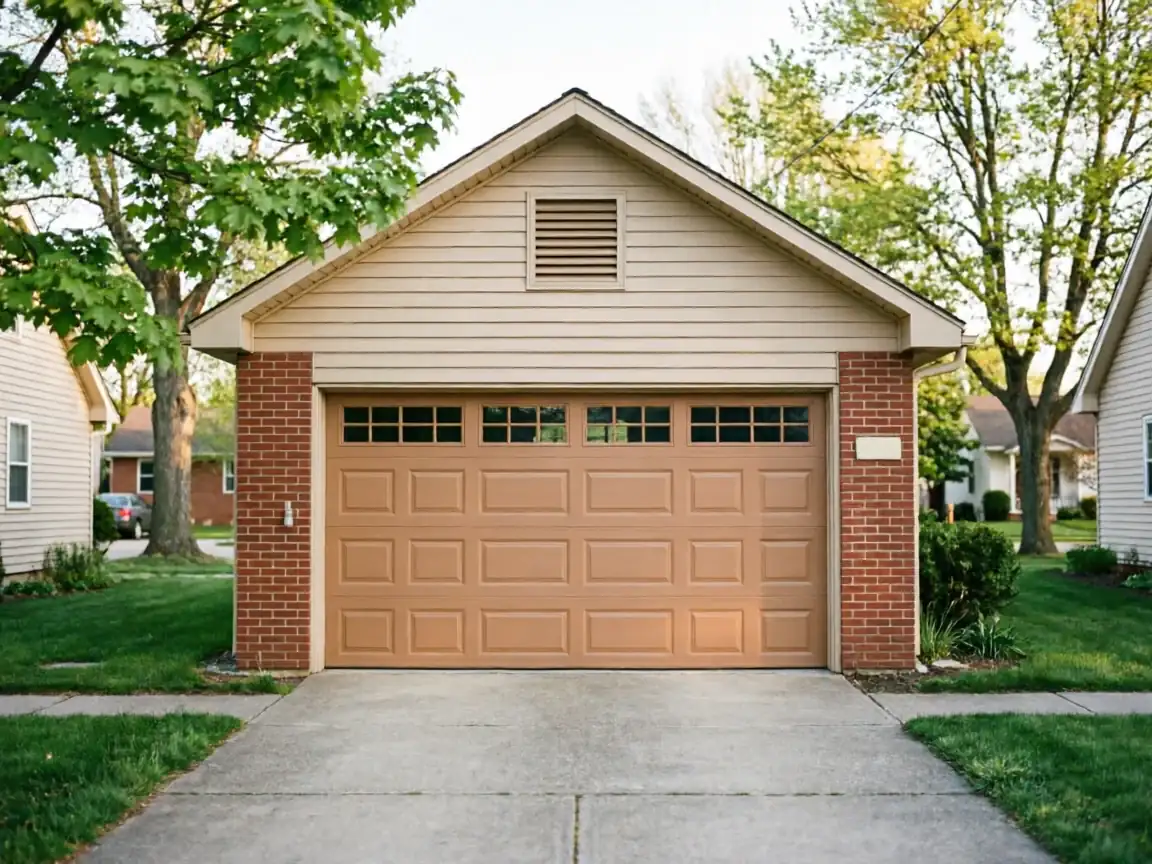
Most of West Milwaukee went up around 1946, which puts it well ahead of the postwar boom that shaped a lot of the wider Milwaukee area's housing between 1960 and 1980. Older construction here often means original openings that were cut for a single-car door before double-wide garages were standard, or framing that's been patched once or twice over the decades. We measure twice before we quote, because "standard size" isn't a safe assumption on a house this old.
If you're calling about a new install, odds are you're not adding a garage
You're replacing what's already there and dealing with an opening that doesn't match a catalog size.
The Cost of This Job
We don't publish a flat price here because the job depends on the door, the opener, and what we find once the old one comes down - and we're not going to put a number on paper that doesn't hold once we're standing in your driveway. What we can tell you is what shapes the estimate in West Milwaukee specifically.
Median household income here is $48,976, noticeably under the $108,690 median across the rest of our service area. That doesn't change what a door costs to build or install, but it does change which door lines we spend time on when we walk a homeowner through options. We carry choices that don't require stepping up to a top-tier insulated door just to get a solid, code-appropriate replacement.
The other cost driver is the house itself. A 1946-era opening that's narrower than today's standard sizes, or framing that needs reinforcing to carry a new door's weight, adds labor the catalog price doesn't show. We flag that during the walk-through, not after the door's already on the truck.
How Long It Takes
A straight swap - same size opening, new door, same track position - is a one-day job for our crew once the door's on site. What stretches the timeline in West Milwaukee more often than elsewhere is sourcing. If your opening doesn't match a stock width because the house dates to 1946, we may be ordering a custom-cut panel rather than pulling one off the shelf, and that lead time runs on the manufacturer's schedule, not ours.
Weather plays a role too. This area sits in the severe end of the cold climate band, and a winter install means working around frozen ground anchors, cold-stiffened weatherstripping, and shorter daylight. None of that stops the job, but it can add an hour or two to a install that would move faster in June.
We'll give you a real timeline once we've measured the opening and know whether we're installing a standard door or ordering one built to fit.
Getting It Booked In
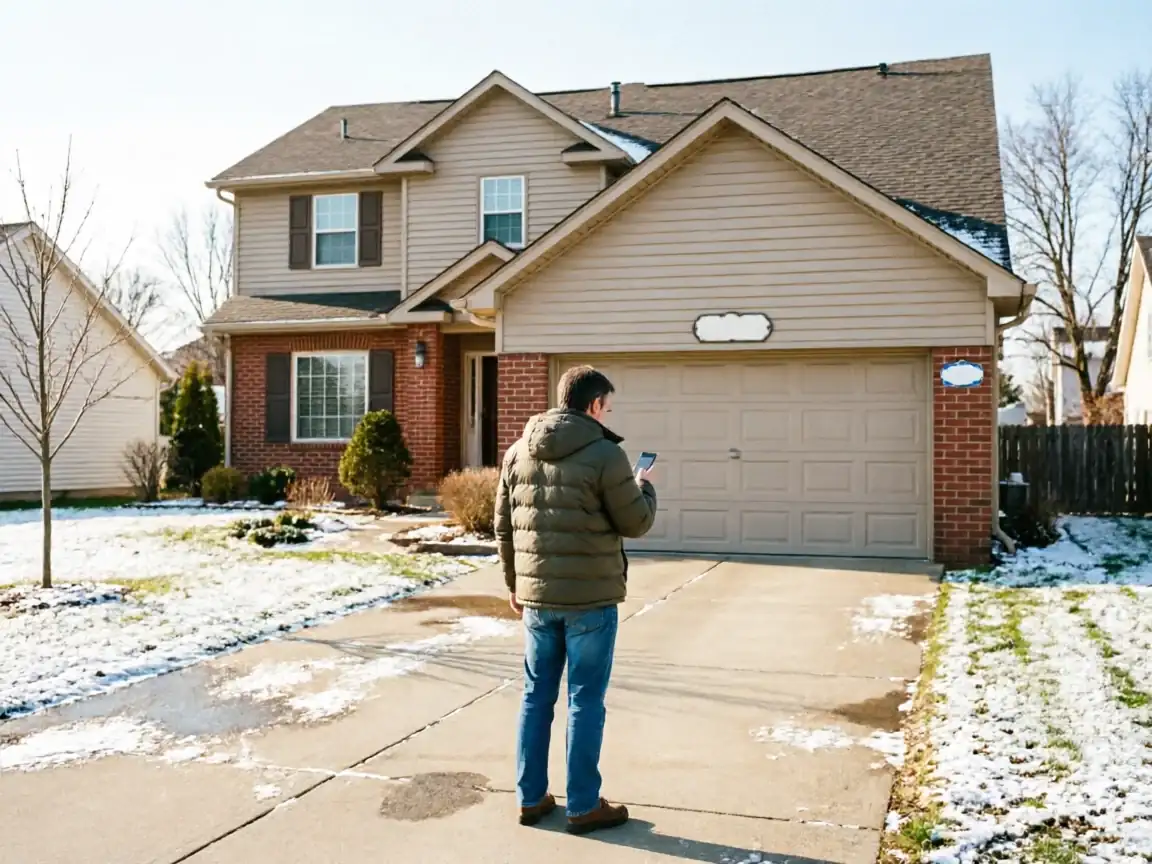
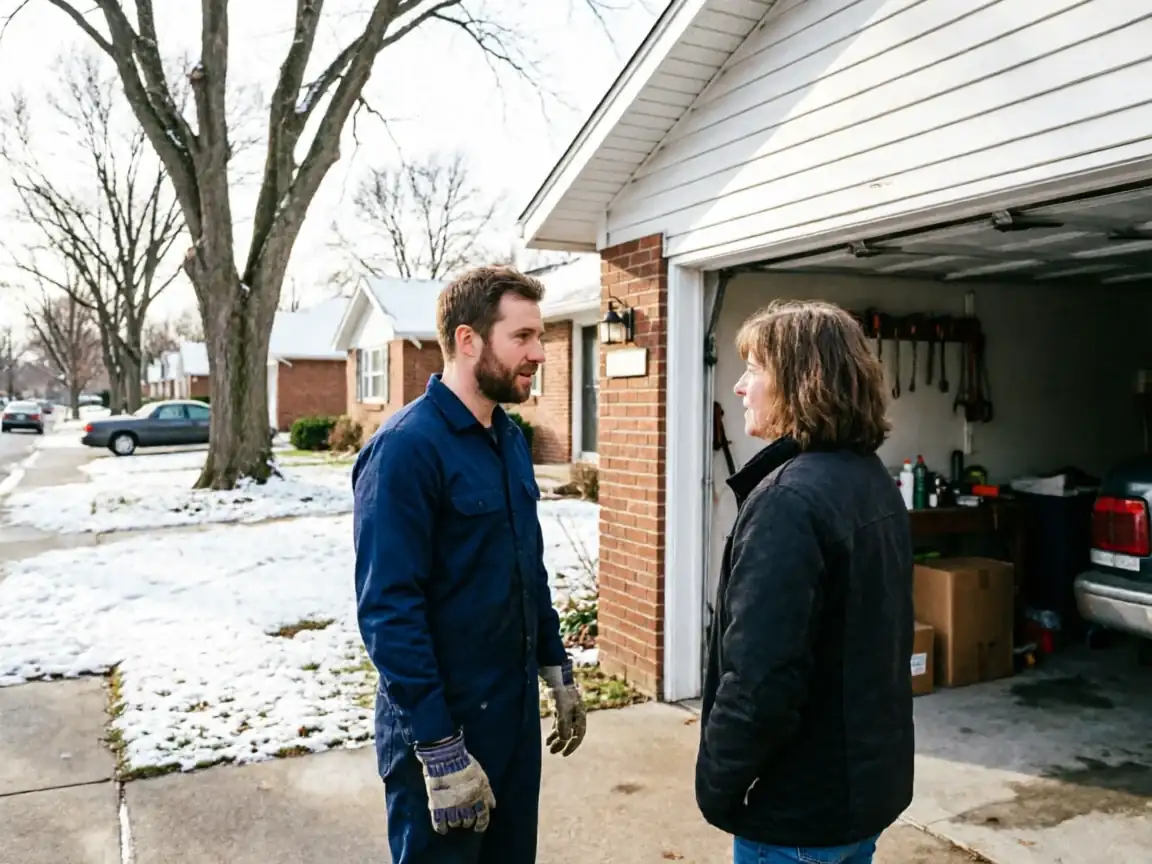
We come out from West Allis, three miles away, to measure the opening and talk through door options before anything's ordered
There's no local branch in West Milwaukee - the crew and truck travel in for the job, same as for the measurement visit.
Because a fair number of the doors we replace here are undersized by modern standards
We'd rather see the opening in person than quote off a phone description. It saves a second trip and gets you an accurate number the first time.
You can see which other towns we cover and book a visit through our service area page
Or read more about what a full install involves on our main West Allis installation page.
What the Fix Involves
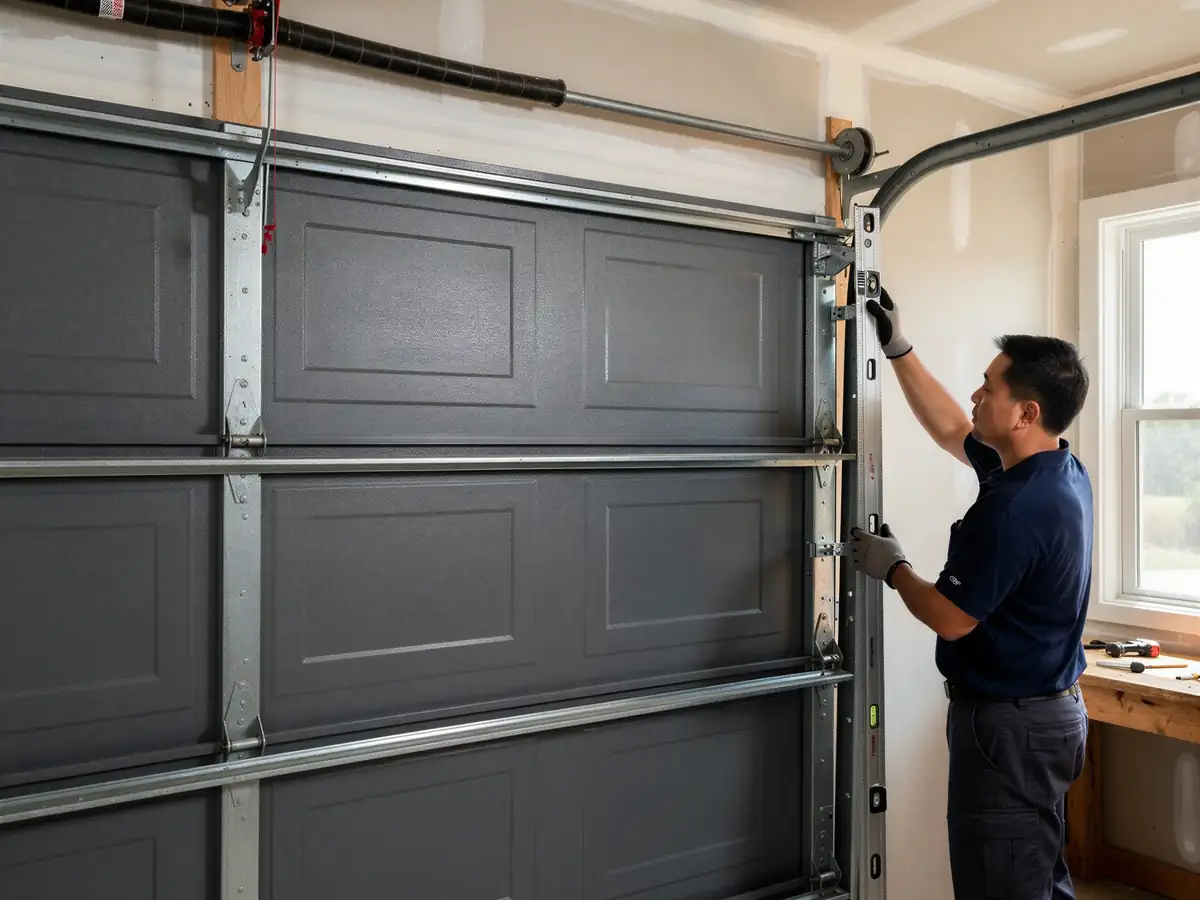
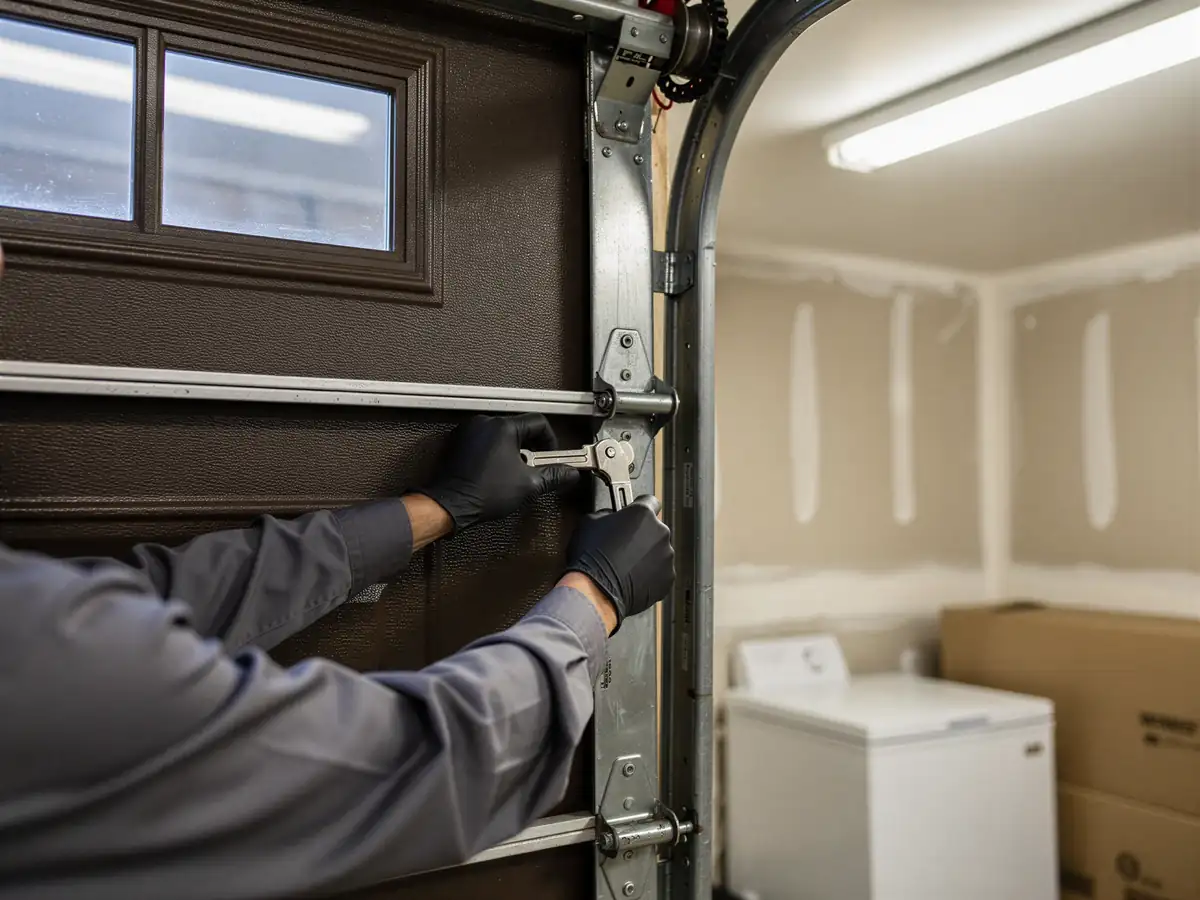
On a house this age, the install usually starts with the opening, not the door. We check the jambs and header for square and for rot, since 1946-era framing has had seventy-plus years to settle or take water. If the opening's out of true, we shim and reinforce before the new door ever goes up - skip that step and a brand-new door will bind on day one.
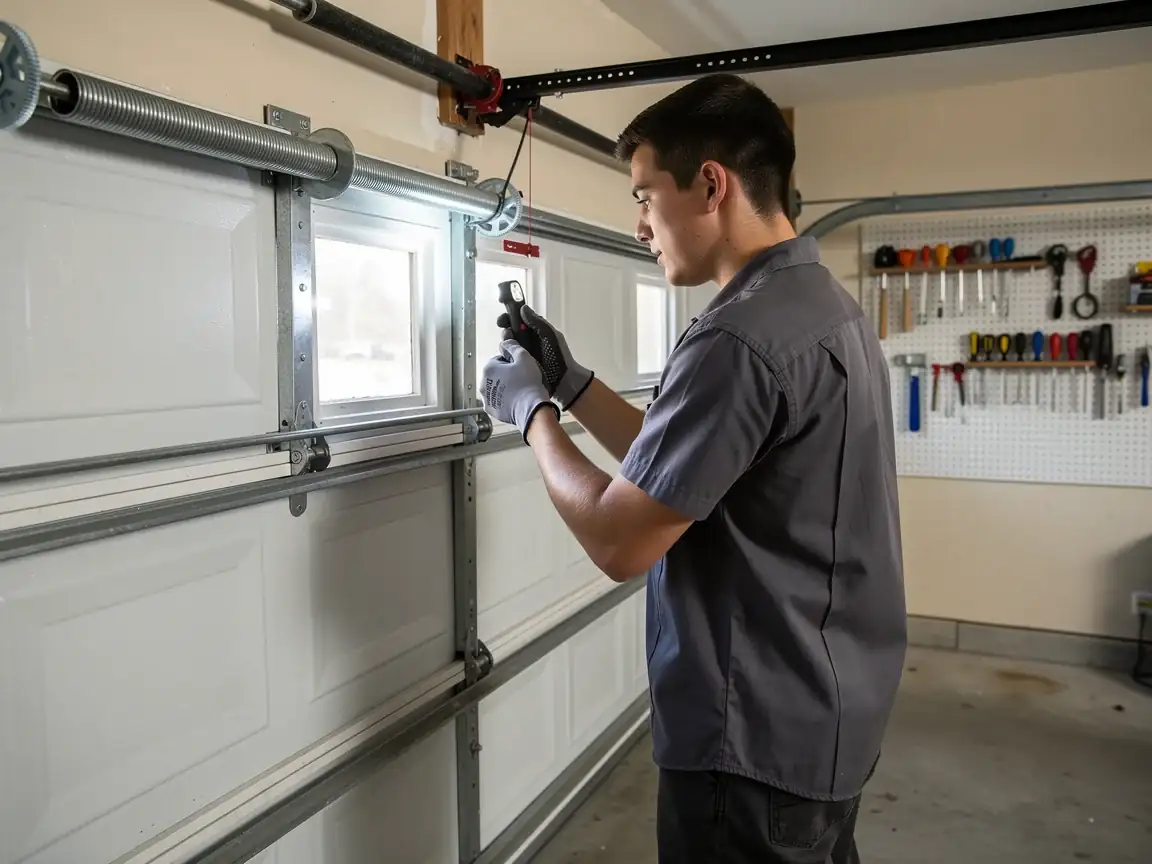
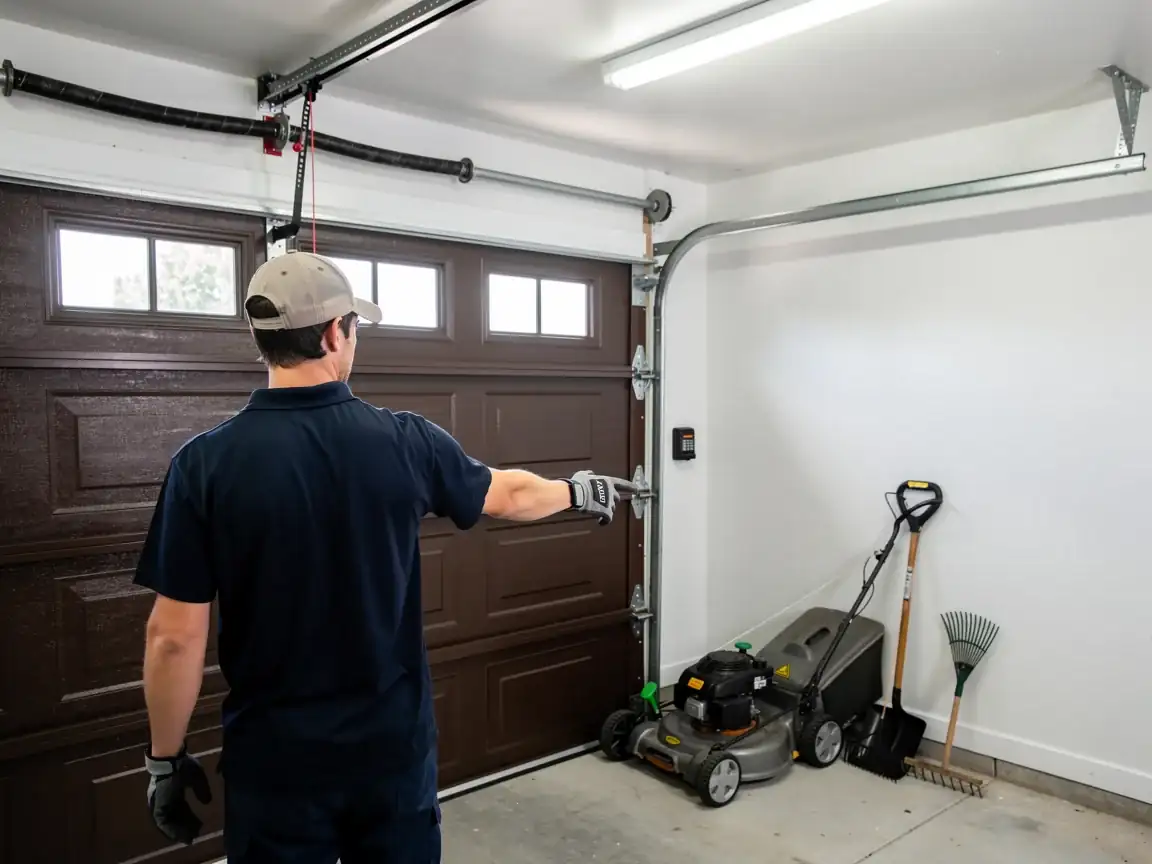
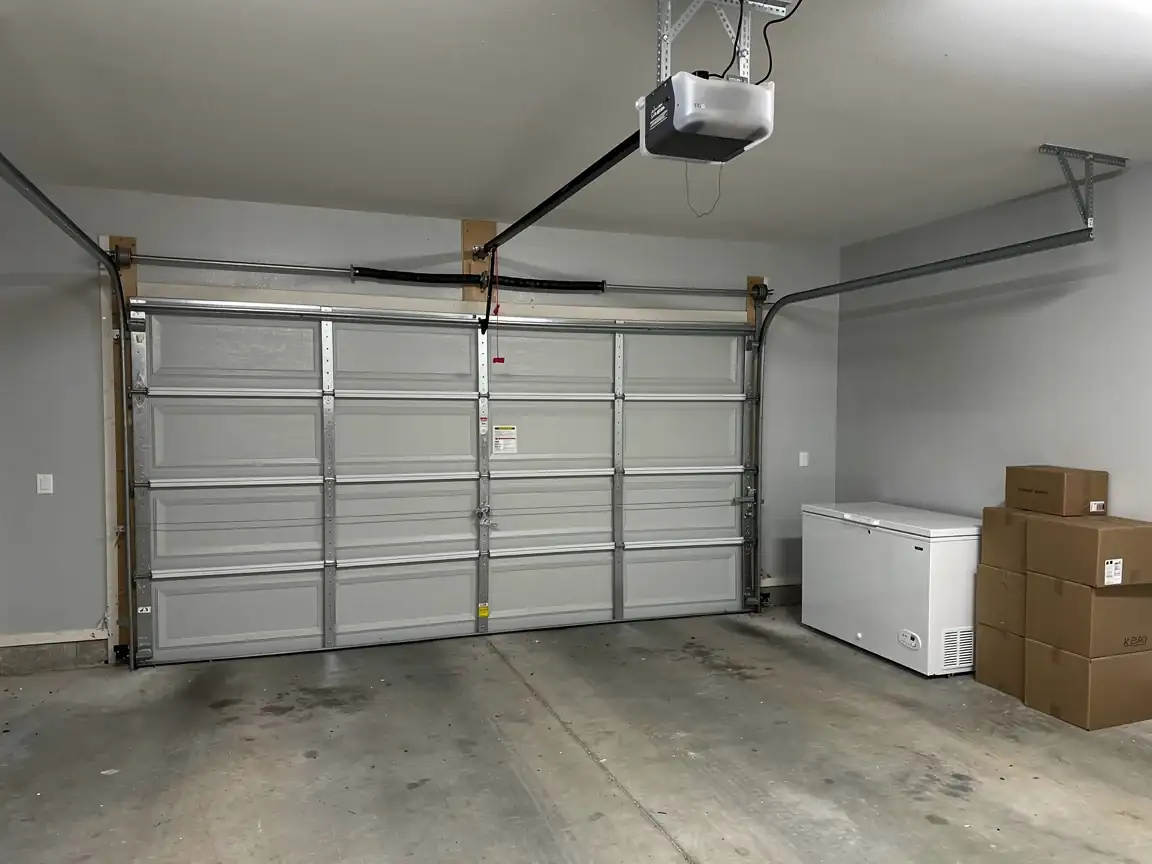
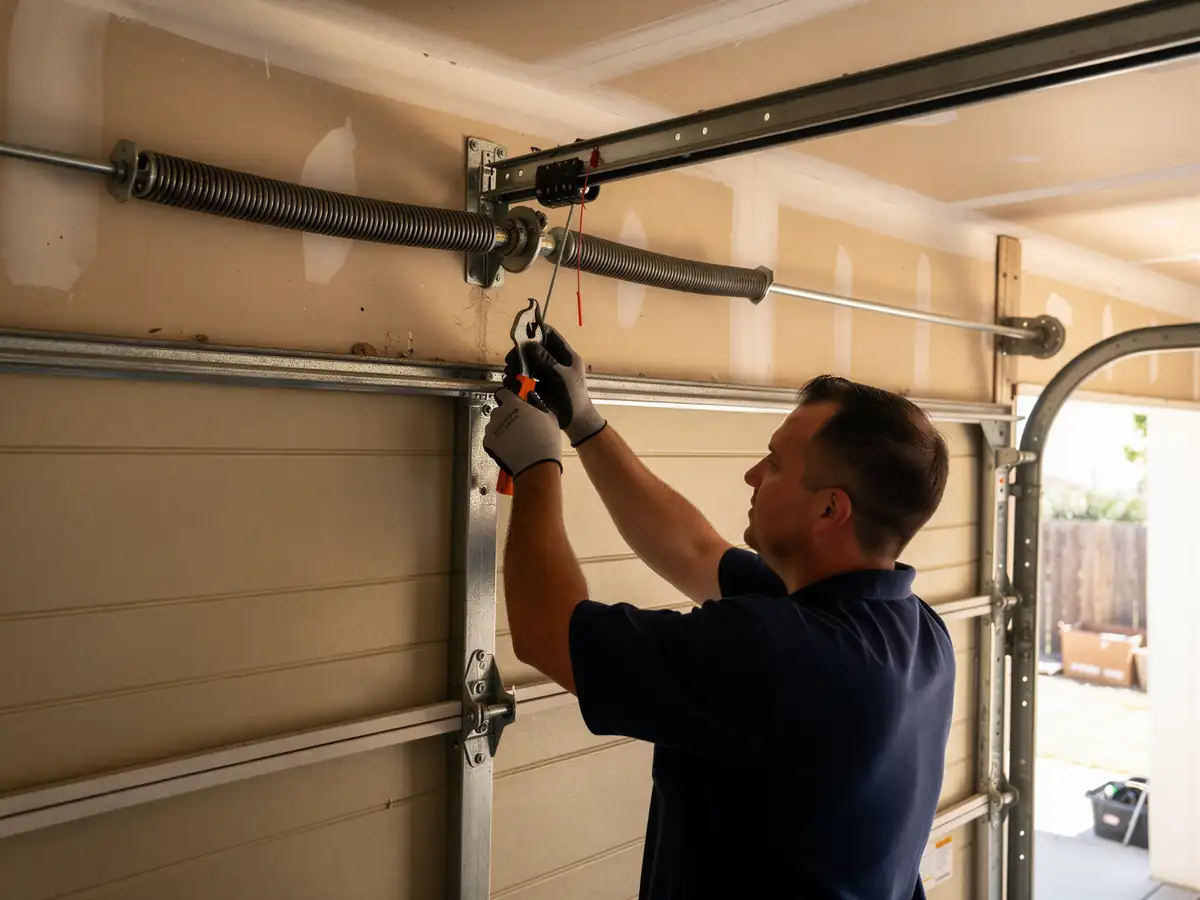
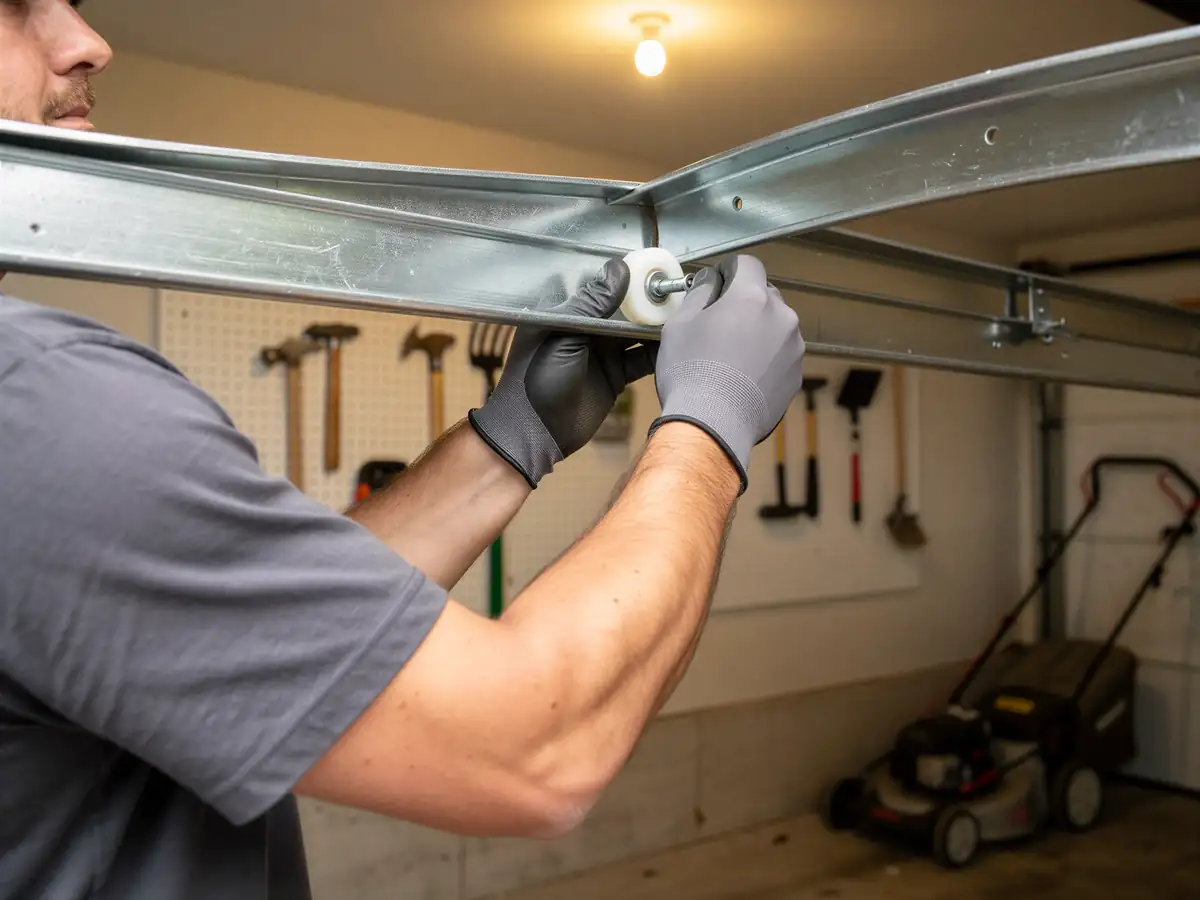
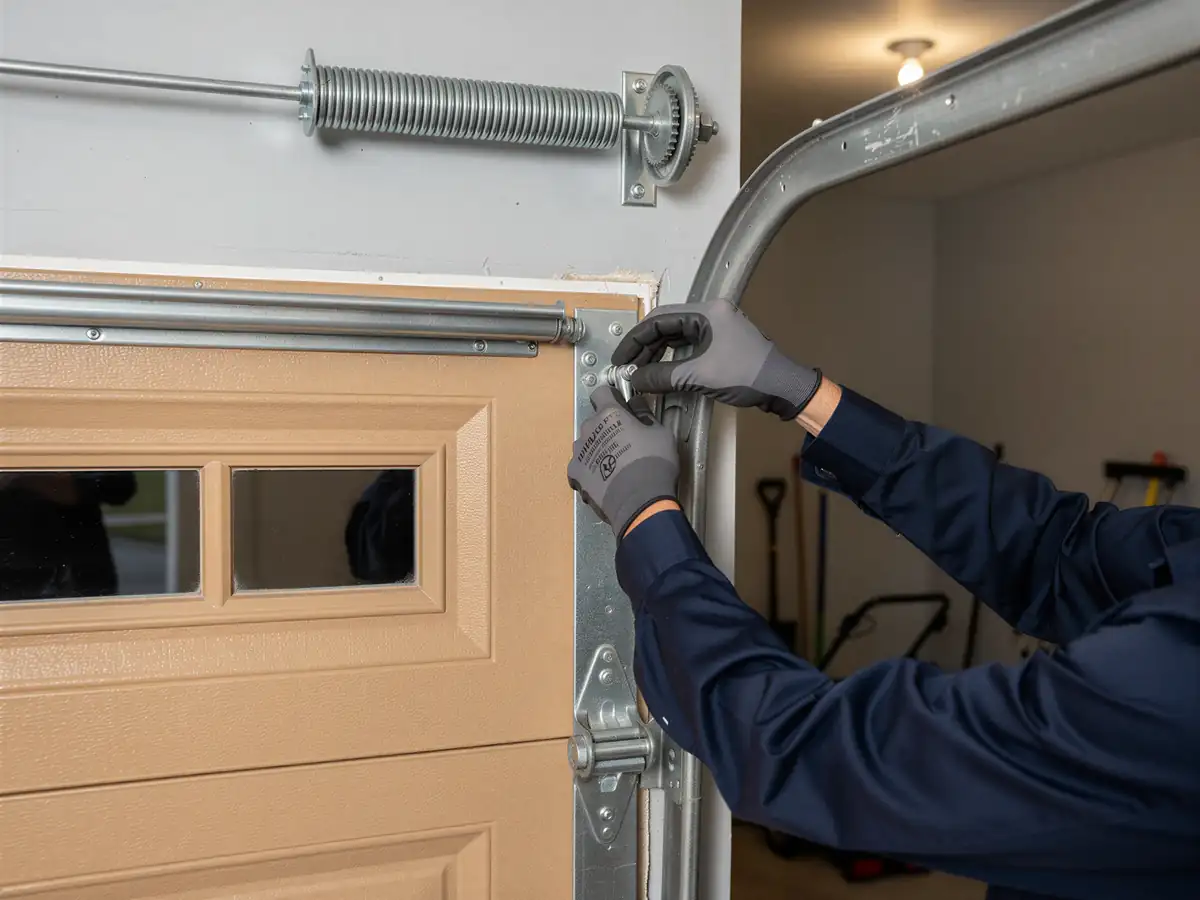
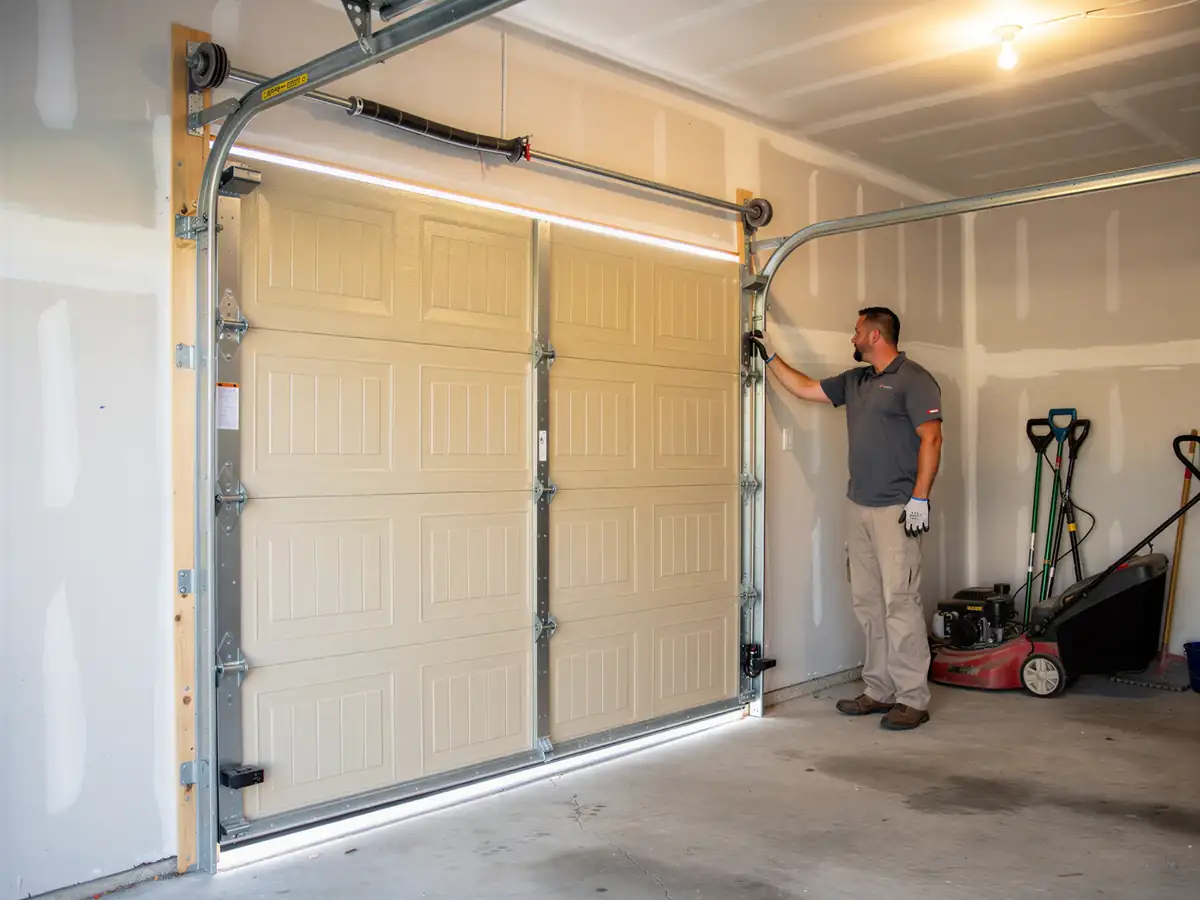
From there it's standard work: new track set plumb, rollers and hinges matched to the door weight, torsion spring sized to the door and set under proper tension, and the opener mounted and force-tested so it reverses correctly on contact. On a cold-climate install like this, we also check the bottom seal and weatherstripping fit closely, since a gap that's invisible in July turns into a draft by December.
What we won't do is install a new door on a frame that's structurally compromised. If the header's rotted through or the opening's failing, that's a carpentry fix first - we'll say so rather than hang a door on a problem it can't fix.
Parts We Carry
For a town with housing this age, we stock hardware sized for openings that don't match current standard widths - rollers, hinges, and track sections that fit a narrower 1946-era door as readily as a modern one. Torsion springs get matched to the actual door weight on site rather than pulled off a generic chart, which matters more on an older door where the panel material and weight can vary from what a spec sheet assumes.
We carry opener units across a range of price points, which matters given the income spread in this area - not every job calls for the top-tier smart opener, and we're not going to push one where a mid-range unit does the job just as well.
One limitation worth saying plainly: if your opening needs a true custom-width door, that's not something we stock on the truck. It's ordered to spec, and that lead time is on the manufacturer, not us.