What You Are Seeing
An off-track door in West Milwaukee usually isn't a clean, sudden jump
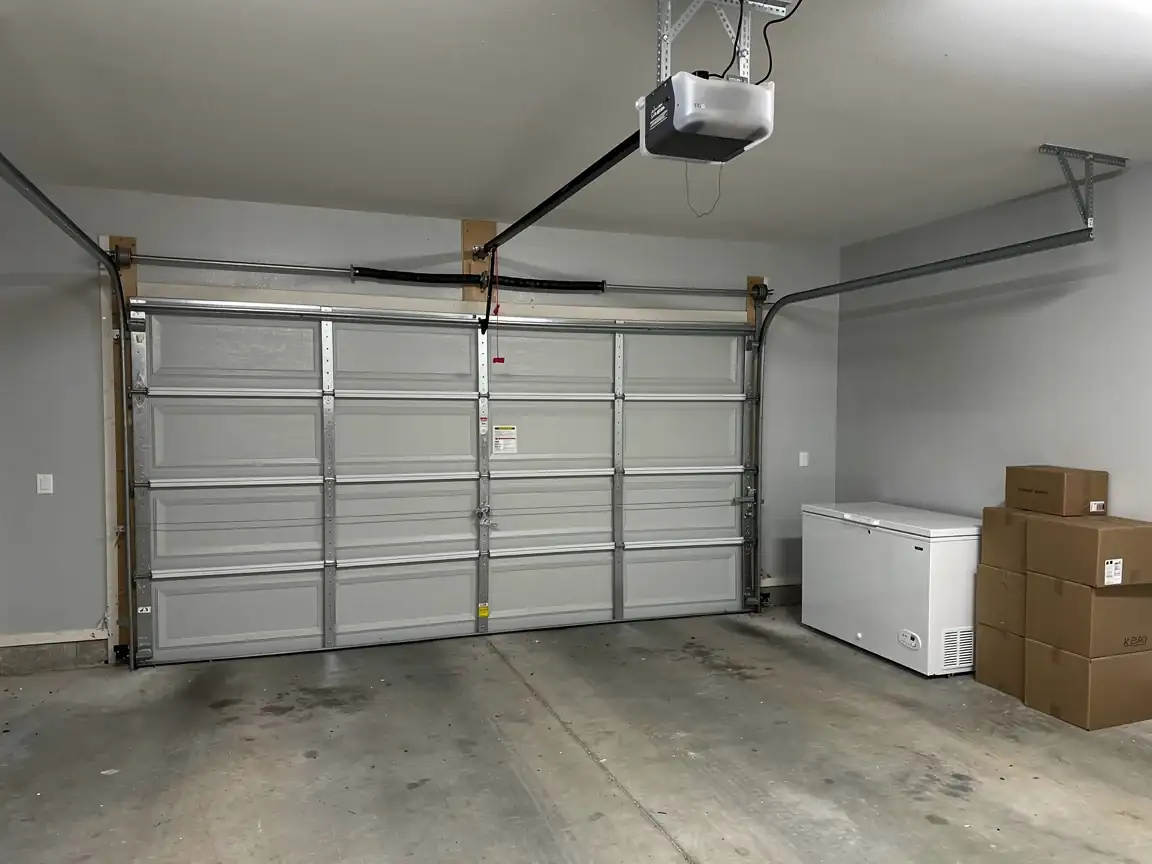
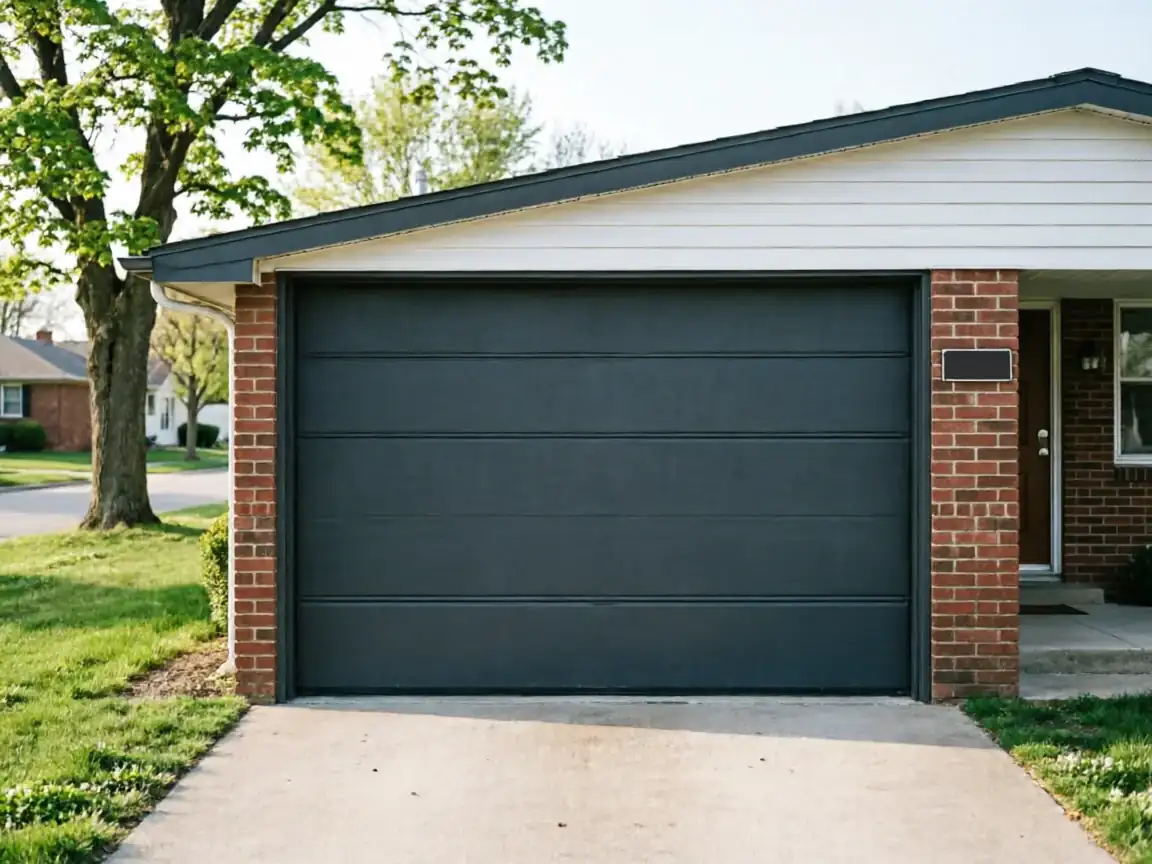
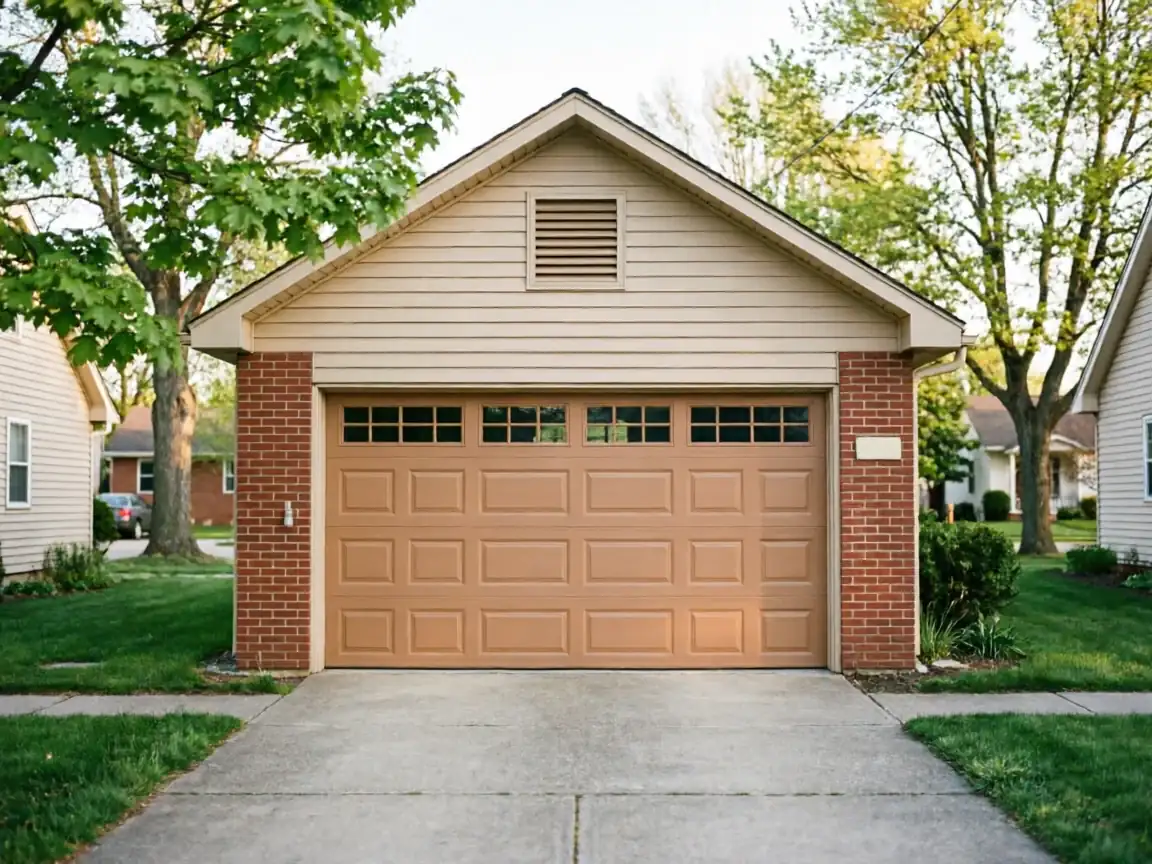
It's a door that's been fighting its hardware for years before it finally lets go. With a median build year of 1946, most houses in this suburb went up with narrow single-car openings, and over the decades a lot of those original track brackets have been loosened, re-shimmed, or replaced piecemeal by whoever owned the place before. We see doors where one side track sits a half-inch off from the other because a jamb shifted and nobody re-leveled the hardware to match.
The other pattern specific to this housing era
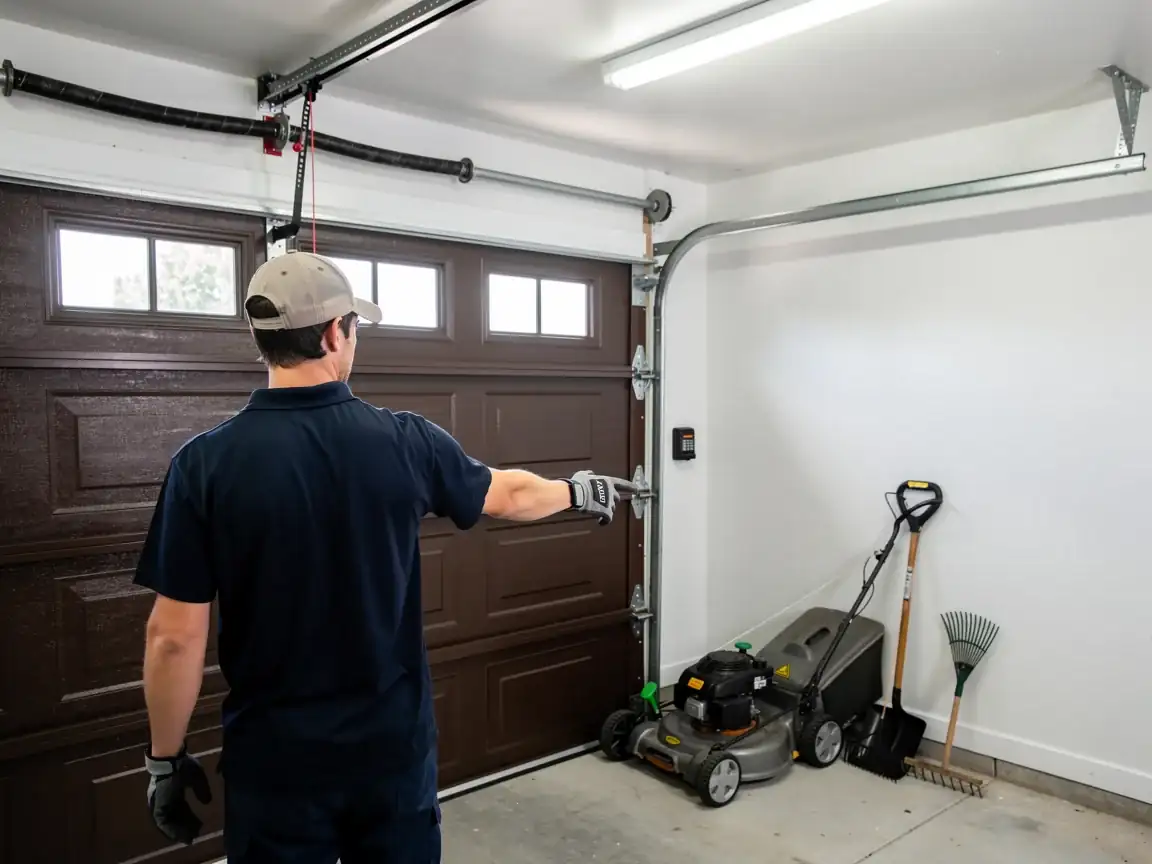
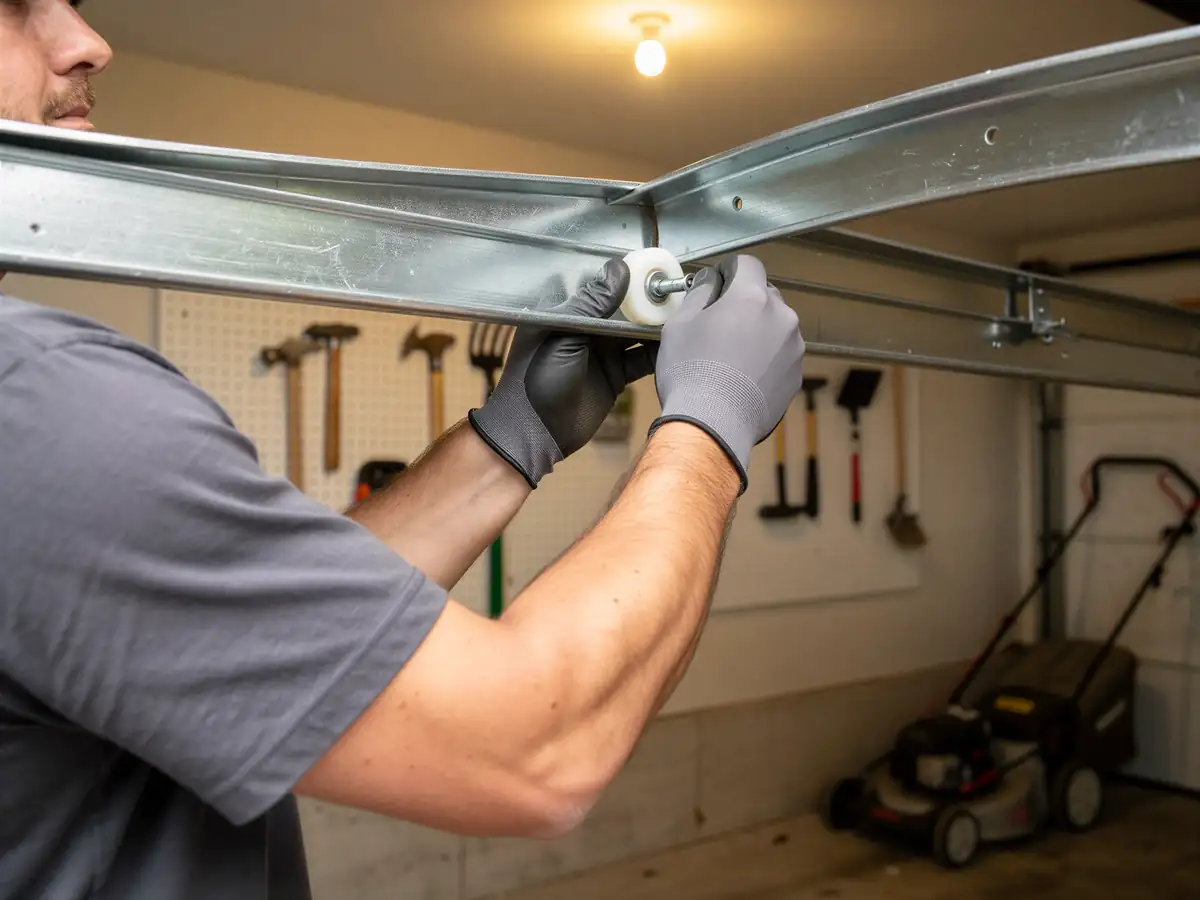
Rollers that were never upgraded from the original stamped steel, now worn enough that they walk out of the track groove under normal travel, especially on a cold morning when the door is moving slower than it should. That's a climate problem layered on top of an age problem - winters here are cold enough that stiff grease and shrunk weatherstripping add drag right when the hardware has the least tolerance for it. A door that's off-track once in warm weather and comes back off-track again in January is telling you the track alignment, not the opener, is the real issue.
The Cost of This Job
We don't post a number here because what an off-track repair costs depends on whether the track itself is bent, whether a roller came apart inside the track, or whether a cable jumped the drum at the same time the door left its track - those are three different jobs wearing the same symptom. What we can tell you is that in a neighborhood with a median household income near $48,976, we try to be straight about when a track repair is worth doing versus when the door and hardware together are past the point of patching. If the opening is original to a 1946-era house and the track brackets are rusted into the jamb, forcing a repair onto them sometimes costs more over two years than redoing the hardware once.
How Long It Takes
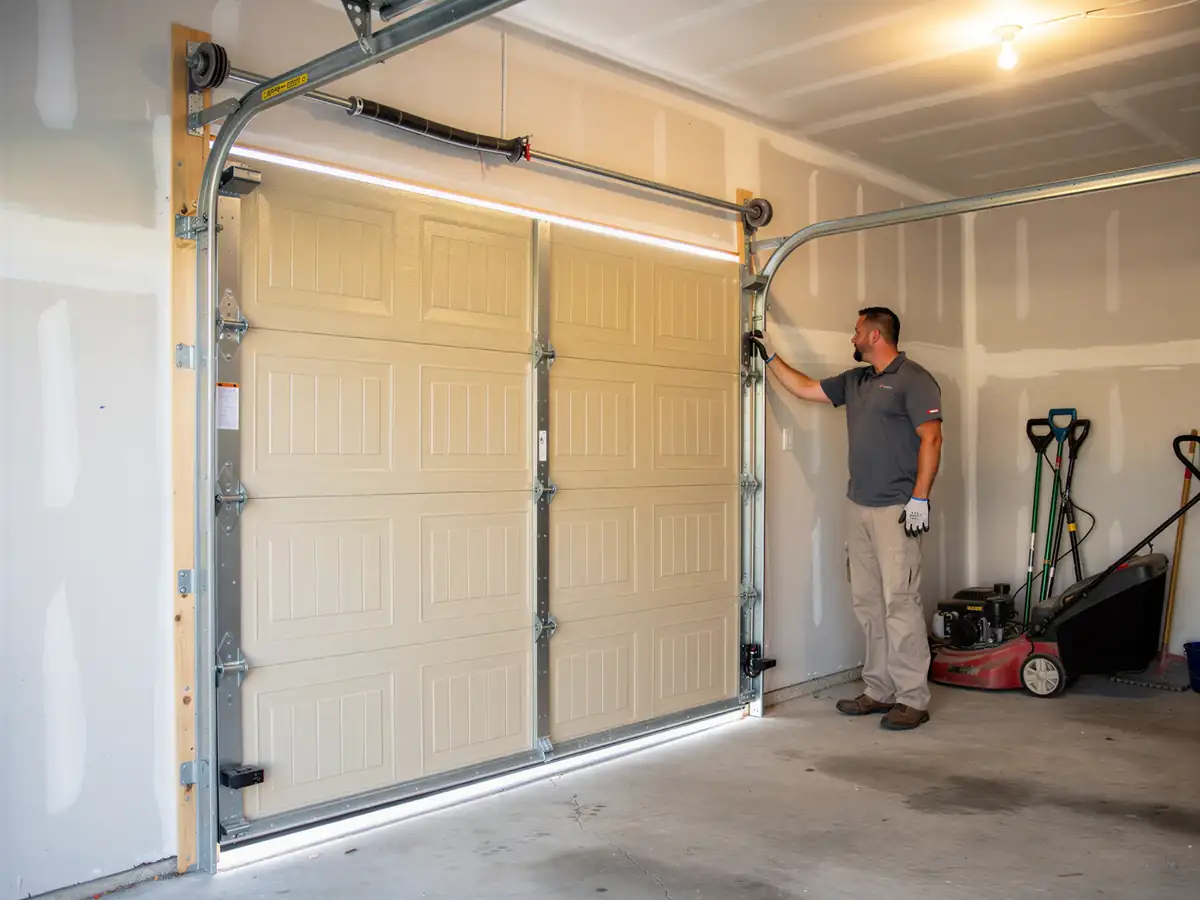
Most off-track jobs are a same-visit fix once we're on-site - realigning a track, replacing a roller, reseating a cable on its drum. What stretches the visit is diagnosis, not labor: on a door that's a few decades old, we're checking whether the track came loose because a bracket pulled out of old jamb wood, or because the door was struck and the track itself bent. Those look similar from the driveway and aren't the same repair. We travel to West Milwaukee from our base in West Allis, about 3 miles away, so the drive isn't the bottleneck - sorting out which part actually failed is where the time goes.
What the Fix Involves
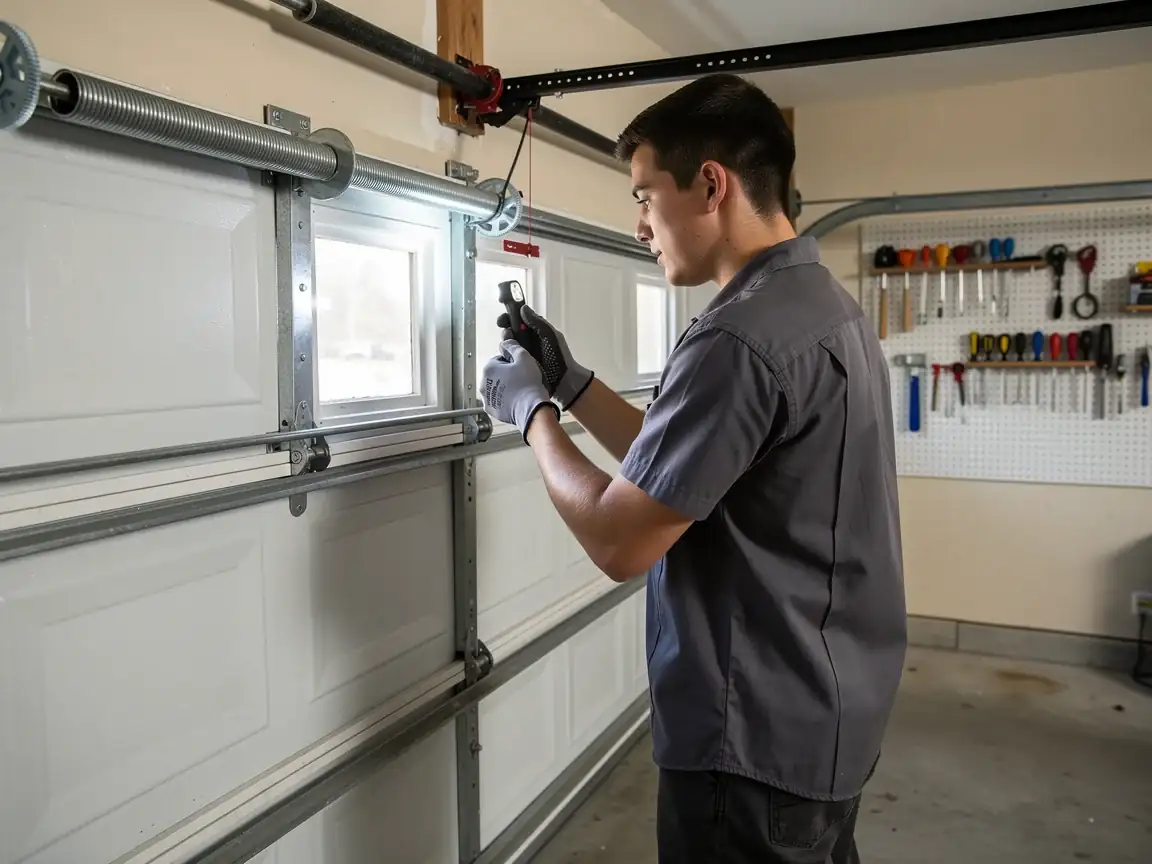
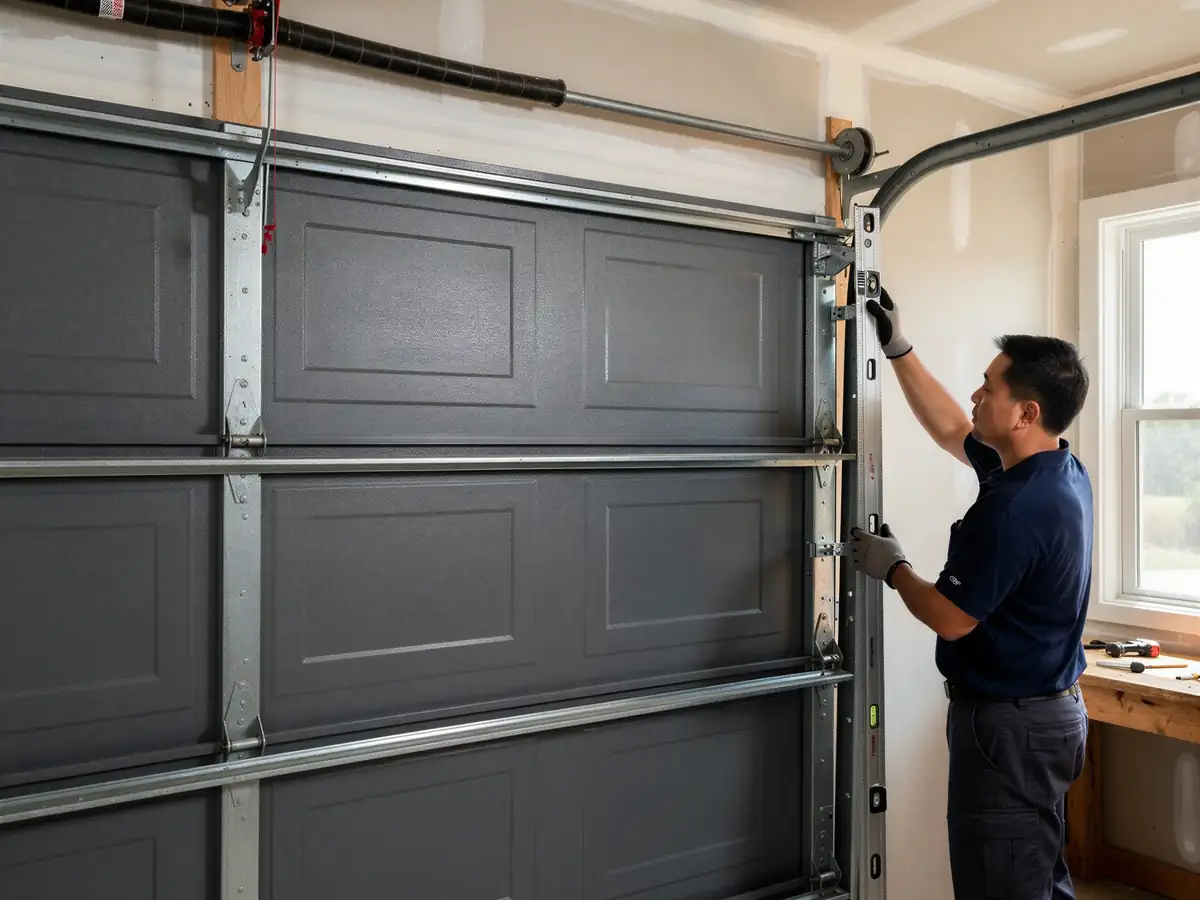
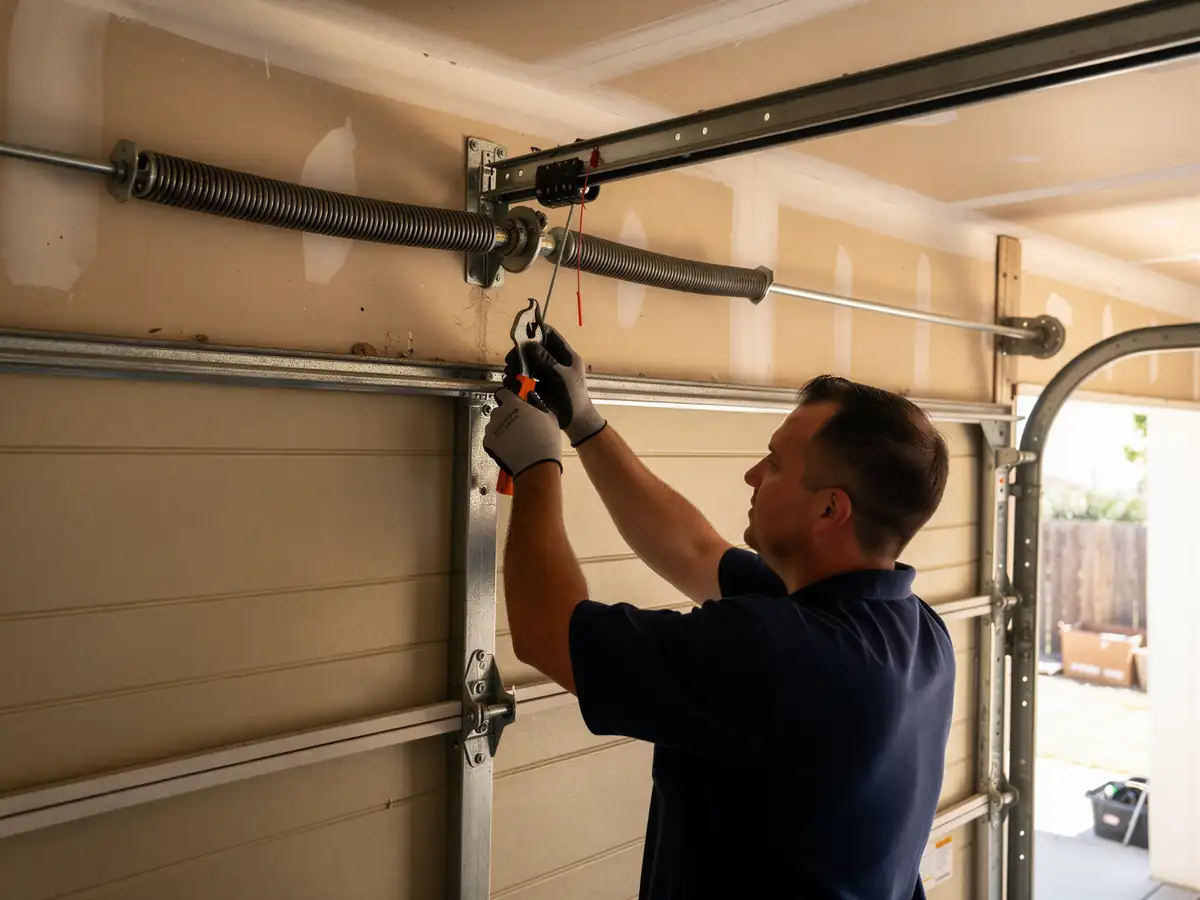
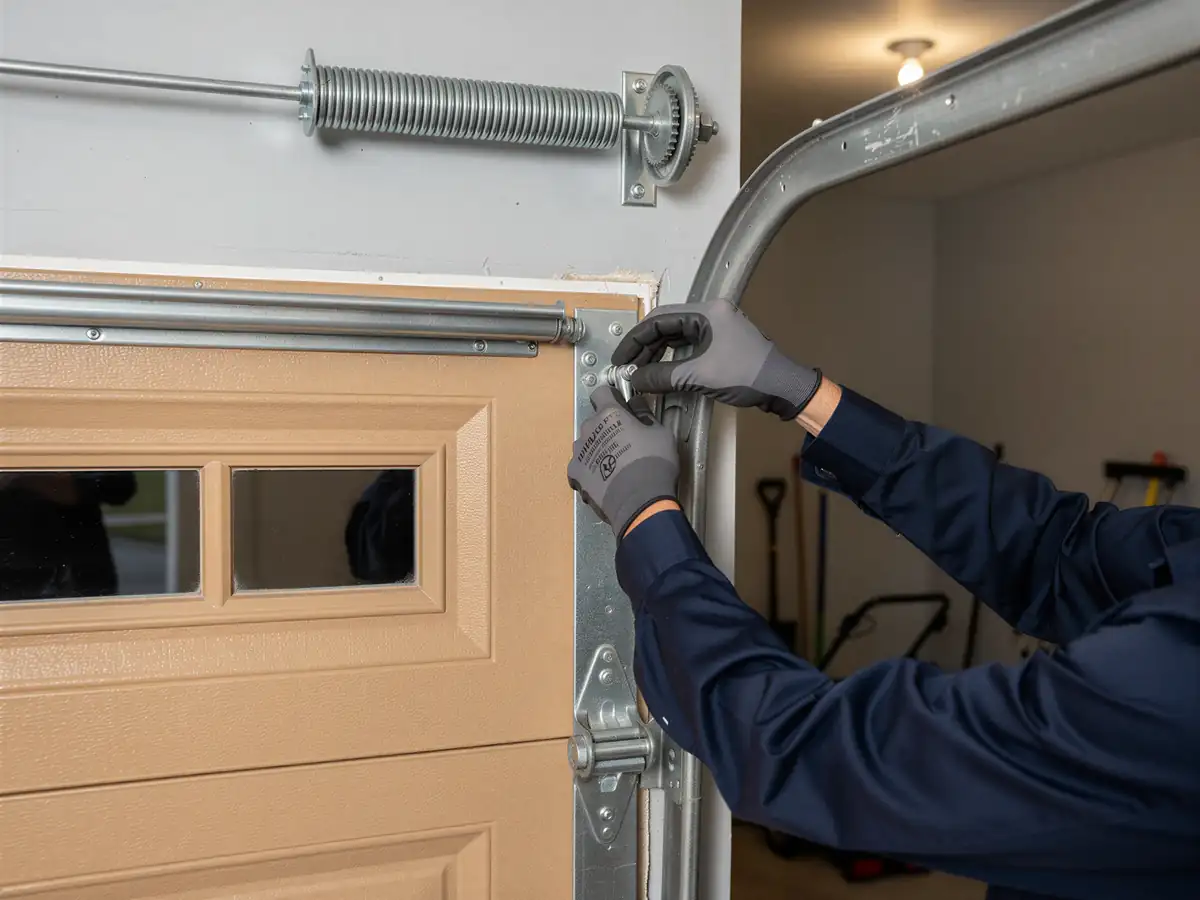
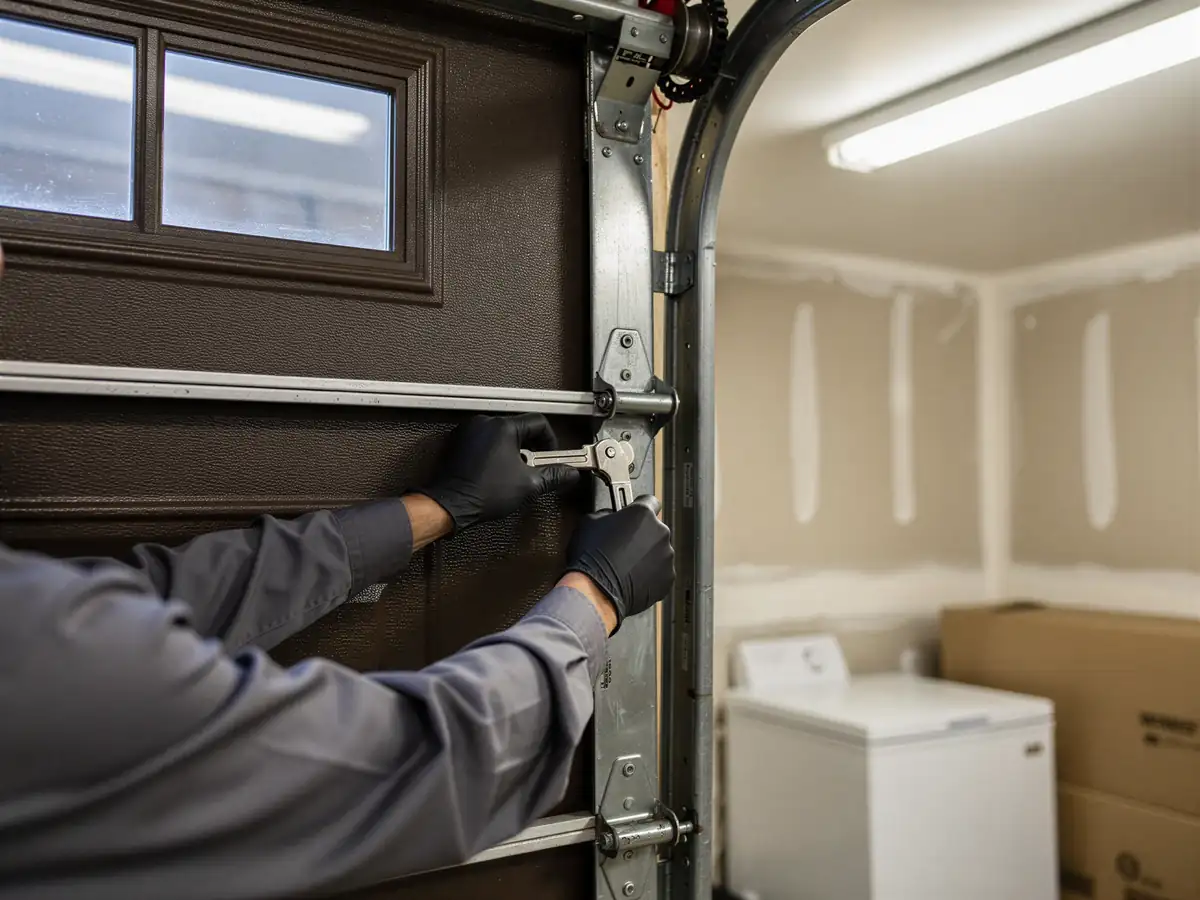
Realigning a track starts with loosening the brackets holding it to the jamb, bringing the rail back to plumb against the door edge, and retightening into solid wood - which on a house from the 1940s sometimes means finding fresh wood to bite into, since the original bracket holes have worked loose over the years. If a roller has failed inside the track, we pull the hinge, swap the roller, and check the adjoining rollers for the same wear pattern, because one dead roller on an old door usually means its neighbors aren't far behind. Where the cable has jumped the drum along with the track coming loose, we re-seat the cable under tension before touching anything else - that's a spring-loaded step, not a DIY one. We'll also check the bottom bracket, since on a door this old it's often the weak point that let the track pull loose in the first place.
Parts We Carry
We stock the rollers, track brackets, and cable hardware that fit standard single and double torsion setups, which covers most of what's on West Milwaukee driveways. What we don't always have on the truck is a full replacement track section sized to an original 1940s narrow opening - some of those older rail profiles aren't the modern stock width, and if yours needs a full track swap rather than a realignment, that part may need to be ordered rather than installed same-day. We'll tell you straight if that's the case rather than forcing a mismatched rail into place.